

white-throated swallow vs andorinha-rabijunca
Hirundo albigularis versus Hirundo smithii
Jogue um quiz com white-throated swallow e andorinha-rabijunca
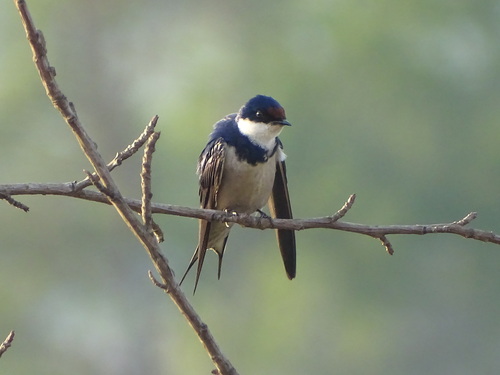 white-throated swallow
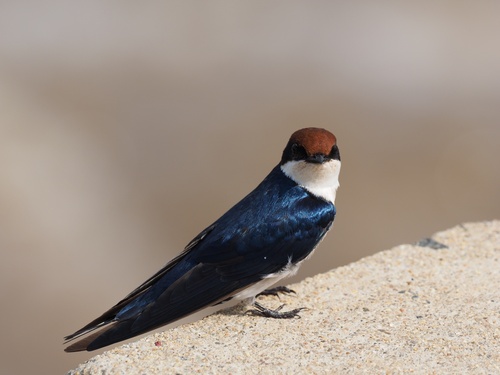 andorinha-rabijunca
Em resumo
A única marca de campo mais confiável é a cauda: a andorinha-rabijunca adulta apresenta penas externas da cauda extremamente longas e filamentosas ('fios'), enquanto a andorinha-de-peito-branco tem uma cauda profundamente bifurcada, mas mais larga, sem fios. Os juvenis de ambas as espécies não possuem as características completas da cauda, então olhe para a cabeça e as partes inferiores: a andorinha-de-peito-branco tem uma garganta branca nitidamente dividida das partes inferiores por uma faixa peitoral escura, enquanto a andorinha-rabijunca tem uma parte inferior branca limpa, sem faixa peitoral. Ambas as espécies têm uma coroa castanha como adultas, mas os juvenis são mais opacos e marrons. Em voo, procure pela parte inferior da cauda: a andorinha-de-peito-branco apresenta manchas brancas perto das pontas das penas, ausentes na andorinha-rabijunca. Ambas são comuns perto da água no sul da África, mas a andorinha-de-peito-branco está especialmente associada a pontes e represas.
Dicas de identificação
- Formato da cauda (adultos): Procure pelas penas externas da cauda extremamente longas e filamentosas ('fios') na andorinha-rabijunca. A andorinha-de-peito-branco tem uma cauda profundamente bifurcada, mas mais larga, sem fios. Esta é a marca mais confiável para adultos.
- Cauda em juvenis: A andorinha-rabijunca juvenil não possui fios na cauda e tem uma cauda mais curta e menos bifurcada, semelhante à andorinha-de-peito-branco juvenil. Não confie apenas na forma da cauda em aves jovens.
- Faixa peitoral: A andorinha-de-peito-branco de todas as idades tem uma faixa peitoral azul-escura que divide nitidamente a garganta branca das partes inferiores. A andorinha-rabijunca nunca apresenta uma faixa peitoral; suas partes inferiores brancas são limpas e sem marcas.
- Garganta e partes inferiores: A andorinha-de-peito-branco tem uma garganta branca, partes inferiores brancas acinzentadas e um contraste nítido na faixa peitoral. A andorinha-rabijunca tem uma garganta branca que se mistura ao restante das partes inferiores brancas sem uma faixa divisória.
- Cor da coroa: Ambas as espécies têm uma coroa castanha como adultas, mas os juvenis são mais opacos e marrons. Em luz fraca ou com aves distantes, essa marca pode ser sutil.
- Partes superiores: Ambas são azuis brilhantes acima, mas a andorinha-de-peito-branco é descrita como 'azul escuro brilhante', enquanto a andorinha-rabijunca é 'azul brilhante'. Essa diferença é sutil e não confiável em campo.
- Padrão da parte inferior da cauda: A andorinha-de-peito-branco apresenta manchas brancas perto das pontas das penas da parte inferior da cauda, visíveis em voo ou quando a cauda está aberta. A andorinha-rabijunca não possui essas manchas brancas na parte inferior da cauda.
- Postura empoleirada: Quando empoleirada, os fios da cauda da andorinha-rabijunca frequentemente se estendem além do restante da cauda, especialmente nos machos. A cauda da andorinha-de-peito-branco é bifurcada, mas não possui fios.
- Confusão juvenil: Os juvenis de ambas as espécies são mais opacos, com coroas mais marrons e caudas mais curtas. Nesse caso, confie na presença (andorinha-de-peito-branco) ou ausência (andorinha-rabijunca) da faixa peitoral e no padrão da parte inferior da cauda, se visível.
- Diferenças sexuais: O macho da andorinha-rabijunca tem fios mais longos que a fêmea, mas ambos os sexos têm fios como adultos. A andorinha-de-peito-branco apresenta apenas uma leve diferença no comprimento da bifurcação da cauda entre os sexos.
- Dicas de habitat: Se vista aninhando sob uma ponte ou represa, a andorinha-de-peito-branco é mais provável, mas ambas as espécies podem ser encontradas perto da água e da habitação humana.
- Estilo de voo: Ambas as espécies são ágeis e rápidas, mas a andorinha-rabijunca pode parecer mais delicada e 'arrastada' em voo devido aos longos fios.
- Voz: Apenas o canto da andorinha-de-peito-branco é descrito (cantos e chilreios); não confie na voz para separação.
- Tamanho: A andorinha-rabijunca é ligeiramente mais pesada e longa (com fios), mas essa não é uma marca de campo confiável, exceto em comparação direta.
- Armadilhas: Cuidado com aves juvenis, que não possuem as características completas da cauda adulta e são geralmente mais opacas. Nesses casos, a faixa peitoral (presente apenas na andorinha-de-peito-branco) e o padrão da parte inferior da cauda são os melhores separadores.
Tamanho
A andorinha-rabijunca é ligeiramente mais pesada (12,7 g) e mais longa (até 18 cm, incluindo fios) que a andorinha-de-peito-branco (14–17 cm), mas a diferença se deve principalmente aos fios da cauda. Na mão ou empoleirada, ambas são pequenas andorinhas com proporções semelhantes, então o tamanho sozinho raramente é diagnóstico.
Plumagem
- Juvenis: Ambas as espécies são mais opacas que os adultos, mas a andorinha-de-peito-branco juvenil tem uma coroa mais marrom e caudas bifurcadas mais curtas, enquanto a andorinha-rabijunca juvenil tem uma coroa, costas e cauda marrons, e não possui os fios da cauda. A faixa peitoral está presente na andorinha-de-peito-branco de todas as idades, ausente na andorinha-rabijunca.
- Adultos: A andorinha-de-peito-branco tem partes superiores azul-escuras brilhantes, uma coroa castanha brilhante, uma garganta branca nitidamente separada das partes inferiores brancas acinzentadas por uma faixa peitoral azul-escura, e manchas brancas perto das pontas das penas da parte inferior da cauda. A andorinha-rabijunca tem partes superiores azul-brilhantes, uma parte inferior branca brilhante, uma touca castanha e penas externas da cauda extremamente longas e filamentosas (fios) em adultos. As partes inferiores são brancas limpas, sem faixa peitoral, e a parte inferior da cauda não possui manchas brancas.
- Sexos: Ambas as espécies são semelhantes em aparência; o macho da andorinha-rabijunca tem fios mais longos que a fêmea.
Comportamento
Ambas as espécies são insetívoras de voo rápido, frequentemente vistas baixas sobre a água. A andorinha-rabijunca está mais associada à água do que a maioria das andorinhas e é frequentemente vista planando muito perto da superfície. A andorinha-de-peito-branco também frequenta a água, mas é especialmente comum ao redor de pontes e represas. Ambas empoleiram-se de forma conspícua, mas os fios da cauda da andorinha-rabijunca são frequentemente óbvios quando empoleirados.
Habitat
Ambas as espécies são encontradas em áreas abertas perto da água no sul da África. A andorinha-de-peito-branco é especialmente comum ao redor de estruturas feitas pelo homem, como pontes e represas, enquanto a andorinha-rabijunca está mais geralmente associada a corpos d'água e áreas abertas, frequentemente perto da habitação humana. Seus habitats se sobrepõem amplamente, então o habitat sozinho não é diagnóstico.
Voz
A andorinha-de-peito-branco emite uma mistura de cantos e chilreios. Nenhuma vocalização distinta é descrita para a andorinha-rabijunca nas fontes, então a voz não é um separador confiável.
white-throated swallow · andorinha-rabijunca · Minhas aves difíceis