

rabo-de-palha-de-bico-laranja vs pardela-escura
Phaethon lepturus versus Ardenna grisea
Jogue um quiz com rabo-de-palha-de-bico-laranja e pardela-escura
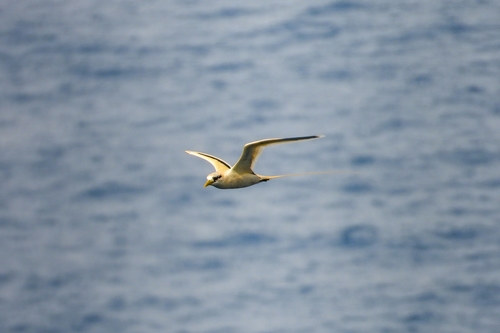 rabo-de-palha-de-bico-laranja
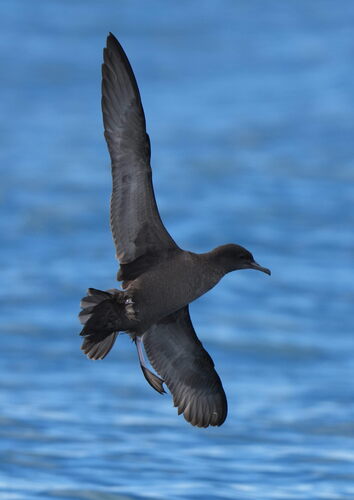 pardela-escura
Em resumo
A marca de campo mais confiável para separar o rabo-de-palha-de-bico-laranja da pardela-escura é a coloração geral: o rabo-de-palha-de-bico-laranja é uma ave marinha de cor branca impressionante, com longas fitas de cauda semelhantes a fitas e uma barra interna da asa preta contrastante, enquanto a pardela-escura é uniformemente marrom escuro a preto-sujo, mostrando apenas um painel prateado na parte inferior da asa em boa luz. Os rabo-de-palha-de-bico-laranja juvenis não têm as longas fitas de cauda e possuem um dorso finamente listrado, mas ainda parecem muito mais claros do que qualquer pardela. Em voo, o rabo-de-palha-de-bico-laranja é flutuante e semelhante a uma andorinha, enquanto a pardela-escura voa com asas rígidas e retas e um voo distinto de "corte" baixo sobre a água. A cor do bico também é diagnóstica a curta distância: amarelo a laranja no rabo-de-palha-de-bico-laranja (verde-amarelo em juvenis), escuro na pardela-escura. Essas duas espécies são extremamente improváveis de serem confundidas em boas condições de visualização, mas vistas distantes ou contra a luz podem causar confusão, especialmente com rabo-de-palha-de-bico-laranja imaturos.
Dicas de identificação
- Cor geral: O rabo-de-palha-de-bico-laranja é predominantemente branco com marcas pretas; a pardela-escura é uniformemente marrom escuro a preto-sujo. Esta é a maneira mais rápida de separá-los a qualquer distância.
- Forma da cauda: Os rabo-de-palha-de-bico-laranja adultos têm fitas de cauda brancas extremamente longas e finas que dobram seu comprimento aparente. Os juvenis não têm fitas, mas ainda possuem uma cauda branca quadrada. A pardela-escura tem uma cauda curta, em forma de cunha, escura, sem fitas em qualquer idade.
- Cor do bico: O rabo-de-palha-de-bico-laranja tem um bico amarelo-laranja brilhante a laranja-vermelho (verde-amarelo em juvenis); o bico da pardela-escura é escuro e esguio. A cor do bico é visível apenas a curta distância.
- Padrão das asas: O rabo-de-palha-de-bico-laranja apresenta uma barra preta ousada na asa interna (todas as idades), contrastando com a asa branca. A pardela-escura é escura por cima, com um painel prateado na parte inferior da asa em boa luz, mas sem barra preta nítida.
- Padrão facial: O rabo-de-palha-de-bico-laranja tem uma máscara ocular preta; o rosto da pardela-escura é uniformemente escuro.
- Estilo de voo: O rabo-de-palha-de-bico-laranja é flutuante, planando e pairando com frequentes mudanças de direção, muitas vezes alto acima da água. A pardela-escura voa baixo com asas rígidas e retas, raramente batendo as asas, e frequentemente se move de lado a lado logo acima das ondas.
- Padrão do dorso (juvenis): Os rabo-de-palha-de-bico-laranja juvenis têm listras finas no dorso, mas permanecem muito mais claros do que qualquer pardela. Os juvenis da pardela-escura são tão escuros quanto os adultos.
- Parte inferior da asa: A pardela-escura mostra um painel prateado central na parte inferior da asa em boa luz; a parte inferior da asa do rabo-de-palha-de-bico-laranja é principalmente branca com uma barra preta.
- Empoleirado/em repouso: O rabo-de-palha-de-bico-laranja raramente é visto sentado na água; se visto, aparece branco e ereto. A pardela-escura frequentemente repousa na água, aparecendo escura e plana.
- Tamanho do grupo: O rabo-de-palha-de-bico-laranja geralmente é visto sozinho ou em pares; a pardela-escura frequentemente em grandes bandos.
- Habitat: O rabo-de-palha-de-bico-laranja é estritamente tropical e oceânico, frequentemente perto de ilhas; a pardela-escura é amplamente distribuída, incluindo águas temperadas e subárticas, e pode ser vista longe da terra.
- Voz: O chamado do rabo-de-palha-de-bico-laranja é um grito alto, raramente ouvido no mar; a pardela-escura é silenciosa no mar, vocal apenas em colônias de reprodução.
- Impressão de tamanho: A pardela-escura é mais robusta com asas mais largas; o rabo-de-palha-de-bico-laranja é esguio e delicado, mas as fitas da cauda podem fazê-lo parecer mais longo.
- Armadilhas: Vistas distantes ou contra a luz podem fazer o rabo-de-palha-de-bico-laranja parecer mais escuro ou a pardela-escura mais clara, mas a presença ou ausência de fitas de cauda e a cor geral do corpo permanecem confiáveis. Rabo-de-palha-de-bico-laranja juvenis sem fitas podem confundir, mas ainda mostram plumagem branca e barra preta na asa.
- Estação: A pardela-escura está presente em águas temperadas durante a migração; o rabo-de-palha-de-bico-laranja está presente durante todo o ano nos trópicos, mas pode vagar.
Tamanho
O rabo-de-palha-de-bico-laranja é overall menor em corpo do que a pardela-escura, mas suas extremas longas penas centrais da cauda podem fazê-lo parecer mais longo (comprimento total 71–80 cm incluindo fitas, envergadura 89–96 cm) [wikipedia]. A pardela-escura é mais robusta, com um comprimento de corpo de 40–51 cm e uma envergadura mais ampla de 94–110 cm [wikipedia]. Sem as fitas da cauda, o rabo-de-palha-de-bico-laranja é notavelmente mais esguio e delicado do que a pardela-escura, que tem uma aparência mais pesada e mais robusta. Em voo, as asas da pardela-escura são mais longas e mais pontudas em relação ao tamanho do corpo.
Plumagem
Os rabo-de-palha-de-bico-laranja juvenis e adultos são predominantemente brancos, com uma máscara ocular preta e uma barra preta ousada na asa interna. Os adultos têm longas fitas de cauda brancas; os juvenis não têm essas fitas, têm um bico verde-amarelo e mostram finas listras no dorso. Em todas as idades, o dorso e as partes inferiores permanecem brancos. A pardela-escura é marrom escuro a preto-sujo em geral em todas as plumagens, com uma faixa prateada ligeiramente mais clara ao longo do centro da parte inferior da asa visível em boa luz. Não há branco no corpo ou na cauda em qualquer idade. O painel prateado da parte inferior da asa da pardela-escura é a única área clara e nunca é tão extensa ou nítida quanto o branco do rabo-de-palha-de-bico-laranja. À distância ou em luz fraca, a pardela-escura pode parecer toda preta, enquanto o rabo-de-palha-de-bico-laranja permanece claro. A barra preta da asa do rabo-de-palha-de-bico-laranja é uma marca nítida e bem definida, não presente na pardela-escura.
Comportamento
O rabo-de-palha-de-bico-laranja tem um voo flutuante, semelhante a uma andorinha, frequentemente pairando ou planando com longas fitas de cauda arrastando atrás, e raramente é visto sentado na água. Ele se alimenta mergulhando de uma altura e é um nadador ruim. A pardela-escura, por outro lado, é quase sempre vista voando baixo sobre a água com asas rígidas e retas, frequentemente se movendo de lado a lado em um movimento característico de 'corte', e frequentemente pousa no mar para descansar ou se alimentar. Seu voo é mais direto e poderoso, assemelhando-se a um pequeno albatroz. O rabo-de-palha-de-bico-laranja é mais provável de ser visto sozinho ou em pares, enquanto a pardela-escura frequentemente ocorre em grandes bandos.
Habitat
O rabo-de-palha-de-bico-laranja é uma espécie tropical, encontrada ao redor de ilhas e águas oceânicas quentes nos oceanos Atlântico tropical, Índico e Pacífico ocidental, às vezes vagando longe de locais de reprodução. Ele se reproduz em ilhas tropicais, frequentemente nidificando em penhascos ou no solo. A pardela-escura se reproduz em ilhas do hemisfério sul, mas migra amplamente, ocorrendo em ambos os hemisférios e frequentemente vista longe da costa em águas temperadas e subárticas. No Atlântico, a pardela-escura é a única pardela grande e toda escura, enquanto o rabo-de-palha-de-bico-laranja é a única ave marinha grande e branca com fitas de cauda em sua área de distribuição.
Voz
O rabo-de-palha-de-bico-laranja emite um alto grito 'keee-keee-krrrt-krrt-krrt' [wikipedia], geralmente ouvido perto de locais de reprodução. A pardela-escura é em sua maioria silenciosa no mar, mas em áreas de reprodução emite altos coos e crocados à noite. No mar, a pardela-escura pode chamar ao competir por alimento, mas geralmente é quieta. A voz é improvável de ser útil para separação no mar.
rabo-de-palha-de-bico-laranja · pardela-escura · Minhas aves difíceis