

White-tailed Tropicbird vs Berta grigia
Phaethon lepturus contro Ardenna grisea
Fai un quiz con White-tailed Tropicbird e Berta grigia
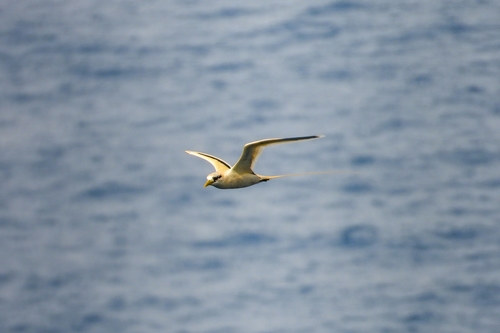 White-tailed Tropicbird
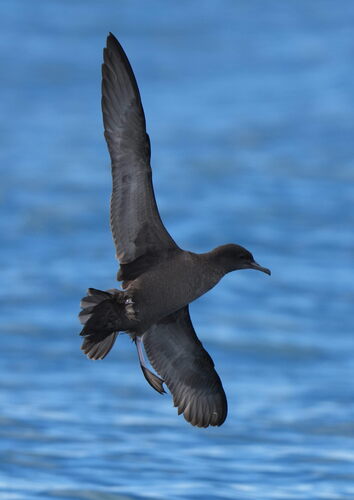 Berta grigia
In breve
Il segno di campo più affidabile per separare il White-tailed Tropicbird dalla Berta grigia è la colorazione generale: il tropicbird è un uccello marino di un bianco sorprendente con lunghe streamers di coda simili a nastri e una barra nera contrastante sulla parte interna dell'ala, mentre la berta grigia è uniformemente marrone scuro fino al nero fuligginoso, mostrando solo un pannello argentato sotto l'ala in buona luce. I tropicbird giovani mancano delle lunghe streamers di coda e hanno un dorso finemente barrato, ma appaiono comunque molto più chiari di qualsiasi berta. In volo, il tropicbird è galleggiante e simile a una sterna, mentre la berta vola con ali rigide e dritte e un volo distintivo "a taglio" basso sull'acqua. Il colore del becco è anche diagnostico a distanza ravvicinata: giallo-arancio nel tropicbird (verde-giallo nei giovani), scuro nella berta. Queste due specie sono estremamente improbabili da confondere in buone condizioni di visione, ma viste distanti o retroilluminate possono causare confusione, specialmente con i tropicbird immaturi.
Consigli di identificazione
- Overall color: Il White-tailed Tropicbird è prevalentemente bianco con marcature nere; la Berta grigia è uniformemente marrone scuro fino al nero fuligginoso. Questo è il modo più veloce per separarli a qualsiasi distanza.
- Tail shape: I tropicbird adulti hanno streamers di coda bianchi, lunghi e sottili, che raddoppiano la loro lunghezza apparente. I giovani mancano di streamers ma hanno comunque una coda bianca quadrata. La Berta grigia ha una coda corta, a forma di cuneo, scura, senza streamers a qualsiasi età.
- Bill color: Il tropicbird ha un becco di un brillante giallo-arancio fino all'arancio-rosso (verde-giallo nei giovani); il becco della berta è scuro e snello. Il colore del becco è visibile solo a distanza ravvicinata.
- Wing pattern: Il tropicbird mostra una barra nera audace sulla parte interna dell'ala (tutte le età), in contrasto con l'ala bianca. La berta è scura sopra, con un pannello argentato sotto l'ala in buona luce ma senza una barra nera netta.
- Facial pattern: Il tropicbird ha una maschera nera attorno all'occhio; il viso della berta è uniformemente scuro.
- Flight style: Il tropicbird è galleggiante, planando e sorvolando con frequenti cambi di direzione, spesso in alto sopra l'acqua. La berta vola bassa con ali rigide e dritte, raramente battendo le ali, e spesso si muove da un lato all'altro appena sopra le onde.
- Back pattern (juveniles): I tropicbird giovani hanno una fine barratura sul dorso ma rimangono molto più chiari di qualsiasi berta. I giovani della berta sono scuri come gli adulti.
- Underwing: La berta mostra un pannello argentato centrale sotto l'ala in buona luce; il sottoala del tropicbird è per lo più bianco con una barra nera.
- Perched/at rest: Il tropicbird è raramente visto seduto sull'acqua; se visto, appare bianco e eretto. La berta spesso riposa sull'acqua, apparendo scura e piatta.
- Group size: Il tropicbird è solitamente visto singolarmente o in coppie; la berta spesso in grandi stormi.
- Habitat: Il tropicbird è strettamente tropicale e oceanico, spesso vicino a isole; la berta è diffusa, includendo acque temperate e subartiche, e può essere vista lontano dalla terra.
- Voice: Il richiamo del tropicbird è un alto urlo, raramente sentito in mare; la berta è silenziosa in mare, vocale solo nelle colonie di riproduzione.
- Size impression: La berta è più robusta con ali più larghe; il tropicbird è snello e delicato, ma le streamers di coda possono farlo apparire più lungo.
- Pitfalls: Viste distanti o retroilluminate possono far apparire il tropicbird più scuro o la berta più chiara, ma la presenza o l'assenza di streamers di coda e il colore generale del corpo rimangono affidabili. I tropicbird giovani senza streamers possono confondere, ma mostrano comunque piumaggio bianco e barra nera sull'ala.
- Season: La berta è presente nelle acque temperate durante la migrazione; il tropicbird è presente tutto l'anno nei tropici, ma può vagare.
Taglia
Il White-tailed Tropicbird è complessivamente più piccolo nel corpo rispetto alla Berta grigia, ma le sue estremamente lunghe penne centrali della coda possono farlo apparire più lungo (lunghezza totale 71–80 cm comprese le streamers, apertura alare 89–96 cm) [wikipedia]. La Berta grigia è più robusta, con una lunghezza del corpo di 40–51 cm e un'apertura alare più ampia di 94–110 cm [wikipedia]. Senza le streamers di coda, il tropicbird è visibilmente più snello e delicato rispetto alla berta, che ha un aspetto più pesante e a petto a botte. In volo, le ali della berta sono più lunghe e più appuntite rispetto alla dimensione del corpo.
Piumaggio
I tropicbird giovani e adulti sono prevalentemente bianchi, con una maschera nera attorno all'occhio e una barra nera audace sulla parte interna dell'ala. Gli adulti hanno lunghe streamers di coda bianche; i giovani mancano di queste streamers, hanno un becco verde-giallo e mostrano una fine barratura sul dorso. In tutte le età, il dorso e le parti inferiori rimangono bianchi. La Berta grigia è di un marrone cioccolato scuro fino al nero fuligginoso in tutte le piumature, con una striscia argentata leggermente più chiara lungo il centro del sottoala visibile in buona luce. Non c'è bianco sul corpo o sulla coda a qualsiasi età. Il pannello argentato sotto l'ala della berta è l'unica area chiara e non è mai così estesa o così netta come il bianco del tropicbird. A distanza o in scarsa luce, la berta può apparire completamente nera, mentre il tropicbird rimane chiaro. La barra nera dell'ala del tropicbird è un segno netto e ben definito, non presente nella berta.
Comportamento
Il White-tailed Tropicbird ha un volo galleggiante, simile a una sterna, spesso planando o volando con lunghe streamers di coda che seguono dietro, ed è raramente visto seduto sull'acqua. Si nutre tuffandosi da un'altezza ed è un nuotatore scarso. La Berta grigia, al contrario, è quasi sempre vista volare bassa sull'acqua con ali rigide e dritte, spesso inclinando da un lato all'altro in un caratteristico movimento 'a taglio', e frequentemente atterra sul mare per riposare o nutrirsi. Il suo volo è più diretto e potente, somigliando a un piccolo albatros. Il tropicbird è più probabile essere visto singolarmente o in coppie, mentre la berta si trova spesso in grandi stormi.
Habitat
Il White-tailed Tropicbird è una specie tropicale, trovata intorno a isole e acque oceaniche calde negli oceani Atlantico tropicale, Indiano e Pacifico occidentale, a volte vagando lontano dai siti di riproduzione. Si riproduce su isole tropicali, spesso nidificando su scogliere o a terra. La Berta grigia si riproduce su isole dell'emisfero australe ma migra ampiamente, presente in entrambi gli emisferi e spesso vista lontano dalla costa in acque temperate e subartiche. Nell'Atlantico, la berta è l'unica berta grande e completamente scura, mentre il tropicbird è l'unico grande uccello marino bianco con streamers di coda nel suo areale.
Voce
Il White-tailed Tropicbird emette un alto urlo 'keee-keee-krrrt-krrt-krrt' [wikipedia], solitamente sentito vicino ai siti di riproduzione. La Berta grigia è per lo più silenziosa in mare, ma nei luoghi di riproduzione emette forti coo e grugniti di notte. In mare, la berta può chiamare quando compete per il cibo, ma è generalmente silenziosa. La voce è improbabile che sia utile per la separazione in mare.
White-tailed Tropicbird · Berta grigia · I miei uccelli difficili