

Motmot

シラオネッタイチョウ 対 ハイイロミズナギドリ

Phaethon lepturus 対 Ardenna grisea

シラオネッタイチョウとハイイロミズナギドリのクイズ
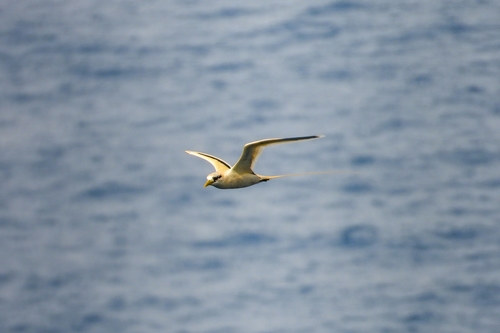
シラオネッタイチョウ (Phaethon lepturus) シラオネッタイチョウ
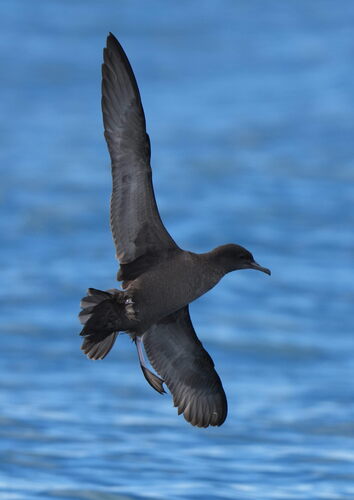
ハイイロミズナギドリ (Ardenna grisea) ハイイロミズナギドリ

メディア

読み込み中…

要点

ホワイトテールトロピックバードとハイイロミズナギドリを区別する最も信頼できるフィールドマークは全体の色合いです:トロピックバードは長くリボンのような尾羽と対照的な黒い内翼のバーを持つ目を引く白い海鳥であり、ハイイロミズナギドリは均一に暗褐色から黒ずんでおり、良い光の中では銀色の下翼パネルのみを示します。幼鳥のトロピックバードは長い尾羽を欠き、細かい縞模様の背中を持っていますが、いずれにしてもハイイロミズナギドリよりもはるかに明るく見えます。飛行中、トロピックバードは浮遊感があり、トンビのようであり、一方ハイイロミズナギドリは硬直したまっすぐな翼で水面近くを特徴的な「シアリング」飛行で力強く飛びます。嘴の色も近距離での診断に役立ちます:トロピックバードは黄色からオレンジ色(幼鳥は緑黄色)、ハイイロミズナギドリは暗色です。これらの2種は良好な観察条件下では混同されることは非常に少ないですが、遠くからの視界や逆光の条件では混乱を招くことがあります。特に未熟なトロピックバードではそうです。

識別のコツ

  1. Overall color: ホワイトテールトロピックバードは主に白で黒いマーキングがあり、ハイイロミズナギドリは均一に暗褐色から黒ずんでいます。これは、どんな距離でも彼らを区別する最も早い方法です。
  2. Tail shape: 成鳥のトロピックバードは非常に長く細い白い尾羽を持ち、その見かけの長さを倍増させます。幼鳥は尾羽を欠きますが、依然として四角い白い尾を持っています。ハイイロミズナギドリは、どの年齢でも尾羽がない短いくさび形の暗い尾を持っています。
  3. Bill color: トロピックバードは明るいオレンジ黄色からオレンジ赤の嘴を持ち(幼鳥は緑黄色)、ハイイロミズナギドリの嘴は暗く細いです。嘴の色は近距離でのみ確認できます。
  4. Wing pattern: トロピックバードは内翼に太い黒いバーを示し(すべての年齢)、白い翼と対照的です。ハイイロミズナギドリは上面が暗く、良い光の中では銀色の下翼パネルがありますが、鋭い黒いバーはありません。
  5. Facial pattern: トロピックバードは黒い目のマスクを持ち、ハイイロミズナギドリの顔は均一に暗いです。
  6. Flight style: トロピックバードは浮遊感があり、方向転換を頻繁に行いながら高く水面上を滑空します。ハイイロミズナギドリは硬直したまっすぐな翼で低く飛び、めったに羽ばたかず、波のすぐ上で左右にシアリングします。
  7. Back pattern (juveniles): 幼鳥のトロピックバードは背中に細かい縞模様がありますが、いずれにしてもハイイロミズナギドリよりもはるかに明るいです。ハイイロミズナギドリの幼鳥は成鳥と同じくらい暗いです。
  8. Underwing: ハイイロミズナギドリは良い光の中で銀色の中央下翼パネルを示し、トロピックバードの下翼は主に白で黒いバーがあります。
  9. Perched/at rest: トロピックバードは水面に座っているのはめったに見られず、見られた場合は白く直立しています。ハイイロミズナギドリは水面に休んでいることが多く、暗く平らに見えます。
  10. Group size: トロピックバードは通常単独またはペアで見られ、ハイイロミズナギドリはしばしば大きな群れで見られます。
  11. Habitat: トロピックバードは厳密に熱帯性で海洋性であり、しばしば島の近くに見られます。ハイイロミズナギドリは広範囲に分布し、温帯および亜北極の水域を含み、陸から遠く離れて見られることがあります。
  12. Voice: トロピックバードの鳴き声は高い悲鳴で、海ではめったに聞かれません。ハイイロミズナギドリは海では静かで、繁殖コロニーでのみ声を発します。
  13. Size impression: ハイイロミズナギドリはよりがっしりしており、翼が広いです。トロピックバードは細くて繊細ですが、尾羽があることで長く見えることがあります。
  14. Pitfalls: 遠くからの視界や逆光の条件ではトロピックバードが暗く見えたり、ハイイロミズナギドリが明るく見えたりすることがありますが、尾羽の有無と全体の体色は信頼できるままです。尾羽のない幼鳥のトロピックバードは混乱を招くことがありますが、依然として白い羽毛と黒い翼のバーを示します。
  15. Season: ハイイロミズナギドリは移動中に温帯の水域に現れ、トロピックバードは熱帯で一年中見られますが、さまざまに移動することがあります。

大きさ

ホワイトテールトロピックバードは全体的にハイイロミズナギドリよりも体が小さいですが、非常に長い中央の尾羽があるため、長く見えることがあります(尾羽を含む全長71〜80 cm、翼幅89〜96 cm)[wikipedia]。ハイイロミズナギドリはより頑丈で、体長は40〜51 cm、翼幅は94〜110 cmです[wikipedia]。尾羽がない場合、トロピックバードはハイイロミズナギドリよりも明らかに細くて繊細です。飛行中、ハイイロミズナギドリの翼は体のサイズに対して長く、尖っています。

羽色

幼鳥と成鳥のホワイトテールトロピックバードは主に白で、黒い目のマスクと内翼に太い黒いバーがあります。成鳥は長い白い尾羽を持ち、幼鳥はこれらの尾羽を欠き、緑黄色の嘴を持ち、背中に細かい縞模様を示します。すべての年齢において、背中と腹部は白のままです。ハイイロミズナギドリはすべての羽色において暗いチョコレート色から黒ずんでおり、良い光の中では下翼の中央にわずかに明るい銀色のストリップが見えます。どの年齢でも体や尾に白はありません。ハイイロミズナギドリの下翼の銀色のパネルは唯一の淡い部分であり、トロピックバードの白ほど広範囲でも鮮明でもありません。遠くからや光が悪いとき、ハイイロミズナギドリは全体が黒く見えることがありますが、トロピックバードは明るいままです。トロピックバードの黒い翼のバーは鋭く、明確なマークであり、ハイイロミズナギドリには存在しません。

行動

ホワイトテールトロピックバードは浮遊感のあるトンビのような飛行を持ち、長い尾羽を引きずりながら滑空したり、浮かんだりすることが多く、水面に座っているのはめったに見られません。高いところから急降下して餌を取り、泳ぎは得意ではありません。対照的に、ハイイロミズナギドリはほぼ常に水面近くを飛んでおり、硬直したまっすぐな翼で、特徴的な「シアリング」動作で左右に揺れながら飛び、頻繁に海に着陸して休んだり餌を取ったりします。その飛行はより直接的で力強く、小型のアルバトロスに似ています。トロピックバードは単独またはペアで見られることが多いのに対し、ハイイロミズナギドリはしばしば大きな群れで見られます。

生息環境

ホワイトテールトロピックバードは熱帯性の種で、熱帯大西洋、インド洋、西太平洋の島々や温かい海洋水域の周りに見られ、繁殖地から遠く離れることもあります。熱帯の島で繁殖し、しばしば崖や地面に巣を作ります。ハイイロミズナギドリは南半球の島で繁殖しますが、広く移動し、両半球に生息し、温帯および亜北極の水域でしばしば沖合で見られます。大西洋では、ハイイロミズナギドリは唯一の大型の全暗色のミズナギドリであり、トロピックバードはその範囲内で尾羽のある唯一の大型の白い海鳥です。

声

ホワイトテールトロピックバードは高い悲鳴の「キィーキィークリートクリートクリート」を発し、通常は繁殖地の近くで聞かれます。ハイイロミズナギドリは海ではほとんど静かですが、繁殖地では夜に大きなクークーやクラックを発します。海では、ハイイロミズナギドリは食物を競うときに鳴くことがありますが、一般的には静かです。声は海での区別にはあまり役立たないでしょう。

より良い説明を送る

比較と同じ項目を使ってください。文章はすぐに公開されます。

The most reliable field mark to separate White-tailed Tropicbird from Sooty Shearwater is overall coloration: the tropicbird is a strikingly white seabird with long, ribbon-like tail streamers and a contrasting black inner wing bar, while the sooty shearwater is uniformly dark brown to sooty-black, showing only a silvery underwing panel in good light. Juvenile tropicbirds lack the long tail streamers and have a finely barred back, but still appear much paler than any shearwater. In flight, the tropicbird is buoyant and tern-like, whereas the shearwater powers along with stiff, straight wings and a distinctive "shearing" flight low over the water. Bill color is also diagnostic at close range: yellow to orange in tropicbird (green-yellow in juveniles), dark in shearwater. These two species are extremely unlikely to be confused in good viewing conditions, but distant or backlit views can cause confusion, especially with immature tropicbirds.

  1. Overall color: White-tailed Tropicbird is predominantly white with black markings; Sooty Shearwater is uniformly dark brown to sooty-black. This is the fastest way to separate them at any distance.
  2. Tail shape: Adult tropicbirds have extremely long, thin, white tail streamers that double their apparent length. Juveniles lack streamers but still have a square white tail. Sooty Shearwater has a short, wedge-shaped, dark tail with no streamers at any age.
  3. Bill color: Tropicbird has a bright orange-yellow to orange-red bill (green-yellow in juveniles); shearwater's bill is dark and slender. Bill color is visible only at close range.
  4. Wing pattern: Tropicbird shows a bold black bar on the inner wing (all ages), contrasting with the white wing. Shearwater is dark above, with a silvery underwing panel in good light but no sharp black bar.
  5. Facial pattern: Tropicbird has a black eye-mask; shearwater's face is uniformly dark.
  6. Flight style: Tropicbird is buoyant, gliding and soaring with frequent changes of direction, often high above the water. Shearwater flies low with stiff, straight wings, rarely flapping, and often shears side to side just above the waves.
  7. Back pattern (juveniles): Juvenile tropicbirds have fine barring on the back but remain much paler than any shearwater. Shearwater juveniles are as dark as adults.
  8. Underwing: Shearwater shows a silvery central underwing panel in good light; tropicbird's underwing is mostly white with a black bar.
  9. Perched/at rest: Tropicbird is rarely seen sitting on the water; if seen, appears white and upright. Shearwater often rests on water, appearing dark and flat.
  10. Group size: Tropicbird usually seen singly or in pairs; shearwater often in large flocks.
  11. Habitat: Tropicbird is strictly tropical and oceanic, often near islands; shearwater is widespread, including temperate and subarctic waters, and may be seen far from land.
  12. Voice: Tropicbird's call is a high scream, rarely heard at sea; shearwater is silent at sea, vocal at breeding colonies only.
  13. Size impression: Shearwater is bulkier with broader wings; tropicbird is slender and delicate, but tail streamers can make it appear longer.
  14. Pitfalls: Distant or backlit views can make tropicbird appear darker or shearwater paler, but the presence or absence of tail streamers and overall body color remain reliable. Juvenile tropicbirds without streamers may confuse, but still show white plumage and black wing bar.
  15. Season: Shearwater is present in temperate waters during migration; tropicbird is present year-round in tropics, but may wander.

White-tailed Tropicbird is overall smaller in body than Sooty Shearwater, but its extremely long central tail feathers can make it appear longer (total length 71–80 cm including streamers, wingspan 89–96 cm) [wikipedia]. Sooty Shearwater is more robust, with a body length of 40–51 cm and a broader wingspan of 94–110 cm [wikipedia]. Without the tail streamers, the tropicbird is noticeably more slender and delicate than the shearwater, which has a heavier, more barrel-chested look. In flight, the shearwater's wings are longer and more pointed relative to body size.

Juvenile and adult White-tailed Tropicbirds are predominantly white, with a black eye-mask and a bold black bar on the inner wing. Adults have long white tail streamers; juveniles lack these streamers, have a green-yellow bill, and show fine barring on the back. In all ages, the back and underparts remain white. Sooty Shearwater is dark chocolate-brown to sooty-black overall in all plumages, with a slightly paler silvery strip along the center of the underwing visible in good light. There is no white on the body or tail at any age. The underwing silvery panel of the shearwater is the only pale area, and is never as extensive or as crisp as the white of the tropicbird. At distance or in poor light, the shearwater can appear all-black, while the tropicbird remains pale. The tropicbird's black wing bar is a sharp, well-defined mark, not present in the shearwater.

White-tailed Tropicbird has a buoyant, tern-like flight, often soaring or gliding with long tail streamers trailing behind, and is rarely seen sitting on the water. It feeds by plunging from height and is a poor swimmer. Sooty Shearwater, by contrast, is almost always seen flying low over the water with stiff, straight wings, often dipping from side to side in a characteristic 'shearing' motion, and frequently lands on the sea to rest or feed. Its flight is more direct and powerful, resembling a small albatross. The tropicbird is more likely to be seen singly or in pairs, while the shearwater often occurs in large flocks.

White-tailed Tropicbird is a tropical species, found around islands and warm oceanic waters in the tropical Atlantic, Indian, and western Pacific Oceans, sometimes wandering far from breeding sites. It breeds on tropical islands, often nesting on cliffs or ground. Sooty Shearwater breeds on southern hemisphere islands but migrates widely, occurring in both hemispheres and often seen far offshore in temperate and subarctic waters. In the Atlantic, the shearwater is the only large, all-dark shearwater, while the tropicbird is the only large, white seabird with tail streamers in its range.

White-tailed Tropicbird gives a high, screamed 'keee-keee-krrrt-krrt-krrt' [wikipedia], usually heard near breeding sites. Sooty Shearwater is mostly silent at sea, but on breeding grounds gives loud coos and croaks at night. At sea, the shearwater may call when competing for food, but is generally quiet. Voice is unlikely to be useful for separation at sea.

変更を破棄しますか?

保存していない編集があります。今離れると失われます。

シラオネッタイチョウ · ハイイロミズナギドリ · 苦手な鳥