

Rabijunco Menor vs Pardela Sombría
Phaethon lepturus frente a Ardenna grisea
Juega un quiz con Rabijunco Menor y Pardela Sombría
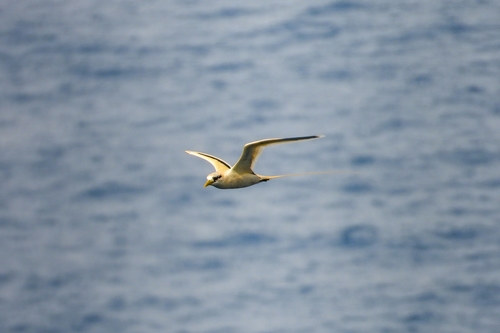 Rabijunco Menor
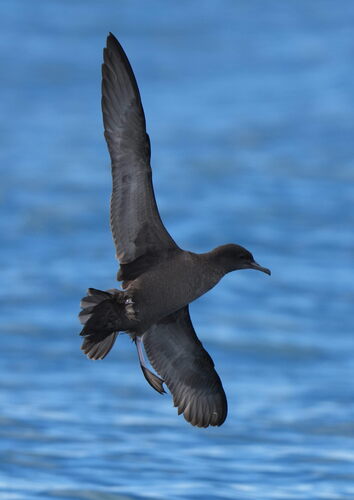 Pardela Sombría
En breve
La marca de campo más confiable para separar el Rabijunco Menor de la Pardela Sombría es la coloración general: el rabijunco es un ave marina notablemente blanca con largas cintas de cola en forma de cinta y una barra negra interna en el ala contrastante, mientras que la pardela es uniformemente marrón oscuro a negro sucio, mostrando solo un panel plateado en el ala inferior en buena luz. Los rabijuncos juveniles carecen de las largas cintas de cola y tienen un dorso finamente barrado, pero aún parecen mucho más pálidos que cualquier pardela. En vuelo, el rabijunco es ligero y similar a una gaviota, mientras que la pardela vuela con alas rígidas y rectas y un vuelo distintivo de "corte" bajo sobre el agua. El color del pico también es diagnóstico a corta distancia: amarillo a naranja en el rabijunco (verde-amarillo en juveniles), oscuro en la pardela. Estas dos especies son extremadamente poco probables de confundirse en buenas condiciones de observación, pero las vistas distantes o contraluz pueden causar confusión, especialmente con rabijuncos inmaduros.
Consejos de identificación
- Color general: El Rabijunco Menor es predominantemente blanco con marcas negras; la Pardela Sombría es uniformemente marrón oscuro a negro sucio. Esta es la forma más rápida de separarlos a cualquier distancia.
- Forma de la cola: Los rabijuncos adultos tienen cintas de cola extremadamente largas y delgadas que duplican su longitud aparente. Los juveniles carecen de cintas pero aún tienen una cola blanca cuadrada. La Pardela Sombría tiene una cola corta, en forma de cuña, oscura, sin cintas a ninguna edad.
- Color del pico: El rabijunco tiene un pico de color amarillo-naranja a rojo-naranja (verde-amarillo en juveniles); el pico de la pardela es oscuro y delgado. El color del pico es visible solo a corta distancia.
- Patrón del ala: El rabijunco muestra una barra negra audaz en el ala interna (todas las edades), contrastando con el ala blanca. La pardela es oscura por encima, con un panel plateado en el ala inferior en buena luz pero sin barra negra nítida.
- Patrón facial: El rabijunco tiene una máscara ocular negra; la cara de la pardela es uniformemente oscura.
- Estilo de vuelo: El rabijunco es ligero, planeando y surcando con cambios frecuentes de dirección, a menudo alto sobre el agua. La pardela vuela bajo con alas rígidas y rectas, raramente batiendo, y a menudo corta de lado a lado justo por encima de las olas.
- Patrón del dorso (juveniles): Los rabijuncos juveniles tienen un barrado fino en el dorso pero permanecen mucho más pálidos que cualquier pardela. Los juveniles de pardela son tan oscuros como los adultos.
- Bajo el ala: La pardela muestra un panel plateado central en el ala inferior en buena luz; el ala inferior del rabijunco es mayormente blanca con una barra negra.
- Posado/en reposo: El rabijunco rara vez se ve sentado sobre el agua; si se ve, aparece blanco y erguido. La pardela a menudo reposa sobre el agua, apareciendo oscura y plana.
- Tamaño del grupo: El rabijunco generalmente se ve solo o en parejas; la pardela a menudo en grandes bandadas.
- Hábitat: El rabijunco es estrictamente tropical y oceánico, a menudo cerca de islas; la pardela es de amplia distribución, incluyendo aguas templadas y subárticas, y puede verse lejos de la tierra.
- Voz: El llamado del rabijunco es un grito agudo, raramente escuchado en el mar; la pardela es silenciosa en el mar, vocal solo en colonias de cría.
- Impresión de tamaño: La pardela es más robusta con alas más anchas; el rabijunco es esbelto y delicado, pero las cintas de la cola pueden hacer que parezca más largo.
- Trampas: Las vistas distantes o contraluz pueden hacer que el rabijunco parezca más oscuro o la pardela más pálida, pero la presencia o ausencia de cintas de cola y el color general del cuerpo siguen siendo confiables. Los rabijuncos juveniles sin cintas pueden confundir, pero aún muestran plumaje blanco y barra negra en el ala.
- Temporada: La pardela está presente en aguas templadas durante la migración; el rabijunco está presente todo el año en los trópicos, pero puede vagar.
Tamaño
El Rabijunco Menor es en general más pequeño en cuerpo que la Pardela Sombría, pero sus extremadamente largas plumas centrales de la cola pueden hacer que parezca más largo (longitud total de 71–80 cm incluyendo cintas, envergadura de 89–96 cm) [wikipedia]. La Pardela Sombría es más robusta, con una longitud de cuerpo de 40–51 cm y una envergadura más amplia de 94–110 cm [wikipedia]. Sin las cintas de la cola, el rabijunco es notablemente más esbelto y delicado que la pardela, que tiene un aspecto más pesado y de pecho barril. En vuelo, las alas de la pardela son más largas y más puntiagudas en relación con el tamaño del cuerpo.
Plumaje
Los rabijuncos Menores juveniles y adultos son predominantemente blancos, con una máscara ocular negra y una barra negra audaz en el ala interna. Los adultos tienen largas cintas de cola blancas; los juveniles carecen de estas cintas, tienen un pico verde-amarillo y muestran un barrado fino en el dorso. En todas las edades, el dorso y las partes inferiores permanecen blancos. La Pardela Sombría es de color marrón chocolate oscuro a negro sucio en general en todos los plumajes, con una franja plateada ligeramente más clara a lo largo del centro del ala inferior visible en buena luz. No hay blanco en el cuerpo o la cola a ninguna edad. El panel plateado del ala inferior de la pardela es la única área pálida, y nunca es tan extensa o tan nítida como el blanco del rabijunco. A distancia o en mala luz, la pardela puede parecer completamente negra, mientras que el rabijunco permanece pálido. La barra negra del ala del rabijunco es una marca nítida y bien definida, no presente en la pardela.
Comportamiento
El Rabijunco Menor tiene un vuelo ligero, similar al de una gaviota, a menudo surcando o planeando con largas cintas de cola que se arrastran detrás, y rara vez se ve sentado sobre el agua. Se alimenta zambulléndose desde altura y es un nadador pobre. La Pardela Sombría, en contraste, casi siempre se ve volando bajo sobre el agua con alas rígidas y rectas, a menudo inclinándose de lado a lado en un movimiento característico de 'corte', y frecuentemente aterriza en el mar para descansar o alimentarse. Su vuelo es más directo y poderoso, asemejándose a un pequeño albatros. El rabijunco es más probable que se vea solo o en parejas, mientras que la pardela a menudo se encuentra en grandes bandadas.
Hábitat
El Rabijunco Menor es una especie tropical, que se encuentra alrededor de islas y aguas oceánicas cálidas en los océanos Atlántico, Índico y Pacífico occidental tropicales, a veces vagando lejos de los sitios de cría. Cría en islas tropicales, a menudo anidando en acantilados o en el suelo. La Pardela Sombría cría en islas del hemisferio sur pero migra ampliamente, ocurriendo en ambos hemisferios y a menudo vista lejos de la costa en aguas templadas y subárticas. En el Atlántico, la pardela es la única pardela grande y completamente oscura, mientras que el rabijunco es la única ave marina grande y blanca con cintas de cola en su rango.
Voz
El Rabijunco Menor emite un grito agudo 'keee-keee-krrrt-krrt-krrt' [wikipedia], generalmente escuchado cerca de los sitios de cría. La Pardela Sombría es mayormente silenciosa en el mar, pero en los terrenos de cría emite fuertes arrullos y croaks por la noche. En el mar, la pardela puede llamar cuando compite por comida, pero generalmente es silenciosa. La voz es poco probable que sea útil para la separación en el mar.