

white-eared hummingbird vs xantus's hummingbird
Basilinna leucotis versus Basilinna xantusii
Jogue um quiz com white-eared hummingbird e xantus's hummingbird
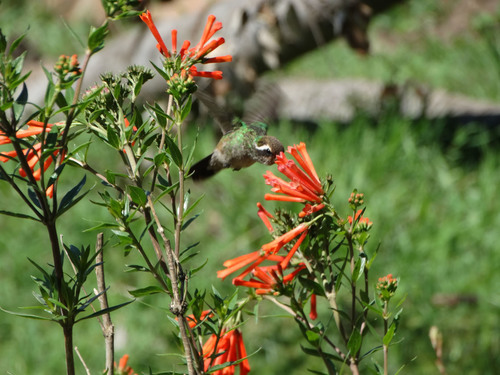 white-eared hummingbird
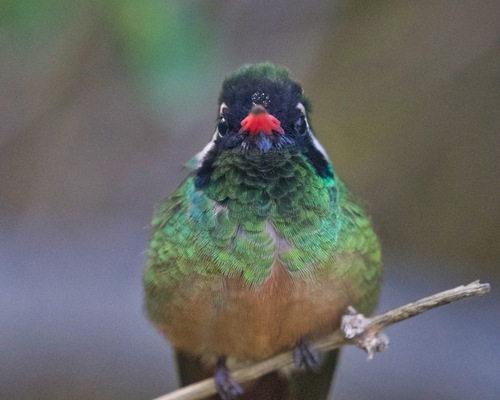 xantus's hummingbird
Em resumo
A marca de campo mais confiável entre o white-eared hummingbird e o xantus's hummingbird é a cor e o padrão das partes inferiores e da cauda: o white-eared mostra principalmente partes inferiores cinzentas a esverdeadas com manchas bronze ou verdes, enquanto o xantus's tem partes inferiores canela ricas e uma cauda ruiva. Ambas as espécies têm uma faixa branca ousada atrás do olho e forma de bico semelhante, mas a cor da coroa, da garganta e da cauda são fundamentais. Pássaros imaturos e fêmeas podem ser especialmente complicados, mas a atenção cuidadosa à cor das partes inferiores e ao padrão da cauda geralmente resolve a confusão. A distribuição também é uma pista forte: o xantus's é restrito à Baja California, enquanto o white-eared é encontrado do sudoeste dos EUA até a Nicarágua.
Dicas de identificação
- A cor das partes inferiores é a marca de campo mais útil: O xantus's hummingbird sempre mostra partes inferiores canela pálidas a médias (incluindo garganta e coberturas da cauda) em ambos os sexos e todas as idades. O white-eared hummingbird tem partes inferiores cinzentas a cinza-brancas com manchas bronze ou verdes, nunca canela.
- Cor e padrão da cauda: O xantus's tem uma cauda ruivo-castanha com bordas verdes nas penas centrais e pontas brancas finas nas penas externas (fêmeas). A cauda do white-eared é verde-bronze a preto-bronze com pontas verdes, sem tons ruivos ou castanhos.
- Coroa e testa: Os machos do white-eared têm uma testa metálica violeta ou azul-violeta e coroa preta opaca; as fêmeas têm uma coroa marrom escura. Os machos do xantus's têm uma coroa verde dourada a verde esmeralda e nuca; as fêmeas têm uma testa marrom opaca, mas ainda mostram partes superiores verde dourado.
- Cor da garganta (machos): Os machos do white-eared têm um queixo azul-violeta e garganta superior, com garganta inferior verde esmeralda metálica. Os machos do xantus's têm um queixo preto e garganta verde esmeralda iridescente, mas o queixo preto é mais extenso e contrasta com as partes inferiores canela.
- Padrão facial: Ambas as espécies têm uma faixa branca ousada atrás do olho, mas o rosto do xantus's é preto (macho) ou marrom escuro (fêmea) com uma faixa buff pálida, enquanto o rosto do white-eared é principalmente preto com uma ampla faixa branca. Isso é semelhante, então nem sempre é confiável.
- Cor do bico: Machos de ambas as espécies têm um bico vermelho com uma ponta preta, mas as fêmeas do white-eared têm um bico principalmente escuro com um pouco de vermelho/laranja na base, enquanto as fêmeas do xantus's têm uma maxila preta com uma base rosada e uma mandíbula rosada com ponta preta. Isso é sutil e nem sempre visível em campo.
- Cor da flanco: O xantus's mostra manchas verdes nos flancos sobre canela, enquanto o white-eared tem flancos verde-bronze sobre partes inferiores cinzentas.
- Coberturas da cauda superior: Ambas as espécies têm bordas ruivas nas coberturas da cauda superior, mas o xantus's é mais pronunciado.
- Coberturas da cauda inferior: As coberturas da cauda inferior do xantus's são canela pálido; as do white-eared são marrom cinzento com um leve brilho bronze (macho) ou cinza com margens esbranquiçadas (fêmea).
- Penas centrais da cauda: As fêmeas do xantus's têm penas centrais da cauda verde dourado com um eixo ruivo; as penas centrais da cauda do white-eared são verde-bronze brilhante sem eixo ruivo.
- Distribuição: Se visto fora da Baja California, exclua o xantus's. Se na Baja, o white-eared não é esperado.
- Armadilhas de sexo/idade: Fêmeas e imaturos de ambas as espécies são mais apagados, mas ainda mostram as diferenças nas partes inferiores e na cauda; cuidado com a iluminação que pode obscurecer os tons canela no xantus's.
- Sem diferenças distintivas de padrão de voo ou asa: Ambas as espécies não têm marcas de asa juvenil ou imatura únicas.
- Tamanho e estrutura: Ambas são semelhantes em tamanho e forma; não confie nisso para separação.
- Contexto de habitat: Em jardins ou bordas de florestas na Baja, espere o xantus's; em florestas montanas do México continental ou mais ao norte/sul, espere o white-eared.
Tamanho
Ambas as espécies são muito semelhantes em tamanho e massa, com o white-eared hummingbird medindo 9–10 cm e o xantus's hummingbird medindo 8.5–9.5 cm de comprimento. Machos e fêmeas de ambas as espécies pesam cerca de 3.2–3.6 g. Não há diferença de tamanho significativa em campo, embora o xantus's possa parecer ligeiramente mais curto e robusto devido à sua cor mais rica das partes inferiores e forma da cauda. O comprimento e a retidão do bico também são muito semelhantes.
Plumagem
-
Juvenil/Imaturo/Primeiro ano: Nenhuma diferença específica de padrão de asa ou voo relacionada à idade é descrita para ambas as espécies; ambas carecem de painéis de asa juvenil distintivos ou contrastes na borda traseira. Concentre-se em vez disso na coloração do corpo e da cauda em todas as idades.
-
Machos adultos: Os machos do white-eared têm uma testa metálica violeta ou azul-violeta, rosto preto e uma ampla faixa branca atrás do olho. Seu queixo e garganta superior são azul-violeta, com garganta inferior verde esmeralda metálica, e o peito/flancos são bronze a verde-bronze com um centro cinza-branco. A cauda é principalmente verde-bronze a preto-bronze com pontas verdes. Os machos do xantus's têm uma coroa dourada a verde esmeralda e partes superiores, testa e queixo pretos, uma faixa branca pós-ocular igualmente ousada e uma garganta verde esmeralda iridescente. Suas partes inferiores são canela com manchas verdes nos flancos, e a cauda é ruivo-castanha com bordas verdes nas penas centrais.
-
Fêmeas adultas: As fêmeas do white-eared são mais apagadas, com uma coroa marrom escura, partes inferiores principalmente cinzentas com manchas verdes metálicas e uma cauda com pontas cinza-acastanhadas. As fêmeas do xantus's têm uma testa marrom opaca, partes superiores verde dourado e partes inferiores e coberturas da cauda canela pálidas a médias. Sua cauda é verde dourado centralmente com eixos ruivos e penas externas que são ruivas escuras com faixas pretas/verde bronze e pontas brancas finas.
-
Contraste chave: O white-eared nunca mostra as extensas partes inferiores canela e cauda ruiva do xantus's; o xantus's nunca mostra as partes inferiores principalmente cinzentas ou manchadas de verde e cauda verde-bronze do white-eared.
Comportamento
Ambas as espécies forrageiam por néctar em uma variedade de flores e arbustos, geralmente nos níveis baixos a médios da vegetação. O white-eared hummingbird é notavelmente territorial, defendendo áreas de alimentação mesmo contra beija-flores maiores. Os movimentos do xantus's hummingbird são menos bem documentados, mas pode se mover localmente em resposta a plantas em flor. No campo, seu comportamento é semelhante e não é diagnosticável de forma confiável.
Habitat
O white-eared hummingbird é encontrado do sudoeste dos EUA ao sul através do México até a Nicarágua, preferindo florestas montanas, bordas e clareiras arbustivas. O xantus's hummingbird é endêmico da Península da Baja California, reproduzindo-se em florestas montanas, mas também descendo para elevações mais baixas após a nidificação. Se observado fora da Baja California, o pássaro quase certamente não é um xantus's. Ambas as espécies podem visitar jardins e bordas, mas suas distribuições não se sobrepõem.
white-eared hummingbird · xantus's hummingbird · Minhas aves difíceis