

white-breasted guineafowl vs eastern crested guineafowl
Agelastes meleagrides versus Guttera pucherani
Jogue um quiz com white-breasted guineafowl e eastern crested guineafowl
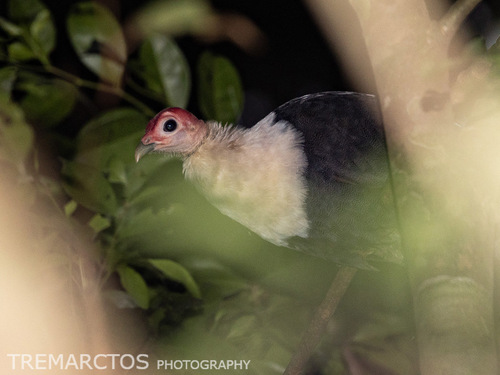 white-breasted guineafowl
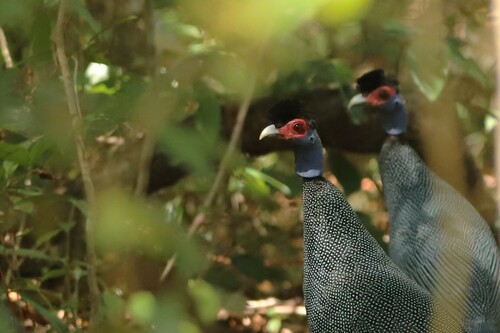 eastern crested guineafowl
Em resumo
A marca de campo mais confiável para separar esses dois é a presença de uma crista negra distinta na cabeça do eastern crested guineafowl, que está completamente ausente no white-breasted guineafowl. Além disso, o eastern crested guineafowl apresenta uma plumagem negra com manchas brancas densas, enquanto o white-breasted guineafowl é principalmente preto com um peito branco contrastante e não possui manchas. Ambas as espécies são semelhantes em forma geral e hábitos terrestres, mas o padrão da cabeça e do peito são as maneiras mais rápidas de distingui-los, mesmo à distância. Padrões de asas juvenis/imaturos não são descritos como diagnósticos para nenhuma das espécies nas notas disponíveis.
Dicas de identificação
- Presença da crista: O eastern crested guineafowl sempre apresenta uma crista negra proeminente de penas encaracoladas na coroa; o white-breasted guineafowl tem uma cabeça vermelha nua sem crista. Esta é a marca de campo mais rápida e confiável em qualquer idade ou estação.
- Cor do peito: O white-breasted guineafowl tem um peito branco bem definido que contrasta com o resto de sua plumagem preta. O eastern crested guineafowl não possui um peito branco; suas partes inferiores são manchadas como o resto do corpo.
- Manchas no corpo: O eastern crested guineafowl é densamente coberto por pequenas manchas brancas sobre um fundo negro, visíveis mesmo à distância. O white-breasted guineafowl é preto liso, exceto pelo peito branco—sem manchas no corpo.
- Cor da cabeça: O white-breasted guineafowl tem uma cabeça pequena, nua e vermelha; a cabeça do eastern crested guineafowl é principalmente preta com a crista e pode mostrar menos pele nua.
- Cauda: Ambas as espécies têm caudas longas e pretas, mas isso não é um separador forte.
- Bico e pés: O white-breasted guineafowl tem um bico marrom-esverdeado e pés acinzentados, mas estes são sutis e raramente diagnósticos em campo.
- Tamanho: O eastern crested guineafowl é ligeiramente maior e mais robusto, mas a sobreposição de tamanho é considerável e não confiável para aves individuais.
- Sexos: Ambas as espécies são sexualmente semelhantes; a fêmea do white-breasted guineafowl é apenas um pouco menor que o macho.
- Plumagem juvenil/imatura: Nenhuma marca distintiva específica de idade é descrita para nenhuma das espécies, então não confie em padrões de asas ou de voo imaturos para separação.
- Voo vs. empoleirado: Ambas são terrestres e raramente voam, mas quando assustadas, a crista e a plumagem manchada do eastern crested guineafowl permanecem visíveis; o peito branco do white-breasted guineafowl pode brilhar em voo.
- Habitat: Se em florestas abertas, matas ou mosaicos de floresta-savana da África Oriental, o eastern crested guineafowl é mais provável, mas o habitat não é diagnóstico por si só.
- Distribuição: O eastern crested guineafowl é restrito à África Oriental (Somália até Tanzânia e ilhas próximas); o white-breasted guineafowl não é descrito em detalhes, mas não é nativo dessa área.
- Erros comuns: Não confunda o peito branco (apenas no white-breasted) com as manchas brancas (apenas no eastern crested). A presença ou ausência de uma crista é a verificação mais rápida.
- Confusão de crista: Esteja ciente de que o termo "cristado" às vezes é mal aplicado a outras espécies de galinha-d'angola, mas apenas o eastern crested guineafowl neste par possui a verdadeira crista negra.
- Contexto de grupo: Ambas as espécies podem ser vistas em pequenos bandos, mas isso não ajuda na separação.
Tamanho
O eastern crested guineafowl é ligeiramente maior, com um comprimento total de cerca de 50 cm e uma faixa de peso de 721–1.543 g [wikipedia], em comparação com o white-breasted guineafowl que chega a 45 cm [wikipedia]. A diferença é sutil em campo, mas o Cristado é geralmente mais robusto e longo. Os sexos são semelhantes em ambas, embora as fêmeas do white-breasted guineafowl sejam um pouco menores que os machos.
Plumagem
- Padrão de asas juvenil/imatura: Nenhuma diferença específica de padrão de asa superior ou de voo relacionada à idade é descrita para nenhuma das espécies nas fontes.
- Adultos: O white-breasted guineafowl é principalmente preto com um peito branco marcante, uma pequena cabeça vermelha nua e uma longa cauda preta. O eastern crested guineafowl é overall negro, mas densamente coberto por pequenas manchas brancas, e possui uma crista negra proeminente de penas encaracoladas na cabeça. O peito não é branco e se mistura com o resto da plumagem manchada. O bico e os pés são marrom-esverdeados e acinzentados, respectivamente, no white-breasted guineafowl, mas estes são sutis em campo. Ambos os sexos parecem semelhantes em cada espécie.
Comportamento
Ambas as espécies são terrestres e passam a maior parte do tempo no chão. Nenhuma diferença comportamental significativa é destacada nas notas disponíveis que ajudaria na identificação em campo.
Habitat
O white-breasted guineafowl não é descrito em detalhes para habitat nas notas, mas o eastern crested guineafowl é encontrado na África Oriental, habitando florestas abertas, matas e mosaicos de floresta-savana [wikipedia]. Se visto nesses habitats da Somália até a Tanzânia e ilhas próximas, o eastern crested é mais provável. O habitat sozinho não é diagnóstico onde as distribuições se sobrepõem ou são incertas.
white-breasted guineafowl · eastern crested guineafowl · Minhas aves difíceis