

Kalkoenparelhoen vs Roodkopkroonparelhoen
Agelastes meleagrides versus Guttera pucherani
Speel een quiz met Kalkoenparelhoen en Roodkopkroonparelhoen
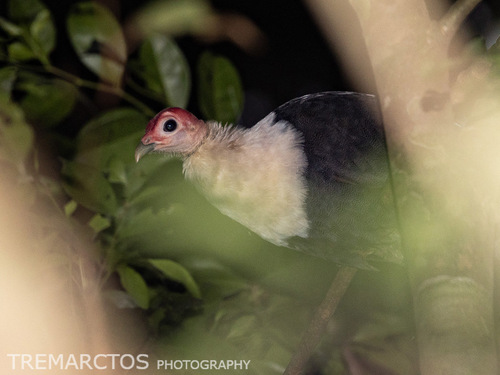 Kalkoenparelhoen
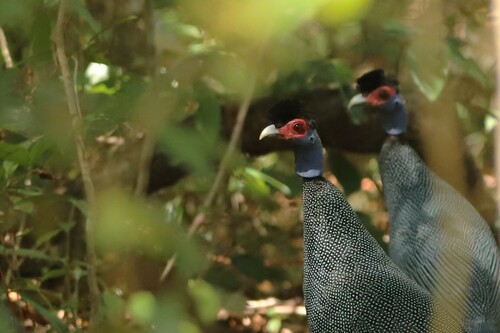 Roodkopkroonparelhoen
Kort gezegd
Het meest betrouwbare veldkenmerk om deze twee te scheiden is de aanwezigheid van een kenmerkende zwarte kuif op het hoofd van het Roodkopkroonparelhoen, die volledig afwezig is bij het Kalkoenparelhoen. Daarnaast vertoont het Roodkopkroonparelhoen een dicht witgestippeld zwartachtig verenkleed, terwijl het Kalkoenparelhoen voornamelijk zwart is met een contrasterende witte borst en geen stippen heeft. Beide soorten zijn vergelijkbaar in algemene vorm en terrestrische gewoonten, maar het patroon op het hoofd en de borst zijn de snelste manieren om ze te onderscheiden, zelfs op afstand. Juveniele/onvolwassen vleugelpatronen worden niet als diagnostisch voor een van beide soorten beschreven in de beschikbare aantekeningen.
Herkenningstips
- Aanwezigheid van kuif: Het Roodkopkroonparelhoen vertoont altijd een prominente zwarte kuif van gekrulde veren op de kroon; het Kalkoenparelhoen heeft een kale, rode kop zonder kuif. Dit is het snelste en meest betrouwbare veldkenmerk op elke leeftijd of in elk seizoen.
- Borstkleur: Het Kalkoenparelhoen heeft een scherp gedefinieerde witte borst die contrasteert met de rest van zijn zwarte verenkleed. Het Roodkopkroonparelhoen mist een witte borst; zijn onderdelen zijn gestippeld zoals de rest van het lichaam.
- Lichaamsstippen: Het Roodkopkroonparelhoen is dicht bedekt met kleine witte stippen over een zwartachtige achtergrond, zichtbaar zelfs op afstand. Het Kalkoenparelhoen is eenvoudig zwart, behalve voor de witte borst—geen stippen op het lichaam.
- Kleur van het hoofd: Het Kalkoenparelhoen heeft een kleine, kale, rode kop; het hoofd van het Roodkopkroonparelhoen is voornamelijk zwart met de kuif en kan minder kale huid vertonen.
- Staart: Beide soorten hebben lange, zwarte staarten, maar dit is geen sterke scheiding.
- Snavel en voeten: Het Kalkoenparelhoen heeft een groenachtig-bruin snavel en grijzige voeten, maar deze zijn subtiel en zelden diagnostisch in het veld.
- Grootte: Het Roodkopkroonparelhoen is iets groter en robuuster, maar de grootte-overlap is aanzienlijk en niet betrouwbaar voor enkele vogels.
- Geslachten: Beide soorten zijn seksueel vergelijkbaar; het vrouwelijke Kalkoenparelhoen is slechts iets kleiner dan het mannetje.
- Juveniele/onvolwassen verenkleed: Er zijn geen kenmerkende leeftijdspecifieke markeringen beschreven voor een van beide soorten, dus vertrouw niet op onvolwassen vleugel- of vluchtpatronen voor scheiding.
- Vlucht versus gezeten: Beide zijn terrestrisch en vliegen zelden, maar wanneer ze opgeschrikt worden, blijven de kuif en het gestippelde verenkleed van het Roodkopkroonparelhoen zichtbaar; de witte borst van het Kalkoenparelhoen kan opvlammen in de vlucht.
- Habitat: Als ze in open bossen, bossen of bos-savanne mozaïeken in Oost-Afrika zijn, is het Roodkopkroonparelhoen waarschijnlijker, maar het habitat is niet alleen diagnostisch.
- Verspreiding: Het Roodkopkroonparelhoen is beperkt tot Oost-Afrika (Somalië tot Tanzania en nabijgelegen eilanden); het Kalkoenparelhoen wordt niet in detail beschreven maar is niet inheems in dit gebied.
- Veelvoorkomende valkuilen: Verwar de witte borst (alleen bij Kalkoenparelhoen) niet met de witte stippen (alleen bij Roodkopkroon). De aanwezigheid of afwezigheid van een kuif is de snelste controle.
- Verwarring met kuif: Wees je ervan bewust dat de term "gekroond" soms verkeerd wordt toegepast op andere parelhoensoorten, maar alleen het Roodkopkroonparelhoen in dit paar heeft de echte zwarte kuif.
- Groepscontext: Beide soorten kunnen in kleine groepen worden gezien, maar dit helpt niet bij de scheiding.
Grootte
Het Roodkopkroonparelhoen is iets groter, met een totale lengte van ongeveer 50 cm en een gewicht van 721–1.543 g [wikipedia], vergeleken met het Kalkoenparelhoen dat tot 45 cm [wikipedia] is. Het verschil is subtiel in het veld, maar de Kroon is over het algemeen robuuster en langer. De geslachten zijn vergelijkbaar in beide, hoewel vrouwelijke Kalkoenparelhoen iets kleiner zijn dan mannelijke.
Verenkleed
- Juveniele/onvolwassen vleugelpatroon: Er zijn geen leeftijdspecifieke verschillen in bovenste vleugel of vluchtpatronen beschreven voor een van beide soorten in de bronnen.
- Volwassenen: Het Kalkoenparelhoen is voornamelijk zwart met een opvallende witte borst, een kleine kale rode kop en een lange zwarte staart. Het Roodkopkroonparelhoen is over het algemeen zwartachtig maar dicht bedekt met kleine witte stippen, en heeft een prominente zwarte kuif van gekrulde veren op het hoofd. De borst is niet wit en mengt zich met de rest van het gestippelde verenkleed. Snavel en voeten zijn respectievelijk groenachtig-bruin en grijzig in het Kalkoenparelhoen, maar deze zijn subtiel in het veld. Beide geslachten zien er vergelijkbaar uit in elke soort.
Gedrag
Beide soorten zijn terrestrisch en brengen het grootste deel van hun tijd op de grond door. Er zijn geen belangrijke gedragsverschillen benadrukt in de beschikbare aantekeningen die zouden helpen bij identificatie in het veld.
Habitat
Het Kalkoenparelhoen wordt niet in detail beschreven voor habitat in de aantekeningen, maar het Roodkopkroonparelhoen wordt aangetroffen in Oost-Afrika, waar het open bossen, bossen en bos-savanne mozaïeken bewoont [wikipedia]. Als het in deze habitats in Somalië tot Tanzania en nabijgelegen eilanden wordt gezien, is het Roodkopkroon waarschijnlijker. Habitat alleen is niet diagnostisch waar verspreidingen overlappen of onzeker zijn.
Kalkoenparelhoen · Roodkopkroonparelhoen · Mijn lastige vogels