

Motmot

ムナジロホロホロチョウ 対 Eastern Crested Guineafowl

Agelastes meleagrides 対 Guttera pucherani

ムナジロホロホロチョウとEastern Crested Guineafowlのクイズ
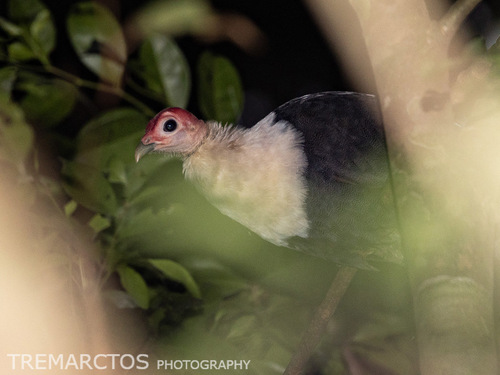
ムナジロホロホロチョウ (Agelastes meleagrides) ムナジロホロホロチョウ
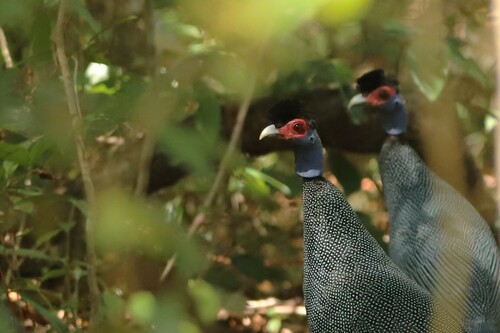
Eastern Crested Guineafowl (Guttera pucherani) Eastern Crested Guineafowl

メディア

読み込み中…

要点

これら二つを区別する最も信頼できるフィールドマークは、Eastern Crested Guineafowlの頭にある特徴的な黒い冠の存在であり、これはムナジロホロホロチョウには完全に欠けています。さらに、Eastern Crested Guineafowlは密に白い斑点のある黒っぽい羽毛を示し、ムナジロホロホロチョウは主に黒で、対照的な白い胸を持ち、斑点がありません。両種は全体的な形状と地上での習性が似ていますが、頭部と胸の模様は、距離があってもそれらを区別する最も迅速な方法です。幼鳥/未成熟の翼の模様は、利用可能なノートではどちらの種に対しても診断的とは記述されていません。

識別のコツ

  1. Crest presence: Eastern Crested Guineafowlは常に頭頂にカールした羽毛の目立つ黒い冠を示します; ムナジロホロホロチョウは冠のない裸の赤い頭を持っています。これは、どの年齢や季節でも最も迅速で信頼できるフィールドマークです。
  2. Breast color: ムナジロホロホロチョウは、黒い羽毛の残りと対照的な鋭く定義された白い胸を持っています。Eastern Crested Guineafowlは白い胸を欠き、腹部は体の残りと同様に斑点があります。
  3. Body spotting: Eastern Crested Guineafowlは黒っぽい背景に小さな白い斑点が密に覆われており、距離があっても見えます。ムナジロホロホロチョウは白い胸を除いては単色の黒で、体には斑点がありません。
  4. Head color: ムナジロホロホロチョウは小さな裸の赤い頭を持っています; Eastern Crested Guineafowlの頭は主に黒で、冠があり、裸の皮膚が少ない場合があります。
  5. Tail: 両種は長い黒い尾を持っていますが、これは強い区別要因ではありません。
  6. Bill and feet: ムナジロホロホロチョウは緑がかった茶色のくちばしと灰色の足を持っていますが、これらは微妙で、フィールドではめったに診断的ではありません。
  7. Size: Eastern Crested Guineafowlはわずかに大きくてずんぐりしていますが、サイズの重複はかなりあり、単独の鳥には信頼できません。
  8. Sexes: 両種は性別が似ており、雌のムナジロホロホロチョウは雄よりもわずかに小さいです。
  9. Juvenile/immature plumage: どちらの種にも特定の年齢に特有のマークは記述されていないため、未成熟の翼や飛行パターンに頼って区別しないでください。
  10. Flight vs. perched: 両者は地上性で、めったに飛びませんが、追い立てられたとき、Eastern Crested Guineafowlの冠と斑点のある羽毛は見え続けます; ムナジロホロホロチョウの白い胸は飛行中にフラッシュするかもしれません。
  11. Habitat: 東アフリカの開けた森林、森林地帯、または森林-サバンナのモザイクにいる場合、Eastern Crested Guineafowlの可能性が高いですが、単独では生息地は診断的ではありません。
  12. Range: Eastern Crested Guineafowlは東アフリカ(ソマリアからタンザニアおよび近隣の島々)に制限されています; ムナジロホロホロチョウは詳細に記述されていませんが、この範囲には自生していません。
  13. Common pitfalls: ムナジロホロホロチョウの白い胸(ムナジロホロホロチョウにのみ)をEastern Crestedの白い斑点(Eastern Crestedにのみ)と混同しないでください。冠の有無は最も迅速なチェックです。
  14. Crest confusion: 「クレスト」という用語が他のホロホロチョウの種に誤って適用されることがあることに注意してくださいが、このペアの中で真の黒い冠を持つのはEastern Crested Guineafowlだけです。
  15. Group context: 両種は小さな群れで見られることがありますが、これでは区別には役立ちません。

大きさ

Eastern Crested Guineafowlはわずかに大きく、全長は約50 cm、体重は721–1,543 g [wikipedia]で、ムナジロホロホロチョウは最大45 cm [wikipedia]です。フィールドでは違いは微妙ですが、Eastern Crestedは一般的にずんぐりしていて長いです。両者の性別は似ていますが、雌のムナジロホロホロチョウは雄よりも少し小さいです。

羽色

行動

両種は地上性で、ほとんどの時間を地面で過ごします。フィールドでの識別に役立つような主要な行動の違いは、利用可能なノートでは強調されていません。

生息環境

ムナジロホロホロチョウの生息地についてはノートで詳細に記述されていませんが、Eastern Crested Guineafowlは東アフリカに見られ、開けた森林、森林地帯、森林-サバンナのモザイクに生息しています [wikipedia]。ソマリアからタンザニアおよび近隣の島々のこれらの生息地で見られた場合、Eastern Crestedの可能性が高いです。生息地だけでは、範囲が重複する場合や不確かな場合には診断的ではありません。

より良い説明を送る

比較と同じ項目を使ってください。文章はすぐに公開されます。

The most reliable field mark to separate these two is the presence of a distinctive black crest on the head of the Eastern Crested Guineafowl, which is completely absent in the White-breasted Guineafowl. In addition, the Eastern Crested Guineafowl shows a densely white-spotted blackish plumage, while the White-breasted Guineafowl is mostly black with a contrasting white breast and lacks spots. Both species are similar in overall shape and terrestrial habits, but the head and breast pattern are the quickest ways to distinguish them, even at a distance. Juvenile/immature wing patterns are not described as diagnostic for either species in the available notes.

  1. Crest presence: Eastern Crested Guineafowl always shows a prominent black crest of curly feathers on the crown; White-breasted Guineafowl has a bare, red head with no crest. This is the fastest and most reliable field mark at any age or season.
  2. Breast color: White-breasted Guineafowl has a sharply defined white breast contrasting with the rest of its black plumage. Eastern Crested Guineafowl lacks a white breast; its underparts are spotted like the rest of the body.
  3. Body spotting: Eastern Crested Guineafowl is densely covered in small white spots over a blackish background, visible even at a distance. White-breasted Guineafowl is plain black except for the white breast—no spots on the body.
  4. Head color: White-breasted Guineafowl has a small, bare, red head; Eastern Crested Guineafowl's head is mostly black with the crest and may show less bare skin.
  5. Tail: Both species have long, black tails, but this is not a strong separator.
  6. Bill and feet: White-breasted Guineafowl has a greenish-brown bill and greyish feet, but these are subtle and rarely diagnostic in the field.
  7. Size: Eastern Crested Guineafowl is slightly larger and bulkier, but size overlap is considerable and not reliable for single birds.
  8. Sexes: Both species are sexually similar; female White-breasted Guineafowl is only slightly smaller than the male.
  9. Juvenile/immature plumage: No distinctive age-specific marks are described for either species, so do not rely on immature wing or flight patterns for separation.
  10. Flight vs. perched: Both are terrestrial and rarely fly, but when flushed, the crest and spotted plumage of Eastern Crested Guineafowl remain visible; White-breasted Guineafowl's white breast may flash in flight.
  11. Habitat: If in East African open forests, woodlands, or forest-savanna mosaics, Eastern Crested Guineafowl is more likely, but habitat is not diagnostic alone.
  12. Range: Eastern Crested Guineafowl is restricted to East Africa (Somalia to Tanzania and nearby islands); White-breasted Guineafowl is not described in detail but is not native to this range.
  13. Common pitfalls: Do not confuse the white breast (only in White-breasted) with the white spots (only in Eastern Crested). The presence or absence of a crest is the quickest check.
  14. Crest confusion: Be aware that the term "crested" is sometimes misapplied to other guineafowl species, but only Eastern Crested Guineafowl in this pair has the true black crest.
  15. Group context: Both species may be seen in small flocks, but this does not aid separation.

Eastern Crested Guineafowl is slightly larger, with a total length of about 50 cm and a weight range of 721–1,543 g [wikipedia], compared to the White-breasted Guineafowl at up to 45 cm [wikipedia]. The difference is subtle in the field, but the Crested is generally bulkier and longer. Sexes are similar in both, though female White-breasted Guineafowl are a bit smaller than males.

  • Juvenile/immature wing pattern: No age-specific upperwing or flight pattern differences are described for either species in the sources.
  • Adults: White-breasted Guineafowl is mostly black with a striking white breast, a small bare red head, and a long black tail. The Eastern Crested Guineafowl is blackish overall but densely covered in small white spots, and has a prominent black crest of curly feathers on the head. The breast is not white and blends with the rest of the spotted plumage. Bill and feet are greenish-brown and greyish, respectively, in White-breasted Guineafowl, but these are subtle in the field. Both sexes look similar in each species.

Both species are terrestrial and spend most of their time on the ground. No major behavioral differences are highlighted in the available notes that would help with identification in the field.

White-breasted Guineafowl is not described in detail for habitat in the notes, but the Eastern Crested Guineafowl is found in East Africa, inhabiting open forests, woodlands, and forest-savanna mosaics [wikipedia]. If seen in these habitats in Somalia to Tanzania and nearby islands, Eastern Crested is more likely. Habitat alone is not diagnostic where ranges overlap or are uncertain.

変更を破棄しますか?

保存していない編集があります。今離れると失われます。

ムナジロホロホロチョウ · Eastern Crested Guineafowl · 苦手な鳥