

araponga-da-amazônia vs araponga
Procnias albus versus Procnias nudicollis
Jogue um quiz com araponga-da-amazônia e araponga
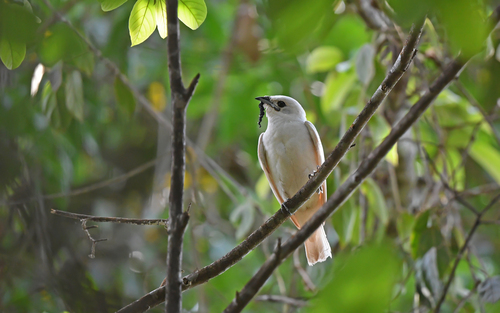 araponga-da-amazônia
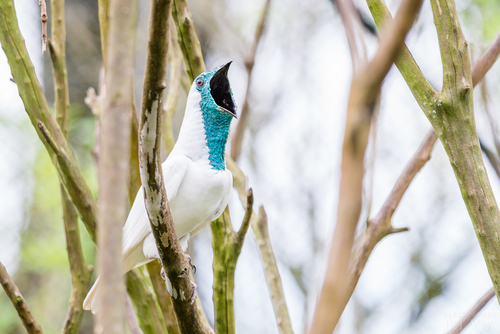 araponga
Em resumo
A marca de campo mais confiável entre a araponga-da-amazônia e a araponga é a presença de uma única carúncula negra pendurada no bico do macho da araponga-da-amazônia, ausente na araponga. Ambos os machos adultos são impressionantemente brancos, mas o macho da araponga mostra uma conspícua mancha de pele nua azulada e preta ao redor do olho, bico e garganta, enquanto o rosto do macho da araponga-da-amazônia é totalmente plumoso, exceto pela carúncula. Fêmeas e imaturos de ambas as espécies são oliva por cima e amarelados por baixo, mas a fêmea da araponga-da-amazônia é mais verde-oliva, enquanto a araponga é oliva-marrom com uma coroa escura. Ambas as espécies têm aproximadamente o mesmo tamanho e estrutura semelhante, mas suas distribuições se sobrepõem apenas em partes do Brasil. Os chamados são extremamente altos em ambas, mas o da araponga-da-amazônia é o mais alto do mundo e possui um padrão distinto de duas notas.
Dicas de identificação
- Macho Adulto: Carúncula vs. Pele Nua – A única carúncula negra pendurada na base do bico é exclusiva do macho da araponga-da-amazônia; machos da araponga nunca mostram uma carúncula, mas têm uma mancha de pele nua azulada e preta ao redor do olho, bico e garganta.
- Macho Adulto: Padrão Facial – Machos da araponga-da-amazônia têm um rosto branco totalmente plumoso (exceto pela carúncula), enquanto machos da araponga têm óbvias manchas de pele nua que contrastam com a plumagem branca.
- Macho Adulto: Movimento do Bico e Carúncula – Ao chamar, machos da araponga-da-amazônia podem inflar e balançar a carúncula; machos da araponga não têm uma carúncula para mover.
- Fêmea Adulta: Cor das Partes Superiores – Fêmeas da araponga-da-amazônia são verde-oliva por cima; fêmeas da araponga são oliva-marrom com uma coroa escura. Essa diferença é sutil, mas pode ser útil em boa luz.
- Fêmea Adulta: Listras nas Partes Inferiores – Ambas têm partes inferiores amareladas com listras oliva, mas as listras da fêmea da araponga-da-amazônia são mais oliva, enquanto as da araponga são verde oliva e podem parecer mais difusas.
- Pássaros Imaturos – Os imaturos de ambas as espécies se assemelham às suas respectivas fêmeas e não têm qualquer plumagem branca, carúncula ou pele facial nua. A separação é difícil; procure diferenças sutis na cor das partes superiores (verde-oliva vs. marrom) e na coroa (escura apenas na araponga).
- Sem Padrão de Asa Diagnóstico – Nenhuma das espécies tem um padrão distintivo na asa superior ou marca de voo em qualquer idade; vistas de voo não são úteis para separação.
- Tamanho e Estrutura – Ambas são semelhantes em tamanho e forma, com bicos curtos e largos; não confie na estrutura para separação.
- Vocalização – Ambas são extremamente altas, mas o chamado da araponga-da-amazônia é uma frase musical aguda de duas notas 'kong-kay' ou um som musical contínuo, enquanto o da araponga é uma nota metálica, semelhante a um martelo batendo em uma bigorna. Se você ouvir o chamado, use-o como uma pista forte.
- Habitat e Distribuição – Se estiver em florestas amazônicas do norte (Guiana, Suriname, Guiana Francesa, Venezuela, norte do Brasil), a araponga-da-amazônia é esperada. Na Mata Atlântica do sudeste do Brasil, Paraguai ou Argentina, a araponga é a espécie provável.
- Avistamentos Urbanos – A araponga foi registrada em parques urbanos no sudeste do Brasil, mas a araponga-da-amazônia não é conhecida em tais ambientes.
- Movimentos Sazonais – Ambas as espécies mostram alguns movimentos locais ou elevacionais, mas isso geralmente não é útil para identificação em campo.
- Variação de Subespécies – A subespécie P. a. wallacei (araponga-da-amazônia) tem um bico mais longo e fino e uma ligeira tonalidade cinza na garganta, mas essas características são sutis e raramente diagnósticas em campo.
- Dimorfismo Sexual – Ambas as espécies são fortemente dimórficas sexualmente; sempre considere o sexo ao identificar, pois apenas os machos adultos mostram as marcas mais distintivas.
- Armadilhas – Pássaros imaturos e fêmeas de ambas as espécies são facilmente confundidos entre si e com a fêmea da araponga-do-nordeste; use a localização, tons sutis da plumagem e (se possível) associação com machos chamando para ajudar.
Tamanho
Ambas as espécies são muito semelhantes em tamanho, com adultos em torno de 27–29 cm (11 pol.) de comprimento. Machos da araponga-da-amazônia pesam ligeiramente mais (210–222 g) do que os machos da araponga, mas essa diferença provavelmente não será perceptível em campo. Ambas têm um bico curto e largo, típico das arapongas. A estrutura e as proporções gerais não são úteis para separação.
Plumagem
- Juvenil/Imaturo: Os imaturos de ambas as espécies se assemelham às suas respectivas fêmeas, sem qualquer plumagem branca ou carúnculas/pele nua facial. Imaturos da araponga-da-amazônia são verde-oliva por cima e amarelos por baixo com listras oliva, enquanto imaturos da araponga são oliva-marrom por cima com uma coroa escura e partes inferiores amareladas listradas com verde oliva. Nenhum padrão distintivo na asa superior ou marca de voo é descrito para qualquer uma das espécies em qualquer idade.
- Macho Adulto: Machos da araponga-da-amazônia são totalmente brancos com uma única carúncula negra na base do bico; sem pele nua no rosto ou garganta. Machos da araponga também são brancos, mas têm uma impressionante mancha de pele nua azulada e preta ao redor do olho, bico e garganta, sem carúncula.
- Fêmea Adulta: Fêmeas da araponga-da-amazônia são verde-oliva por cima, mais escuras nas asas, e amarelas por baixo com listras oliva; sem pele nua facial ou carúncula. Fêmeas da araponga são oliva-marrom por cima (não verde), têm uma coroa escura e partes inferiores amareladas listradas com verde oliva. Ambas carecem de carúnculas faciais ou pele nua.
- Subespécies: A subespécie P. a. wallacei (araponga-da-amazônia) tem um bico mais longo e fino e uma leve tonalidade cinza na garganta, mas isso é sutil e raramente diagnóstico em campo.
Comportamento
Ambas as espécies são tipicamente vistas empoleiradas altas na copa, frequentemente em galhos expostos, especialmente machos exibindo e chamando. Machos de ambas as espécies são sedentários ou migratórios localmente, mantendo territórios e chamando alto para atrair fêmeas. Ambas são frugívoras e podem ser vistas sozinhas ou em associação solta com outros visitantes de árvores frutíferas. Machos da araponga-da-amazônia exibem do topo das árvores, frequentemente inflando a carúncula durante os chamados. Machos da araponga empoleiram-se altos e chamam, mas não têm uma carúncula para exibir.
Habitat
A araponga-da-amazônia é encontrada no norte da América do Sul (Brasil, Guiana Francesa, Guiana, Suriname, Venezuela e como vagante em Trinidad), principalmente em copas de florestas úmidas. A araponga é encontrada mais ao sul (Brasil, Paraguai, Argentina), em florestas subtropicais e tropicais úmidas de baixada e montanha, frequentemente na região da Mata Atlântica. Ambas preferem florestas primárias, mas podem ser encontradas em florestas secundárias com árvores frutíferas. A sobreposição é possível no sudeste do Brasil, mas a araponga-da-amazônia está ausente da Argentina e do Paraguai. A araponga também pode aparecer em ambientes urbanos ou perturbados incomuns, como documentado no Rio de Janeiro e em São Paulo.
Voz
Ambas as espécies são famosas por seus chamados extremamente altos. A araponga-da-amazônia é a ave mais alta conhecida, com um chamado de duas notas descrito como 'kong-kay', entregue com a cabeça parada ou balançando de lado a lado, e um segundo chamado mais musical e contínuo. Machos da araponga têm um chamado metálico, comparado a um martelo batendo em uma bigorna, também entre os mais altos de todas as aves. Embora ambas possam ser ouvidas a grandes distâncias, o chamado da araponga-da-amazônia é mais abrupto e semelhante a um sino, enquanto o da araponga é metálico e ressonante.