

White Bellbird vs Bare-throated Bellbird
Procnias albus contro Procnias nudicollis
Fai un quiz con White Bellbird e Bare-throated Bellbird
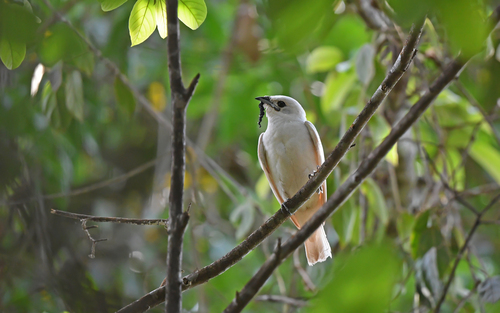 White Bellbird
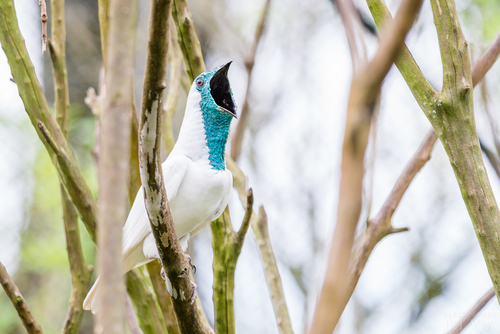 Bare-throated Bellbird
In breve
Il segno distintivo più affidabile tra il White Bellbird e il Bare-throated Bellbird è la presenza di una singola caruncola nera appesa al becco del maschio di White Bellbird, assente nel Bare-throated. Entrambi i maschi adulti sono bianchissimi, ma il maschio di Bare-throated Bellbird mostra una evidente macchia di pelle nuda bluastro-nera attorno all'occhio, al becco e alla gola, mentre il volto del maschio di White Bellbird è completamente piumato tranne che per la caruncola. Le femmine e gli immaturi di entrambe le specie sono olivacei sopra e giallastri sotto, ma la femmina di White Bellbird è più verde-oliva, mentre il Bare-throated è olivastro-bruno con una corona nerognola. Entrambe le specie sono di dimensioni simili e hanno una struttura simile, ma i loro areali si sovrappongono solo in alcune parti del Brasile. I richiami sono estremamente forti in entrambe, ma quello del White Bellbird è il più forte al mondo e ha un distintivo schema a due note.
Consigli di identificazione
- Adult Male: Wattle vs. Bare Skin – La singola caruncola nera appesa alla base del becco è unica per il maschio di White Bellbird; i maschi di Bare-throated Bellbird non mostrano mai una caruncola ma hanno una macchia di pelle nuda bluastro-nera attorno all'occhio, al becco e alla gola.
- Adult Male: Facial Pattern – I maschi di White Bellbird hanno un volto completamente piumato e bianco (eccetto per la caruncola), mentre i maschi di Bare-throated Bellbird hanno evidenti macchie di pelle nuda che contrastano con il piumaggio bianco.
- Adult Male: Bill and Wattle Movement – Quando chiamano, i maschi di White Bellbird possono gonfiare e muovere la caruncola; i maschi di Bare-throated Bellbird non hanno una caruncola da muovere.
- Adult Female: Upperparts Color – Le femmine di White Bellbird sono verde-oliva sopra; le femmine di Bare-throated Bellbird sono olivastro-brune con una corona nerognola. Questa differenza è sottile ma può essere utile in buona luce.
- Adult Female: Underparts Streaking – Entrambe hanno parti inferiori giallastre con striature olivacee, ma le striature della femmina di White Bellbird sono più olivacee, mentre quelle del Bare-throated sono verde oliva e possono apparire più diffuse.
- Immature Birds – Gli immaturi di entrambe le specie assomigliano alle rispettive femmine e mancano di qualsiasi piumaggio bianco, caruncola o pelle facciale nuda. La separazione è difficile; cerca differenze sottili nel colore delle parti superiori (verdastro vs. bruno) e nella corona (nerognola solo nel Bare-throated).
- No Diagnostic Wing Pattern – Nessuna delle due specie ha un distintivo segno alare o di volo a qualsiasi età; le viste in volo non sono utili per la separazione.
- Size and Structure – Entrambe sono simili in dimensioni e forma, con becchi corti e larghi; non fare affidamento sulla struttura per la separazione.
- Vocalization – Entrambe sono estremamente forti, ma il richiamo del White Bellbird è un netto 'kong-kay' a due note o una frase musicale ronzante, mentre quello del Bare-throated Bellbird è una nota metallica simile a un'incudine. Se senti il richiamo, usalo come un forte indizio.
- Habitat and Range – Se nei boschi amazzonici settentrionali (Guyana, Suriname, Guiana Francese, Venezuela, Brasile settentrionale), ci si aspetta di trovare il White Bellbird. Nella Foresta Atlantica del Brasile sudorientale, Paraguay o Argentina, il Bare-throated Bellbird è la specie probabile.
- Urban Sightings – Il Bare-throated Bellbird è stato registrato in parchi urbani nel Brasile sudorientale, ma il White Bellbird non è noto in tali ambienti.
- Seasonal Movements – Entrambe le specie mostrano alcuni movimenti locali o elevazionali, ma questo non è solitamente utile per l'identificazione sul campo.
- Subspecies Variation – La sottospecie P. a. wallacei (White Bellbird) ha un becco più lungo e sottile e una leggera gola grigia, ma queste sono sottili e raramente diagnostiche sul campo.
- Sexual Dimorphism – Entrambe le specie sono fortemente dimorfiche sessualmente; considera sempre il sesso quando identifichi, poiché solo i maschi adulti mostrano i segni più distintivi.
- Pitfalls – Gli immaturi e le femmine di entrambe le specie di bellbird sono facilmente confusi tra loro e con le femmine di Bearded Bellbird; utilizza la posizione, toni di piumaggio sottili e (se possibile) l'associazione con maschi che chiamano per aiutare.
Taglia
Entrambe le specie sono molto simili in dimensioni, con adulti di circa 27–29 cm (11 in) di lunghezza. I maschi di White Bellbird pesano leggermente di più (210–222 g) rispetto ai Bare-throated Bellbird, ma questa differenza non è probabile che sia evidente sul campo. Entrambi hanno un becco corto e largo tipico dei bellbird. La struttura e le proporzioni complessive non sono utili per la separazione.
Piumaggio
- Juvenile/Immature: Gli immaturi di entrambe le specie assomigliano alle rispettive femmine, mancando di qualsiasi piumaggio bianco o caruncole/pelle facciale nuda. Gli immaturi di White Bellbird sono verde-oliva sopra e gialli sotto con striature olivacee, mentre gli immaturi di Bare-throated Bellbird sono olivastro-bruni sopra con una corona nerognola e parti inferiori giallastre striate di verde oliva. Nessun distintivo schema alare o segno di volo è descritto per nessuna delle due specie a qualsiasi età.
- Adult Male: I maschi di White Bellbird sono completamente bianchi con una singola caruncola nera alla base del becco; nessuna pelle nuda sul volto o sulla gola. I maschi di Bare-throated Bellbird sono anch'essi bianchi ma hanno una sorprendente macchia di pelle nuda bluastro-nera attorno all'occhio, al becco e alla gola, senza caruncola.
- Adult Female: Le femmine di White Bellbird sono verde-oliva sopra, più scure sulle ali, e gialle sotto con striature olivacee; nessuna pelle nuda facciale o caruncola. Le femmine di Bare-throated Bellbird sono olivastro-brune sopra (non verdi), hanno una corona nerognola e parti inferiori giallastre striate di verde oliva. Entrambe mancano di caruncole facciali o pelle nuda.
- Subspecies: La sottospecie P. a. wallacei (White Bellbird) ha un becco più lungo e sottile e una leggera sfumatura grigia alla gola, ma questa è sottile e raramente diagnostica sul campo.
Comportamento
Entrambe le specie sono tipicamente viste posate in alto nella chioma, spesso su rami esposti, specialmente i maschi che si esibiscono e chiamano. I maschi di entrambe le specie sono sedentari o migratori localmente, mantenendo territori e chiamando ad alta voce per attrarre le femmine. Entrambi sono frugivori e possono essere visti da soli o in associazione libera con altri visitatori di alberi fruttiferi. I maschi di White Bellbird si esibiscono dalle cime degli alberi, gonfiando spesso la caruncola durante le chiamate. I maschi di Bare-throated Bellbird si posano in alto e chiamano, ma non hanno una caruncola da esibire.
Habitat
Il White Bellbird si trova nel nord del Sud America (Brasile, Guiana Francese, Guyana, Suriname, Venezuela, e come vagante a Trinidad), principalmente nelle chiome delle foreste umide. Il Bare-throated Bellbird si trova più a sud (Brasile, Paraguay, Argentina), in foreste umide subtropicali e tropicali di pianura e montane, spesso nella regione della Foresta Atlantica. Entrambi preferiscono le foreste primarie ma possono essere trovati in foreste secondarie con alberi fruttiferi. È possibile una sovrapposizione nel sud-est del Brasile, ma il White Bellbird è assente dall'Argentina e dal Paraguay. Il Bare-throated Bellbird può anche apparire in ambienti urbani o disturbati insoliti, come documentato a Rio de Janeiro e São Paulo.
Voce
Entrambe le specie sono famose per i richiami estremamente forti. Il White Bellbird è l'uccello più forte conosciuto, con un richiamo a due note descritto come 'kong-kay,' emesso con la testa ferma o oscillata da un lato all'altro, e un secondo richiamo più musicale e ronzante. I maschi di Bare-throated Bellbird hanno un richiamo metallico, paragonato a un martello che colpisce un'incudine, anche tra i più forti di tutti gli uccelli. Mentre entrambi possono essere uditi da grandi distanze, il richiamo del White Bellbird è più brusco e simile a una campana, mentre quello del Bare-throated è metallico e risonante.
White Bellbird · Bare-throated Bellbird · I miei uccelli difficili