

Witte klokvogel vs Naaktkeelklokvogel
Procnias albus versus Procnias nudicollis
Speel een quiz met Witte klokvogel en Naaktkeelklokvogel
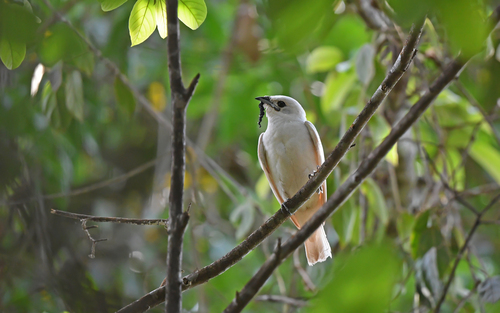 Witte klokvogel
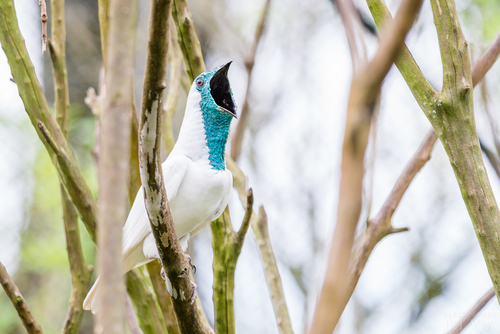 Naaktkeelklokvogel
Kort gezegd
Het meest betrouwbare veldkenmerk tussen Witte klokvogel en Naaktkeelklokvogel is de aanwezigheid van een enkele zwarte kam die aan de snavel van de mannelijke Witte klokvogel hangt, afwezig bij Naaktkeel. Beide volwassen mannetjes zijn opvallend wit, maar het mannetje van de Naaktkeelklokvogel vertoont een opvallende blauwachtige-zwarte kale huid rond het oog, de snavel en de keel, terwijl het gezicht van het mannetje van de Witte klokvogel volledig met veren bedekt is, behalve voor de kam. Vrouwtjes en onvolwassen vogels van beide soorten zijn olijfkleurig boven en geelachtig onder, maar het vrouwtje van de Witte klokvogel is meer groenachtig-olijf, terwijl de Naaktkeel olijfbruin is met een zwartachtige kroon. Beide soorten zijn ongeveer even groot en hebben een vergelijkbare structuur, maar hun verspreidingsgebieden overlappen alleen in delen van Brazilië. De roep is extreem luid bij beide, maar de roep van de Witte klokvogel is de luidste ter wereld en heeft een kenmerkend patroon van twee noten.
Herkenningstips
- Volwassen mannetje: Kam vs. Kale huid – De enkele zwarte kam die aan de basis van de snavel hangt, is uniek voor het mannetje van de Witte klokvogel; mannelijke Naaktkeelklokvogels vertonen nooit een kam maar hebben een kale blauwachtige-zwarte huid rond het oog, de snavel en de keel.
- Volwassen mannetje: Gezichtspatroon – Mannen van de Witte klokvogel hebben een volledig met veren bedekt wit gezicht (behalve voor de kam), terwijl mannelijke Naaktkeelklokvogels duidelijke kale huidplekken hebben die contrasteren met de witte veren.
- Volwassen mannetje: Snavel- en kambeweging – Bij het roepen kunnen mannelijke Witte klokvogels de kam opblazen en zwaaien; mannelijke Naaktkeelklokvogels hebben geen kam om te bewegen.
- Volwassen vrouwtje: Bovenste kleur – Vrouwtjes van de Witte klokvogel zijn olijfgroen boven; vrouwtjes van de Naaktkeelklokvogel zijn olijfbruin met een zwartachtige kroon. Dit verschil is subtiel maar kan nuttig zijn bij goed licht.
- Volwassen vrouwtje: Onderdelen met strepen – Beide hebben geelachtige onderdelen met olijfstrepen, maar de strepen van het vrouwtje van de Witte klokvogel zijn meer olijf, terwijl die van de Naaktkeel olijfgroen zijn en meer diffuus kunnen lijken.
- Onvolwassen vogels – De onvolwassen vogels van beide soorten lijken op hun respectieve vrouwtjes en missen enige witte veren, kam of kale gezichtshuid. Scheiding is moeilijk; let op subtiele verschillen in de kleur van de bovenkant (groenachtig vs. bruinachtig) en kroon (alleen zwartachtig bij Naaktkeel).
- Geen diagnostisch vleugelpatroon – Geen van beide soorten heeft een kenmerkend bovenvleugel- of vluchtkenmerk op enige leeftijd; vluchtwaarnemingen zijn niet nuttig voor scheiding.
- Grootte en structuur – Beide zijn vergelijkbaar in grootte en vorm, met korte, breedopen snavels; vertrouw niet op structuur voor scheiding.
- Vocalisatie – Beide zijn extreem luid, maar de roep van de Witte klokvogel is een scherpe, twee-notige 'kong-kay' of een dronende muzikale frase, terwijl die van de Naaktkeelklokvogel een metalen, aambeeldachtige noot is. Als je de roep hoort, gebruik het dan als een sterke aanwijzing.
- Habitat en verspreiding – Als je in de noordelijke Amazonebossen bent (Guyana, Suriname, Franse Guyana, Venezuela, noordelijk Brazilië), wordt de Witte klokvogel verwacht. In het Atlantische Woud van zuidoost Brazilië, Paraguay of Argentinië is de Naaktkeelklokvogel de waarschijnlijke soort.
- Stedelijke waarnemingen – De Naaktkeelklokvogel is geregistreerd in stedelijke parken in zuidoost Brazilië, maar de Witte klokvogel is niet bekend uit dergelijke omgevingen.
- Seizoensgebonden bewegingen – Beide soorten vertonen enige lokale of elevatiebewegingen, maar dit is meestal niet nuttig voor veldidentificatie.
- Subspecies variatie – De ondersoort P. a. wallacei (Witte klokvogel) heeft een langere, dunnere snavel en een lichte grijze keel, maar deze zijn subtiel en zelden diagnostisch in het veld.
- Seksueel dimorfisme – Beide soorten zijn sterk seksueel dimorf; overweeg altijd het geslacht bij identificatie, aangezien alleen volwassen mannetjes de meest kenmerkende kenmerken vertonen.
- Valstrikken – Onvolwassen en vrouwelijke klokvogels van beide soorten worden gemakkelijk met elkaar en met vrouwelijke Baardklokvogel verward; gebruik locatie, subtiele verentinten en (indien mogelijk) associatie met roepende mannetjes om te helpen.
Grootte
Beide soorten zijn zeer vergelijkbaar in grootte, met volwassenen van ongeveer 27–29 cm (11 in) in lengte. Mannelijke Witte klokvogels wegen iets meer (210–222 g) dan Naaktkeelklokvogels, maar dit verschil zal waarschijnlijk niet opvallen in het veld. Beide hebben een korte, breedopen snavel die typisch is voor klokvogels. Structuur en algehele verhoudingen zijn niet nuttig voor scheiding.
Verenkleed
- Jong/onvolwassen: De onvolwassen vogels van beide soorten lijken op hun respectieve vrouwtjes, zonder enige witte veren of gezichtskammen/kale huid. Onvolwassen Witte klokvogels zijn olijfgroen boven en geel onder met olijfstrepen, terwijl onvolwassen Naaktkeelklokvogels olijfbruin boven zijn met een zwartachtige kroon en geelachtige onderdelen gestreept met olijfgroen. Er is geen kenmerkend bovenvleugelpatroon of vluchtkenmerk beschreven voor beide soorten op enige leeftijd.
- Volwassen mannetje: Mannen van de Witte klokvogel zijn volledig wit met een enkele zwarte kam aan de basis van de snavel; geen kale huid op het gezicht of de keel. Mannen van de Naaktkeelklokvogel zijn ook wit maar hebben een opvallende blauwachtige-zwarte kale huid rond het oog, de snavel en de keel, zonder kam.
- Volwassen vrouwtje: Vrouwtjes van de Witte klokvogel zijn olijfgroen boven, donkerder op de vleugels, en geel onder met olijfstrepen; geen kale huid of kam op het gezicht. Vrouwtjes van de Naaktkeelklokvogel zijn olijfbruin boven (niet groen), hebben een zwartachtige kroon, en geelachtige onderdelen gestreept met olijfgroen. Beide missen gezichtskammen of kale huid.
- Subspecies: De ondersoort P. a. wallacei (Witte klokvogel) heeft een langere, dunnere snavel en een lichte grijze tint op de keel, maar dit is subtiel en zelden diagnostisch in het veld.
Gedrag
Beide soorten worden typisch gezien hoog in de boomtoppen, vaak op blootgestelde takken, vooral mannetjes die zich tentoonstellen en roepen. Mannen van beide soorten zijn sedentair of lokaal migrerend, onderhouden territoria en roepen luid om vrouwtjes aan te trekken. Beide zijn fruiteters en kunnen alleen of in losse associatie met andere bezoekers van fruitdragende bomen worden gezien. Mannen van de Witte klokvogel tonen zich vanaf de boomtoppen, vaak de kam opblazend tijdens het roepen. Mannen van de Naaktkeelklokvogel zitten hoog en roepen, maar hebben geen kam om te tonen.
Habitat
De Witte klokvogel wordt aangetroffen in het noorden van Zuid-Amerika (Brazilië, Franse Guyana, Guyana, Suriname, Venezuela, en als dwaalgast in Trinidad), voornamelijk in vochtige boskruinen. De Naaktkeelklokvogel wordt verder naar het zuiden aangetroffen (Brazilië, Paraguay, Argentinië), in subtropische en tropische vochtige laagland- en bergbossen, vaak in het Atlantische Woud. Beide geven de voorkeur aan primaire bossen maar kunnen worden aangetroffen in secundaire bossen met fruitdragende bomen. Overlap is mogelijk in zuidoost Brazilië, maar de Witte klokvogel is afwezig in Argentinië en Paraguay. De Naaktkeelklokvogel kan ook verschijnen in ongebruikelijke stedelijke of verstoorde omgevingen, zoals gedocumenteerd in Rio de Janeiro en São Paulo.
Geluid
Beide soorten zijn beroemd om hun extreem luide roepen. De Witte klokvogel is de luidste bekende vogel, met een roep van twee noten die wordt beschreven als 'kong-kay,' geleverd met het hoofd stil gehouden of zijwaarts gezwaaid, en een tweede, meer muzikale dronende roep. Mannen van de Naaktkeelklokvogel hebben een metalen roep, vergeleken met een hamer die een aambeeld slaat, ook een van de luidste van alle vogels. Terwijl beide van grote afstand te horen zijn, is de roep van de Witte klokvogel abrupt en klokachtig, terwijl die van de Naaktkeel een metalen en klingelende klank heeft.