

Motmot

スズドリ 対 ハゲノドスズドリ

Procnias albus 対 Procnias nudicollis

スズドリとハゲノドスズドリのクイズ
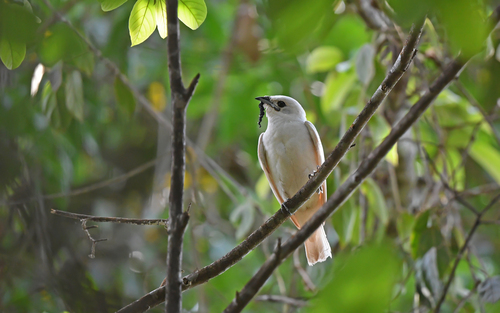
スズドリ (Procnias albus) スズドリ
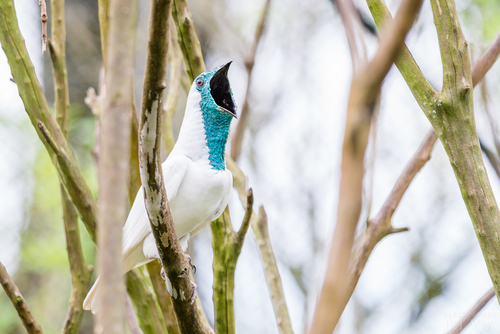
ハゲノドスズドリ (Procnias nudicollis) ハゲノドスズドリ

メディア

読み込み中…

要点

ホワイトスズドリとハゲノドスズドリの最も信頼できるフィールドマークは、オスのホワイトスズドリのくちばしからぶら下がる単一の黒いワットルの存在であり、ハゲノドスズドリにはありません。両方の成鳥オスは目を引くほど白いですが、ハゲノドスズドリのオスは目、くちばし、喉の周りに目立つ青黒い裸の皮膚の斑点を示し、一方でホワイトスズドリのオスの顔はワットルを除いて完全に羽毛で覆われています。両種の雌と幼鳥は上面がオリーブ色で、下面が黄色がかっていますが、ホワイトスズドリの雌はより緑がかったオリーブ色で、ハゲノドスズドリはオリーブ色の茶色で黒っぽい冠を持っています。両種はほぼ同じサイズで構造も似ていますが、分布域はブラジルの一部でのみ重なります。鳴き声は両方とも非常に大きいですが、ホワイトスズドリの鳴き声は世界で最も大きく、特徴的な二音パターンを持っています。

識別のコツ

  1. 成鳥オス: ワットル対裸の皮膚 – くちばしの基部からぶら下がる単一の黒いワットルはオスのホワイトスズドリに特有であり、ハゲノドスズドリのオスはワットルを示さず、目、くちばし、喉の周りに青黒い裸の皮膚の斑点を持っています。
  2. 成鳥オス: 顔のパターン – ホワイトスズドリのオスは完全に羽毛で覆われた白い顔を持ち(ワットルを除く)、ハゲノドスズドリのオスは白い羽毛と対照的な明らかな裸の皮膚の斑点を持っています。
  3. 成鳥オス: くちばしとワットルの動き – 鳴くとき、ホワイトスズドリのオスはワットルを膨らませて揺らすことがありますが、ハゲノドスズリのオスには動かすワットルがありません。
  4. 成鳥雌: 上面の色 – ホワイトスズドリの雌は上面がオリーブ緑色で、ハゲノドスズドリの雌はオリーブ色の茶色で黒っぽい冠を持っています。この違いは微妙ですが、良い光の下では役立つことがあります。
  5. 成鳥雌: 下面の斑点 – 両方ともオリーブの斑点がある黄色がかった下面を持っていますが、ホワイトスズドリの雌の斑点はよりオリーブ色で、ハゲノドスズドリの斑点はオリーブ緑色で、より拡散して見えることがあります。
  6. 幼鳥 – 両種の幼鳥はそれぞれの雌に似ており、白い羽毛、ワットル、または裸の顔の皮膚を欠いています。分離は難しく、上面の色(緑がかった vs. 茶色がかった)や冠(ハゲノドスズリのみ黒っぽい)の微妙な違いを探してください。
  7. 診断的な翼のパターンなし – どちらの種も年齢に関係なく特徴的な上翼または飛行マークを持っていません; 飛行中の視点は分離には役立ちません。
  8. サイズと構造 – 両方ともサイズと形状が似ており、短くて幅の広いくちばしを持っています; 構造に頼って分離しないでください。
  9. 鳴き声 – 両方とも非常に大きいですが、ホワイトスズドリの鳴き声は鋭い二音の「コンケイ」またはドローンのような音楽的フレーズであり、ハゲノドスズドリの鳴き声は金属的で金床のような音です。鳴き声を聞いたら、それを強い手がかりとして使用してください。
  10. 生息地と分布 – 北部アマゾンの森林(ガイアナ、スリナム、フランス領ギアナ、ベネズエラ、北部ブラジル)にいる場合、ホワイトスズドリが期待されます。ブラジル南東部のアトランティックフォレスト、パラグアイ、またはアルゼンチンでは、ハゲノドスズドリが可能性のある種です。
  11. 都市での目撃 – ハゲノドスズリはブラジル南東部の都市公園で記録されていますが、ホワイトスズドリはそのような環境では知られていません。
  12. 季節的な移動 – 両種は一部の地域的または標高的な移動を示しますが、これは通常フィールドIDには役立ちません。
  13. 亜種の変異 – 亜種P. a. wallacei(ホワイトスズドリ)は、より長くて細いくちばしとわずかに灰色がかった喉を持っていますが、これらは微妙でフィールドでは診断的であることは稀です。
  14. 性差 – 両種は強い性差を持っており、識別する際には常に性別を考慮してください。成鳥のオスだけが最も特徴的なマークを示します。
  15. 落とし穴 – 両種の幼鳥と雌のスズドリは互いに、またアゴヒゲスズドリの雌と簡単に混同されます; 場所、微妙な羽毛の色合い、そして(可能であれば)鳴いているオスとの関連を使用して助けてください。

大きさ

両種は非常にサイズが似ており、成鳥は約27〜29 cm(11インチ)の長さです。オスのホワイトスズドリはハゲノドスズドリよりもわずかに重い(210〜222 g)ですが、この違いはフィールドでは目立たないでしょう。両方ともスズドリに典型的な短くて幅の広いくちばしを持っています。構造と全体の比率は分離には役立ちません。

羽色

行動

両種は通常、特にオスがディスプレイや鳴き声を上げる際に、露出した枝の上で高く止まっているのが見られます。両種のオスは定住または地域的に移動し、テリトリーを維持し、雌を引き寄せるために大声で鳴きます。両方とも果物を食べ、単独または他の果物を食べる木の訪問者と緩やかに関連しているのが見られます。ホワイトスズドリのオスは樹冠からディスプレイし、鳴くときにワットルを膨らませることがよくあります。ハゲノドスズドリのオスは高く止まり、鳴きますが、ディスプレイするためのワットルはありません。

生息環境

ホワイトスズドリは南アメリカ北部(ブラジル、フランス領ギアナ、ガイアナ、スリナム、ベネズエラ、トリニダードへの迷鳥)で主に湿った森林の樹冠に生息しています。ハゲノドスズドリはさらに南(ブラジル、パラグアイ、アルゼンチン)で、亜熱帯および熱帯の湿った低地および山地の森林に生息し、しばしばアトランティックフォレスト地域に見られます。両方とも原生林を好みますが、果物を持つ木のある二次林でも見られます。南東ブラジルでは重なりが可能ですが、ホワイトスズドリはアルゼンチンとパラグアイには存在しません。ハゲノドスズドリは、リオデジャネイロやサンパウロで記録されているように、異常な都市や乱された環境にも現れることがあります。

声

両種は非常に大きな鳴き声で有名です。ホワイトスズドリは知られている中で最も大きな鳥で、二音の鳴き声は「コンケイ」と表現され、頭を静止させたり左右に振ったりしながら発声され、二つ目はより音楽的なドローンのような鳴き声です。ハゲノドスズドリのオスは金属的な鳴き声を持ち、金床を叩くハンマーのように例えられ、すべての鳥の中でも非常に大きな鳴き声の一つです。両方とも遠くから聞こえますが、ホワイトスズドリの鳴き声はより急で鐘のような音であり、ハゲノドスズドリの鳴き声は金属的で響きます。

より良い説明を送る

比較と同じ項目を使ってください。文章はすぐに公開されます。

The most reliable field mark between White Bellbird and Bare-throated Bellbird is the presence of a single black wattle hanging from the male White Bellbird’s bill, absent in Bare-throated. Both adult males are strikingly white, but the Bare-throated Bellbird male shows a conspicuous bluish-black bare patch of skin around the eye, beak, and throat, while the White Bellbird male’s face is entirely feathered except for the wattle. Females and immatures of both species are olive above and yellowish below, but the White Bellbird female is more greenish-olive, while the Bare-throated is olive-brown with a blackish crown. Both species are about the same size and have similar structure, but their ranges only overlap in parts of Brazil. Calls are extremely loud in both, but the White Bellbird’s is the world’s loudest and has a distinctive two-note pattern.

  1. Adult Male: Wattle vs. Bare Skin – The single black wattle hanging from the bill base is unique to male White Bellbird; Bare-throated Bellbird males never show a wattle but have a bare bluish-black patch of skin around the eye, bill, and throat.
  2. Adult Male: Facial Pattern – White Bellbird males have a fully feathered white face (except for the wattle), while Bare-throated Bellbird males have obvious bare skin patches that contrast with the white plumage.
  3. Adult Male: Bill and Wattle Movement – When calling, White Bellbird males may inflate and swing the wattle; Bare-throated Bellbird males do not have a wattle to move.
  4. Adult Female: Upperparts Color – White Bellbird females are olive-green above; Bare-throated Bellbird females are olive-brown with a blackish crown. This difference is subtle but can be useful in good light.
  5. Adult Female: Underparts Streaking – Both have yellowish underparts with olive streaking, but the White Bellbird female’s streaks are more olive, while the Bare-throated’s are olive green and may appear more diffuse.
  6. Immature Birds – Both species’ immatures resemble their respective females and lack any white plumage, wattle, or bare facial skin. Separation is difficult; look for subtle differences in upperpart color (greenish vs. brownish) and crown (blackish in Bare-throated only).
  7. No Diagnostic Wing Pattern – Neither species has a distinctive upperwing or flight mark at any age; flight views are not helpful for separation.
  8. Size and Structure – Both are similar in size and shape, with short, wide-gaped bills; do not rely on structure for separation.
  9. Vocalization – Both are extremely loud, but the White Bellbird’s call is a sharp, two-note 'kong-kay' or a droning musical phrase, while the Bare-throated Bellbird’s is a metallic, anvil-like note. If you hear the call, use it as a strong clue.
  10. Habitat and Range – If in northern Amazonian forests (Guyana, Suriname, French Guiana, Venezuela, northern Brazil), White Bellbird is expected. In the Atlantic Forest of southeast Brazil, Paraguay, or Argentina, Bare-throated Bellbird is the likely species.
  11. Urban Sightings – Bare-throated Bellbird has been recorded in urban parks in southeast Brazil, but White Bellbird is not known from such settings.
  12. Seasonal Movements – Both species show some local or elevational movements, but this is not usually helpful for field ID.
  13. Subspecies Variation – The subspecies P. a. wallacei (White Bellbird) has a longer, thinner bill and a slight grayish throat, but these are subtle and rarely diagnostic in the field.
  14. Sexual Dimorphism – Both species are strongly sexually dimorphic; always consider sex when identifying, as only adult males show the most distinctive marks.
  15. Pitfalls – Immature and female bellbirds of both species are easily confused with each other and with female Bearded Bellbird; use location, subtle plumage tones, and (if possible) association with calling males to help.

Both species are very similar in size, with adults around 27–29 cm (11 in) in length. Male White Bellbirds weigh slightly more (210–222 g) than Bare-throated Bellbirds, but this difference is not likely to be noticeable in the field. Both have a short, wide-gaped bill typical of bellbirds. Structure and overall proportions are not useful for separation.

  • Juvenile/Immature: Both species’ immatures resemble their respective females, lacking any white plumage or facial wattles/bare skin. Immature White Bellbirds are olive-green above and yellow below with olive streaks, while immature Bare-throated Bellbirds are olive-brown above with a blackish crown and yellowish underparts streaked with olive green. No distinctive upperwing pattern or flight mark is described for either species at any age.
  • Adult Male: White Bellbird males are entirely white with a single black wattle at the base of the bill; no bare skin on the face or throat. Bare-throated Bellbird males are also white but have a striking bluish-black bare patch of skin around the eye, beak, and throat, with no wattle.
  • Adult Female: White Bellbird females are olive-green above, duskier on the wings, and yellow below with olive streaks; no facial bare skin or wattle. Bare-throated Bellbird females are olive-brown above (not green), have a blackish crown, and yellowish underparts streaked with olive green. Both lack facial wattles or bare skin.
  • Subspecies: The subspecies P. a. wallacei (White Bellbird) has a longer, thinner bill and a slight gray tinge to the throat, but this is subtle and rarely diagnostic in the field.

Both species are typically seen perched high in the canopy, often on exposed branches, especially males displaying and calling. Males of both species are sedentary or locally migratory, maintaining territories and calling loudly to attract females. Both are fruit-eaters and may be seen alone or in loose association with other fruiting tree visitors. White Bellbird males display from treetops, often inflating the wattle during calls. Bare-throated Bellbird males perch high and call, but do not have a wattle to display.

White Bellbird is found in northern South America (Brazil, French Guiana, Guyana, Suriname, Venezuela, and as a vagrant to Trinidad), primarily in humid forest canopies. Bare-throated Bellbird is found further south (Brazil, Paraguay, Argentina), in subtropical and tropical moist lowland and montane forests, often in the Atlantic Forest region. Both prefer primary forest but can be found in secondary forests with fruiting trees. Overlap is possible in southeastern Brazil, but White Bellbird is absent from Argentina and Paraguay. Bare-throated Bellbird may also appear in unusual urban or disturbed settings, as documented in Rio de Janeiro and São Paulo.

Both species are famous for extremely loud calls. The White Bellbird is the loudest bird known, with a two-note call described as 'kong-kay,' delivered with the head held still or swung side to side, and a second, more musical droning call. Bare-throated Bellbird males have a metallic call, likened to a hammer striking an anvil, also among the loudest of all birds. While both can be heard from great distances, the White Bellbird’s call is more abrupt and bell-like, while the Bare-throated’s is metallic and ringing.

変更を破棄しますか?

保存していない編集があります。今離れると失われます。

スズドリ · ハゲノドスズドリ · 苦手な鳥