

maçarico-pernilongo vs pilrito-de-dedos-compridos
Calidris himantopus versus Calidris subminuta
Jogue um quiz com maçarico-pernilongo e pilrito-de-dedos-compridos
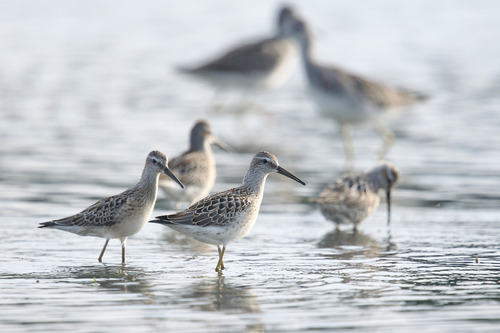 maçarico-pernilongo
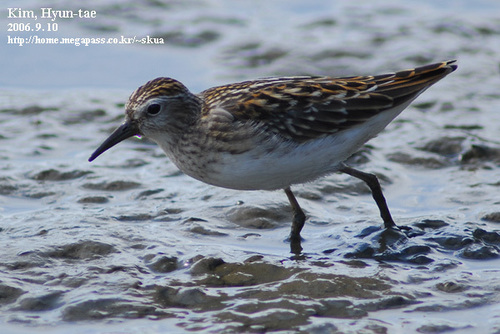 pilrito-de-dedos-compridos
Em resumo
A marca de campo mais confiável para separar o maçarico-pernilongo do pilrito-de-dedos-compridos é o tamanho e a estrutura: o maçarico-pernilongo é muito maior, com um pescoço mais longo, pernas mais longas e um bico notavelmente mais longo e ligeiramente curvado para baixo, enquanto o pilrito-de-dedos-compridos é minúsculo, compacto e tem um bico curto e reto. Em voo, o maçarico-pernilongo não possui uma faixa alar, enquanto o pilrito-de-dedos-compridos pode mostrar uma fraca, mas isso nem sempre é óbvio. As aves juvenis e não reprodutoras de ambas as espécies podem parecer semelhantes em cor geral, mas o maçarico-pernilongo sempre parece mais esguio e se destaca mais, com pernas amarelo-esverdeadas (não amarelo brilhante). A atenção cuidadosa à forma do bico, cor das pernas e proporções é fundamental, especialmente ao observar aves solitárias ou bandos mistos.
Dicas de identificação
- O tamanho é a primeira e mais óbvia pista: O maçarico-pernilongo é muito maior e mais alto que o pilrito-de-dedos-compridos. Se você ver uma ave limícola que parece esguia e se destaca acima de pequenos limícolas próximos, é provável que seja um maçarico-pernilongo.
- Forma e comprimento do bico: O maçarico-pernilongo tem um bico longo e ligeiramente curvado para baixo (não tão curvado quanto o maçarico-de-bico-curvo), enquanto o pilrito-de-dedos-compridos tem um bico curto, reto e com ponta afiada. Isso é visível mesmo à distância se a ave estiver de lado.
- Cor das pernas: As pernas do maçarico-pernilongo são amarelo-esverdeadas, enquanto as do pilrito-de-dedos-compridos são amarelas mais brilhantes. Isso pode ser sutil em luz fraca, mas é uma marca de apoio útil.
- Pescoço e postura: O maçarico-pernilongo tem um pescoço longo e se mantém ereto, frequentemente parecendo esticado. O pilrito-de-dedos-compridos tem pescoço mais curto, é mais compacto e se agacha mais perto do chão.
- Padrão de voo: O maçarico-pernilongo não possui uma faixa alar em voo, enquanto o pilrito-de-dedos-compridos pode mostrar uma fraca faixa alar (nem sempre óbvia). Se você ver uma faixa alar clara, não é um maçarico-pernilongo.
- Partes superiores juvenis: O juvenil do maçarico-pernilongo tem um padrão de cabeça forte e costas marrons com franjas brancas, mas não é estriado na parte inferior. O juvenil do pilrito-de-dedos-compridos é mais ruivo acima com listras brancas no manto. Procure o padrão da cabeça e o contraste nas costas.
- Plumagem reprodutiva na parte inferior: O adulto do maçarico-pernilongo é fortemente estriado na parte inferior com barras escuras sobre o branco; o pilrito-de-dedos-compridos é branco liso na parte inferior com algumas manchas marrons claras no peito.
- Supercílios e coroa: Ambos têm um supercílios pálido, mas o do maçarico-pernilongo é mais proeminente e pode ser bordado por manchas laranja-avermelhadas na plumagem reprodutiva. A coroa do pilrito-de-dedos-compridos é marrom, e o supercílios é menos marcante.
- Padrão das costas: O maçarico-pernilongo tem costas marrons com centros de penas mais escuros; o pilrito-de-dedos-compridos é marrom acima com centros mais escuros, mas é menor e mais delicado.
- Comprimento das pernas: As pernas do maçarico-pernilongo são muito mais longas, permitindo que ele se aprofunde mais na água do que o pilrito-de-dedos-compridos. Se a ave estiver forrageando em água até a barriga, é mais provável que seja um maçarico-pernilongo.
- Comportamento: O maçarico-pernilongo se move mais lentamente e deliberadamente, frequentemente sondando profundamente. O pilrito-de-dedos-compridos é mais ativo, pegando rapidamente na superfície.
- Comprimento dos dedos: O pilrito-de-dedos-compridos tem dedos especialmente longos para seu tamanho, que podem ser visíveis ao andar na lama, mas isso é sutil e raramente diagnóstico à distância.
- Contexto: Se visto na América do Norte, o maçarico-pernilongo é esperado; o pilrito-de-dedos-compridos é um vagrante raro. Na Eurásia, o contexto é menos útil, mas o maçarico-pernilongo ainda é raro fora de sua faixa normal.
- Bandos mistos: Se você ver uma ave muito maior e de pernas mais longas entre pequenos limícolas ou pilritos, suspeite do maçarico-pernilongo. Se todas as aves forem pequenas, verifique o pilrito-de-dedos-compridos.
- Quando em dúvida: Concentre-se primeiro no tamanho, forma do bico e cor das pernas. Se possível, tente ver a ave em voo para a presença ou ausência de uma faixa alar.
Tamanho
maçarico-pernilongo is substantially larger: 18–23 cm in length and 50–70 g in weight, compared to pilrito-de-dedos-compridos's 13–16 cm and about 30.5 g. The maçarico-pernilongo also has a much longer wingspan (37–42 cm vs. 26.5–30.5 cm). In the field, maçarico-pernilongo appears tall and elongated, with long legs and neck, while pilrito-de-dedos-compridos is noticeably smaller, more compact, and delicate. This size difference is usually obvious if the two are seen together, but can be underestimated if only one species is present.
Plumagem
- Juvenile/Immature birds: maçarico-pernilongo juveniles have a strong head pattern, brownish back with white fringes, and are not barred below. pilrito-de-dedos-compridos juveniles are brightly patterned above with rufous tones and white mantle stripes. Both can look similar at a distance, but the maçarico-pernilongo is larger and longer-necked, and its head pattern is more pronounced.
- Flight (all ages): maçarico-pernilongo lacks a wingbar in flight, while pilrito-de-dedos-compridos may show a weak wingbar, but this is not prominent and may be missed.
- Breeding plumage: maçarico-pernilongo adults are heavily barred below with blackish bars on white, and show reddish-orange patches above and below the white supercilium. pilrito-de-dedos-compridos adults are rich brown above with darker feather centers and white below, with a light supercilium and brown crown.
- Nonbreeding plumage: Both species become plainer: maçarico-pernilongo is gray above and white below, retaining a white supercilium; pilrito-de-dedos-compridos is gray above and white below with a pale supercilium and brown crown.
- Leg color: maçarico-pernilongo legs are greenish-yellow; pilrito-de-dedos-compridos legs are brighter yellow.
Comportamento
O maçarico-pernilongo normalmente forrageia com um andar lento e deliberado, frequentemente se aprofundando mais devido às suas pernas mais longas. Ele pode sondar mais profundamente na lama ou em água rasa. O pilrito-de-dedos-compridos é mais ativo e delicado, pegando rapidamente na superfície e se movendo rapidamente, frequentemente em água mais rasa ou na borda de lamaçais. A postura é distinta: o maçarico-pernilongo se mantém alto e ereto, enquanto o pilrito-de-dedos-compridos está mais baixo em relação ao chão, com uma postura mais horizontal. Os longos dedos do pilrito-de-dedos-compridos podem ser visíveis se vistos bem, especialmente ao andar na lama.
Habitat
Ambas as espécies utilizam lamaçais e wetlands rasos, mas o maçarico-pernilongo é mais provável de ser encontrado se aprofundando em água mais profunda devido às suas pernas mais longas. O pilrito-de-dedos-compridos prefere as bordas dos lamaçais e poças mais rasas. Em suas faixas normais, o maçarico-pernilongo é um migrante da América do Norte, enquanto o pilrito-de-dedos-compridos se reproduz no norte da Ásia e é um vagrante raro na Europa e na América do Norte. O contexto e a localização podem ajudar, mas não são diagnósticos se ambos forem possíveis.
Voz
Nenhuma vocalização diagnóstica é descrita nas notas fornecidas para qualquer uma das espécies. Ambas podem ter chamadas distintas, mas estas não são detalhadas aqui e não devem ser confiadas para separação com base nas informações atuais.
maçarico-pernilongo · pilrito-de-dedos-compridos · Minhas aves difíceis