

Steltstrandloper vs Taigastrandloper
Calidris himantopus versus Calidris subminuta
Speel een quiz met Steltstrandloper en Taigastrandloper
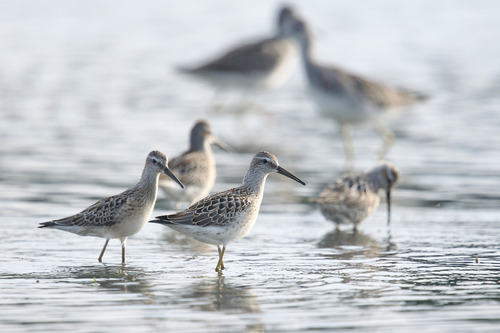 Steltstrandloper
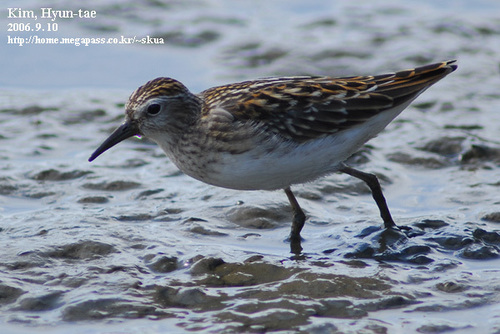 Taigastrandloper
Kort gezegd
Het meest betrouwbare veldkenmerk om de Steltstrandloper van de Taigastrandloper te onderscheiden, is grootte en structuur: de Steltstrandloper is veel groter, met een langere nek, langere poten en een merkbaar langere, licht gebogen snavel, terwijl de Taigastrandloper klein, compact is en een korte, rechte snavel heeft. In de vlucht mist de Steltstrandloper een vleugelstreep, terwijl de Taigastrandloper een zwakke kan tonen, maar dit is niet altijd duidelijk. Juveniele en niet-broedende vogels van beide soorten kunnen qua kleur vergelijkbaar lijken, maar de Steltstrandloper ziet er altijd slanker uit en staat hoger, met groenachtig-gele (niet felgele) poten. Zorgvuldige aandacht voor snavelvorm, potkleur en verhoudingen is essentieel, vooral bij het bekijken van alleenstaande vogels of gemengde groepen.
Herkenningstips
- Grootte is het eerste en meest voor de hand liggende kenmerk: De Steltstrandloper is veel groter en hoger dan de Taigastrandloper. Als je een strandvogel ziet die slank lijkt en boven de nabijgelegen piepers staat, is het waarschijnlijk een Steltstrandloper.
- Snavelvorm en -lengte: De Steltstrandloper heeft een lange, licht gebogen snavel (niet zo duidelijk gebogen als de Krombekstrandloper), terwijl de Taigastrandloper een korte, rechte, scherp-tipped snavel heeft. Dit is zelfs op afstand zichtbaar als de vogel zijwaarts staat.
- Poten kleur: De poten van de Steltstrandloper zijn groenachtig-geel, terwijl die van de Taigastrandloper feller geel zijn. Dit kan subtiel zijn bij slecht licht, maar is een nuttig ondersteunend kenmerk.
- Nek en houding: De Steltstrandloper heeft een lange nek en staat rechtop, vaak uitgestrekt. De Taigastrandloper heeft een kortere nek, is compacter en hurkt lager bij de grond.
- Vluchtpatroon: De Steltstrandloper mist een vleugelstreep in de vlucht, terwijl de Taigastrandloper een zwakke vleugelstreep kan tonen (niet altijd duidelijk). Als je een duidelijke vleugelstreep ziet, is het geen Steltstrandloper.
- Juveniele bovenkant: Juveniele Steltstrandloper heeft een sterk koppatroon en een bruinachtige rug met witte randen, maar is niet gebarricadeerd aan de onderkant. Juveniele Taigastrandloper is boven meer roestrood met witte mantelstrepen. Let op het koppatroon en het contrast van de rug.
- Broedkleed onderkant: Volwassen Steltstrandloper is zwaar gebarricadeerd aan de onderkant met zwartachtige strepen op wit; de Taigastrandloper is eenvoudig wit onder met enkele lichte bruine spikkels op de borst.
- Supercilium en kroon: Beide hebben een licht supercilium, maar het supercilium van de Steltstrandloper is prominenter en kan worden omrand door roest-oranje vlekken in het broedkleed. De kroon van de Taigastrandloper is bruin, en het supercilium is minder opvallend.
- Rugpatroon: De Steltstrandloper heeft een bruine rug met donkerdere veercentra; de Taigastrandloper is bruin boven met donkerdere centra maar is kleiner en fijner gebouwd.
- Poten lengte: De poten van de Steltstrandloper zijn veel langer, waardoor hij dieper kan waden dan de Taigastrandloper. Als de vogel zich voedt in water tot aan zijn buik, is het waarschijnlijker dat het een Steltstrandloper is.
- Gedrag: De Steltstrandloper beweegt langzamer en opzettelijk, vaak diep doorborend. De Taigastrandloper is actiever, pikt snel aan het oppervlak.
- Te lengte: De Taigastrandloper heeft bijzonder lange tenen voor zijn grootte, die zichtbaar kunnen zijn bij het lopen op modder, maar dit is subtiel en zelden diagnostisch op afstand.
- Context: Als je hem in Noord-Amerika ziet, wordt de Steltstrandloper verwacht; de Taigastrandloper is een zeldzame dwaalgast. In Eurazië is de context minder nuttig, maar de Steltstrandloper is nog steeds zeldzaam buiten zijn normale bereik.
- Gemengde groepen: Als je een veel grotere, langerbenige vogel tussen kleine piepers of strandlopers ziet, vermoed dan de Steltstrandloper. Als alle vogels klein zijn, kijk dan naar de Taigastrandloper.
- Bij twijfel: Focus eerst op grootte, snavelvorm en potkleur. Als het mogelijk is, probeer de vogel in de vlucht te zien voor de aanwezigheid of afwezigheid van een vleugelstreep.
Grootte
De Steltstrandloper is aanzienlijk groter: 18–23 cm in lengte en 50–70 g in gewicht, vergeleken met de 13–16 cm en ongeveer 30,5 g van de Taigastrandloper. De Steltstrandloper heeft ook een veel grotere vleugelspanwijdte (37–42 cm vs. 26,5–30,5 cm). In het veld lijkt de Steltstrandloper lang en langwerpig, met lange poten en nek, terwijl de Taigastrandloper merkbaar kleiner, compacter en delicater is. Dit formaatverschil is meestal duidelijk als de twee samen worden gezien, maar kan worden onderschat als slechts één soort aanwezig is.
Verenkleed
- Juveniele/Onvolwassen vogels: Juveniele Steltstrandloper heeft een sterk koppatroon, bruinachtige rug met witte randen, en is niet gebarricadeerd aan de onderkant. Juveniele Taigastrandloper is helder gepatterned boven met roestrode tonen en witte mantelstrepen. Beide kunnen op afstand vergelijkbaar lijken, maar de Steltstrandloper is groter en heeft een langere nek, en zijn koppatroon is meer uitgesproken.
- Vlucht (alle leeftijden): De Steltstrandloper mist een vleugelstreep in de vlucht, terwijl de Taigastrandloper een zwakke vleugelstreep kan tonen, maar dit is niet prominent en kan gemist worden.
- Broedkleed: Volwassen Steltstrandloper is zwaar gebarricadeerd aan de onderkant met zwartachtige strepen op wit, en toont roest-oranje vlekken boven en onder het witte supercilium. Volwassen Taigastrandloper is rijk bruin boven met donkerdere veercentra en wit onder, met een licht supercilium en een bruine kroon.
- Niet-broedkleed: Beide soorten worden eenvoudiger: de Steltstrandloper is grijs boven en wit onder, met een wit supercilium; de Taigastrandloper is grijs boven en wit onder met een licht supercilium en een bruine kroon.
- Poten kleur: De poten van de Steltstrandloper zijn groenachtig-geel; de poten van de Taigastrandloper zijn feller geel.
Gedrag
De Steltstrandloper zoekt typisch met een langzame, opzettelijke gang, vaak dieper waden door zijn langere poten. Hij kan dieper doorboren in modder of ondiep water. De Taigastrandloper is actiever en eleganter, pikt aan het oppervlak en beweegt snel, vaak in ondieper water of aan de rand van moddervlaktes. De houding is kenmerkend: de Steltstrandloper staat rechtop en recht, terwijl de Taigastrandloper lager bij de grond is, met een meer horizontale houding. De lange tenen van de Taigastrandloper kunnen zichtbaar zijn als ze goed worden gezien, vooral bij het lopen op modder.
Habitat
Beide soorten gebruiken moddervlaktes en ondiepe wetlands, maar de Steltstrandloper is waarschijnlijker te vinden in dieper water door zijn langere poten. De Taigastrandloper geeft de voorkeur aan de randen van moddervlaktes en ondiepe poelen. In hun normale gebieden is de Steltstrandloper een Noord-Amerikaanse migrant, terwijl de Taigastrandloper broedt in Noord-Azië en een zeldzame dwaalgast is in Europa en Noord-Amerika. Context en locatie kunnen helpen, maar zijn niet diagnostisch als beide mogelijk zijn.
Geluid
Geen diagnostische vocalisaties zijn beschreven in de verstrekte notities voor beide soorten. Beide kunnen onderscheidende roepen hebben, maar deze zijn hier niet gedetailleerd en moeten niet worden vertrouwd voor scheiding op basis van de huidige informatie.