

Motmot

アシナガシギ 対 ヒバリシギ

Calidris himantopus 対 Calidris subminuta

アシナガシギとヒバリシギのクイズ
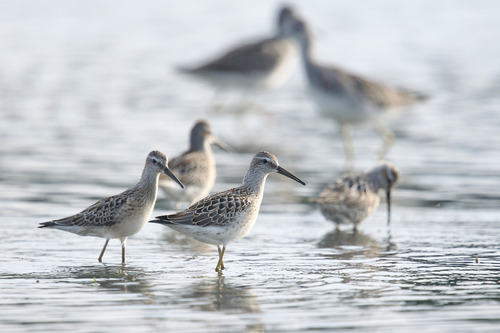
アシナガシギ (Calidris himantopus) アシナガシギ
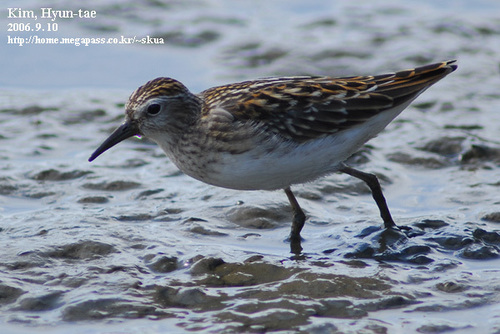
ヒバリシギ (Calidris subminuta) ヒバリシギ

メディア

読み込み中…

要点

スティルトサンドパイパーとヒバリシギを区別する最も信頼できるフィールドマークはサイズと構造です:スティルトサンドパイパーははるかに大きく、長い首、長い脚、そして明らかに長く、わずかに下向きのくちばしを持っています。一方、ヒバリシギは小さく、コンパクトで、短くて真っ直ぐなくちばしを持っています。飛行中、スティルトサンドパイパーには翼帯がなく、ヒバリシギは弱い翼帯を示すことがありますが、これは常に明らかではありません。両種の幼鳥と非繁殖期の鳥は全体的な色合いが似て見えることがありますが、スティルトサンドパイパーは常に痩せて見え、高く立ち、緑がかった黄色(明るい黄色ではない)の脚を持っています。特に孤立した鳥や混合した群れを観察する際には、くちばしの形、脚の色、比率に注意を払うことが重要です。

識別のコツ

  1. サイズは最初で最も明白な手がかりです: スティルトサンドパイパーはヒバリシギよりもはるかに大きく、高いです。もし近くの小さなシギよりも痩せて見え、高く立っている shorebird を見たら、それはおそらくスティルトサンドパイパーです。
  2. くちばしの形と長さ: スティルトサンドパイパーは長く、わずかに下向きのくちばしを持っています(サルハマシギほど明らかに曲がってはいません)、一方、ヒバリシギは短く、真っ直ぐで、鋭い先端のくちばしを持っています。これは鳥が横から見える場合、遠くからでも確認できます。
  3. 脚の色: スティルトサンドパイパーの脚は緑がかった黄色で、ヒバリシギの脚は明るい黄色です。これは薄暗い光の中では微妙ですが、役立つ補助マークです。
  4. 首と姿勢: スティルトサンドパイパーは長い首を持ち、直立して立ち、しばしば伸びて見えます。ヒバリシギは首が短く、よりコンパクトで、地面に低くかがんでいます。
  5. 飛行パターン: スティルトサンドパイパーは飛行中に翼帯がなく、ヒバリシギは弱い翼帯を示すことがあります(常に明らかではありません)。もし明確な翼帯が見えたら、それはスティルトサンドパイパーではありません。
  6. 幼鳥の上面: 幼鳥のスティルトサンドパイパーは強い頭の模様と茶色の背中を持っていますが、下は縞模様がありません。幼鳥のヒバリシギはより赤褐色で、白いマントルストライプがあります。頭の模様と背中のコントラストを探してください。
  7. 繁殖羽毛の下部: 成鳥のスティルトサンドパイパーは白地に黒っぽい縞模様が強く、ヒバリシギは下が単色の白で、胸に淡い茶色の斑点があります。
  8. スーパーシリウムと冠: 両種とも淡いスーパーシリウムを持っていますが、スティルトサンドパイパーの方が目立ち、繁殖羽毛では赤橙色の斑点で縁取られていることがあります。ヒバリシギの冠は茶色で、スーパーシリウムはそれほど目立ちません。
  9. 背中の模様: スティルトサンドパイパーは茶色の背中に暗い羽毛の中心を持っています。ヒバリシギは上面が茶色で、中心が暗いですが、より小さく、より細かく作られています。
  10. 脚の長さ: スティルトサンドパイパーの脚ははるかに長く、ヒバリシギよりも深く水に浸かることができます。もし鳥が腹まで水中で餌を探しているなら、それはスティルトサンドパイパーの可能性が高いです。
  11. 行動: スティルトサンドパイパーはよりゆっくりと意図的に動き、しばしば深く探ります。ヒバリシギはより活発で、表面を素早くつつきます。
  12. 指の長さ: ヒバリシギはそのサイズに対して特に長い指を持っており、泥の上を歩いているときに見えることがありますが、これは微妙で、遠くからは診断的ではありません。
  13. 文脈: 北アメリカで見られた場合、スティルトサンドパイパーが期待されます。ヒバリシギは珍しい迷鳥です。ユーラシアでは文脈はあまり役に立ちませんが、スティルトサンドパイパーは通常の範囲外では依然として珍しいです。
  14. 混合群れ: もし小さなシギやヒバリシギの中に、はるかに大きく、長い脚の鳥が見えたら、スティルトサンドパイパーを疑ってください。もしすべての鳥が小さいなら、ヒバリシギを確認してください。
  15. 疑わしい場合: まずサイズ、くちばしの形、脚の色に焦点を当ててください。可能であれば、飛行中の鳥を見て、翼帯の有無を確認してください。

大きさ

スティルトサンドパイパーはかなり大きいです:長さ18〜23 cm、体重50〜70 gで、ヒバリシギの13〜16 cm、約30.5 gと比較されます。スティルトサンドパイパーは翼幅もはるかに長く(37〜42 cm対26.5〜30.5 cm)、フィールドではスティルトサンドパイパーは高く、細長く見え、長い脚と首を持っています。一方、ヒバリシギは明らかに小さく、よりコンパクトで繊細です。このサイズの違いは通常、両者が一緒に見られると明らかですが、片方の種だけが存在する場合は過小評価されることがあります。

羽色

行動

スティルトサンドパイパーは通常、ゆっくりとした意図的な歩き方で餌を探し、長い脚のためにしばしば深く水に浸かります。泥や浅い水の中でより深く探ることがあります。ヒバリシギはより活発で、表面をつつきながら素早く動き、しばしば浅い水や泥干潟の端で見られます。姿勢は特徴的で、スティルトサンドパイパーは高く直立して立ち、ヒバリシギは地面に低く、より水平な姿勢を持っています。ヒバリシギの長い指は、特によく見える場合、泥の上を歩いているときに見えることがあります。

生息環境

両種は泥干潟や浅い湿地を利用しますが、スティルトサンドパイパーは長い脚のためにより深い水で餌を探す可能性が高いです。ヒバリシギは泥干潟の端や浅いプールを好みます。通常の範囲内では、スティルトサンドパイパーは北アメリカの渡り鳥であり、ヒバリシギは北アジアで繁殖し、ヨーロッパや北アメリカでは珍しい迷鳥です。文脈と場所は役立つことがありますが、両者が可能な場合は診断的ではありません。

声

提供されたメモには、両種の診断的な鳴き声は記載されていません。両者は特徴的な鳴き声を持っている可能性がありますが、ここでは詳細が記載されておらず、現在の情報に基づいて区別するために頼るべきではありません。

より良い説明を送る

比較と同じ項目を使ってください。文章はすぐに公開されます。

The most reliable field mark to separate Stilt Sandpiper from Long-toed Stint is size and structure: Stilt Sandpiper is much larger, with a longer neck, longer legs, and a noticeably longer, slightly downcurved bill, while Long-toed Stint is tiny, compact, and has a short, straight bill. In flight, Stilt Sandpiper lacks a wingbar, whereas Long-toed Stint may show a weak one, but this is not always obvious. Juvenile and nonbreeding birds of both species can appear similar in overall color, but Stilt Sandpiper always looks lankier and stands taller, with greenish-yellow (not bright yellow) legs. Careful attention to bill shape, leg color, and proportions is key, especially when viewing lone birds or mixed flocks.

  1. Size is the first and most obvious clue: Stilt Sandpiper is much larger and taller than Long-toed Stint. If you see a shorebird that looks lanky and stands above nearby peeps, it's likely a Stilt Sandpiper.
  2. Bill shape and length: Stilt Sandpiper has a long, slightly downcurved bill (not as obviously curved as Curlew Sandpiper), while Long-toed Stint has a short, straight, sharp-tipped bill. This is visible even at a distance if the bird is side-on.
  3. Leg color: Stilt Sandpiper's legs are greenish-yellow, while Long-toed Stint's are brighter yellow. This can be subtle in poor light, but is a useful supporting mark.
  4. Neck and stance: Stilt Sandpiper has a long neck and stands upright, often appearing stretched. Long-toed Stint is shorter-necked, more compact, and crouches lower to the ground.
  5. Flight pattern: Stilt Sandpiper lacks a wingbar in flight, while Long-toed Stint may show a weak wingbar (not always obvious). If you see a clear wingbar, it's not a Stilt Sandpiper.
  6. Juvenile upperparts: Juvenile Stilt Sandpiper has a strong head pattern and brownish back with white fringes, but is not barred below. Juvenile Long-toed Stint is more rufous above with white mantle stripes. Look for the head pattern and back contrast.
  7. Breeding plumage underparts: Adult Stilt Sandpiper is heavily barred below with blackish bars on white; Long-toed Stint is plain white below with some pale brown speckling on the breast.
  8. Supercilium and crown: Both have a pale supercilium, but Stilt Sandpiper's is more prominent and may be bordered by reddish-orange patches in breeding plumage. Long-toed Stint's crown is brown, and the supercilium is less striking.
  9. Back pattern: Stilt Sandpiper has a brown back with darker feather centers; Long-toed Stint is brown above with darker centers but is smaller and more finely built.
  10. Leg length: Stilt Sandpiper's legs are much longer, allowing it to wade deeper than Long-toed Stint. If the bird is foraging in water up to its belly, it's more likely a Stilt Sandpiper.
  11. Behavior: Stilt Sandpiper moves more slowly and deliberately, often probing deeply. Long-toed Stint is more active, picking quickly at the surface.
  12. Toe length: Long-toed Stint has especially long toes for its size, which may be visible when walking on mud, but this is subtle and rarely diagnostic at a distance.
  13. Context: If seen in North America, Stilt Sandpiper is expected; Long-toed Stint is a rare vagrant. In Eurasia, context is less helpful, but Stilt Sandpiper is still rare outside its normal range.
  14. Mixed flocks: If you see a much larger, longer-legged bird among small peeps or stints, suspect Stilt Sandpiper. If all birds are tiny, check for Long-toed Stint.
  15. When in doubt: Focus on size, bill shape, and leg color first. If possible, try to see the bird in flight for the presence or absence of a wingbar.

Stilt Sandpiper is substantially larger: 18–23 cm in length and 50–70 g in weight, compared to Long-toed Stint's 13–16 cm and about 30.5 g. The Stilt Sandpiper also has a much longer wingspan (37–42 cm vs. 26.5–30.5 cm). In the field, Stilt Sandpiper appears tall and elongated, with long legs and neck, while Long-toed Stint is noticeably smaller, more compact, and delicate. This size difference is usually obvious if the two are seen together, but can be underestimated if only one species is present.

  • Juvenile/Immature birds: Stilt Sandpiper juveniles have a strong head pattern, brownish back with white fringes, and are not barred below. Long-toed Stint juveniles are brightly patterned above with rufous tones and white mantle stripes. Both can look similar at a distance, but the Stilt Sandpiper is larger and longer-necked, and its head pattern is more pronounced.
  • Flight (all ages): Stilt Sandpiper lacks a wingbar in flight, while Long-toed Stint may show a weak wingbar, but this is not prominent and may be missed.
  • Breeding plumage: Stilt Sandpiper adults are heavily barred below with blackish bars on white, and show reddish-orange patches above and below the white supercilium. Long-toed Stint adults are rich brown above with darker feather centers and white below, with a light supercilium and brown crown.
  • Nonbreeding plumage: Both species become plainer: Stilt Sandpiper is gray above and white below, retaining a white supercilium; Long-toed Stint is gray above and white below with a pale supercilium and brown crown.
  • Leg color: Stilt Sandpiper legs are greenish-yellow; Long-toed Stint legs are brighter yellow.

Stilt Sandpiper typically forages with a slow, deliberate gait, often wading deeper due to its longer legs. It may probe more deeply in mud or shallow water. Long-toed Stint is more active and dainty, picking at the surface and moving quickly, often in shallower water or at the edge of mudflats. The stance is distinctive: Stilt Sandpiper stands tall and upright, while Long-toed Stint is lower to the ground, with a more horizontal posture. Long-toed Stint's long toes may be visible if seen well, especially when walking on mud.

Both species use mudflats and shallow wetlands, but Stilt Sandpiper is more likely to be found wading in deeper water due to its longer legs. Long-toed Stint prefers the edges of mudflats and shallower pools. In their normal ranges, Stilt Sandpiper is a North American migrant, while Long-toed Stint breeds in northern Asia and is a rare vagrant in Europe and North America. Context and location can help, but are not diagnostic if both are possible.

No diagnostic vocalizations are described in the provided notes for either species. Both may have distinctive calls, but these are not detailed here and should not be relied upon for separation based on the current information.

変更を破棄しますか?

保存していない編集があります。今離れると失われます。

アシナガシギ · ヒバリシギ · 苦手な鳥