

Correlimos Zancolín vs Correlimos Dedilargo
Calidris himantopus frente a Calidris subminuta
Juega un quiz con Correlimos Zancolín y Correlimos Dedilargo
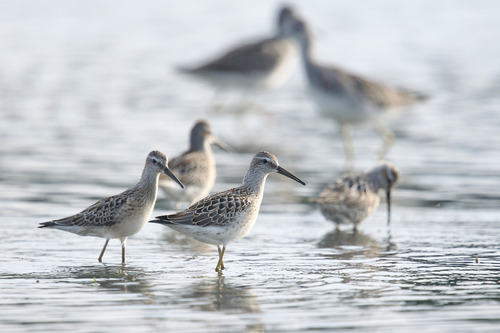 Correlimos Zancolín
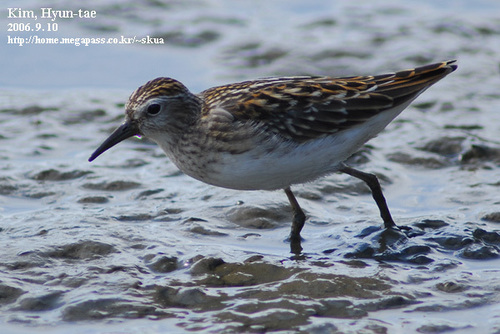 Correlimos Dedilargo
En breve
La marca de campo más confiable para separar el Correlimos Zancolín del Correlimos Dedilargo es el tamaño y la estructura: el Correlimos Zancolín es mucho más grande, con un cuello más largo, piernas más largas y un pico notablemente más largo y ligeramente curvado hacia abajo, mientras que el Correlimos Dedilargo es pequeño, compacto y tiene un pico corto y recto. En vuelo, el Correlimos Zancolín carece de una barra alar, mientras que el Correlimos Dedilargo puede mostrar una débil, pero esto no siempre es obvio. Las aves juveniles y no reproductivas de ambas especies pueden parecer similares en color general, pero el Correlimos Zancolín siempre se ve más delgado y se mantiene más alto, con piernas amarillas verdosas (no amarillas brillantes). Prestar atención cuidadosa a la forma del pico, el color de las piernas y las proporciones es clave, especialmente al observar aves solitarias o bandadas mixtas.
Consejos de identificación
- El tamaño es la primera y más obvia pista: El Correlimos Zancolín es mucho más grande y alto que el Correlimos Dedilargo. Si ves una ave playera que parece delgada y se mantiene por encima de los peeps cercanos, es probable que sea un Correlimos Zancolín.
- Forma y longitud del pico: El Correlimos Zancolín tiene un pico largo y ligeramente curvado hacia abajo (no tan evidentemente curvado como el Correlimos Zarapitín), mientras que el Correlimos Dedilargo tiene un pico corto, recto y afilado. Esto es visible incluso a distancia si el ave está de lado.
- Color de las piernas: Las piernas del Correlimos Zancolín son amarillas verdosas, mientras que las del Correlimos Dedilargo son de un amarillo más brillante. Esto puede ser sutil en mala luz, pero es una marca de apoyo útil.
- Cuello y postura: El Correlimos Zancolín tiene un cuello largo y se mantiene erguido, a menudo pareciendo estirado. El Correlimos Dedilargo tiene un cuello más corto, es más compacto y se agacha más cerca del suelo.
- Patrón de vuelo: El Correlimos Zancolín carece de una barra alar en vuelo, mientras que el Correlimos Dedilargo puede mostrar una débil barra alar (no siempre obvia). Si ves una barra alar clara, no es un Correlimos Zancolín.
- Partes superiores juveniles: El juvenil de Correlimos Zancolín tiene un fuerte patrón en la cabeza y un dorso marrón con bordes blancos, pero no tiene barras por debajo. El juvenil de Correlimos Dedilargo es más rufo por encima con franjas blancas en el manto. Busca el patrón en la cabeza y el contraste en el dorso.
- Plumaje de cría en las partes inferiores: El adulto de Correlimos Zancolín tiene muchas barras por debajo con barras negruzcas sobre blanco; el Correlimos Dedilargo es completamente blanco por debajo con algunas manchas marrones pálidas en el pecho.
- Supercilio y corona: Ambos tienen un supercilio pálido, pero el del Correlimos Zancolín es más prominente y puede estar bordeado por parches anaranjados rojizos en plumaje de cría. La corona del Correlimos Dedilargo es marrón, y el supercilio es menos llamativo.
- Patrón del dorso: El Correlimos Zancolín tiene un dorso marrón con centros de plumas más oscuros; el Correlimos Dedilargo es marrón por encima con centros más oscuros pero es más pequeño y más delicado.
- Longitud de las piernas: Las piernas del Correlimos Zancolín son mucho más largas, lo que le permite vadear más profundo que el Correlimos Dedilargo. Si el ave está buscando alimento en agua hasta su vientre, es más probable que sea un Correlimos Zancolín.
- Comportamiento: El Correlimos Zancolín se mueve más lentamente y deliberadamente, a menudo sondeando profundamente. El Correlimos Dedilargo es más activo, picoteando rápidamente en la superficie.
- Longitud de los dedos: El Correlimos Dedilargo tiene dedos especialmente largos para su tamaño, que pueden ser visibles al caminar sobre barro, pero esto es sutil y rara vez es diagnóstico a distancia.
- Contexto: Si se ve en América del Norte, se espera el Correlimos Zancolín; el Correlimos Dedilargo es un vagabundo raro. En Eurasia, el contexto es menos útil, pero el Correlimos Zancolín sigue siendo raro fuera de su rango normal.
- Bandadas mixtas: Si ves un ave mucho más grande y de piernas más largas entre pequeños peeps o correlimos, sospecha del Correlimos Zancolín. Si todas las aves son pequeñas, verifica si hay un Correlimos Dedilargo.
- Cuando tengas dudas: Concéntrate primero en el tamaño, la forma del pico y el color de las piernas.
Tamaño
El Correlimos Zancolín es sustancialmente más grande: 18–23 cm de longitud y 50–70 g de peso, en comparación con los 13–16 cm y aproximadamente 30.5 g del Correlimos Dedilargo. El Correlimos Zancolín también tiene una envergadura mucho más larga (37–42 cm frente a 26.5–30.5 cm). En el campo, el Correlimos Zancolín parece alto y alargado, con piernas y cuello largos, mientras que el Correlimos Dedilargo es notablemente más pequeño, más compacto y delicado. Esta diferencia de tamaño suele ser obvia si se ven juntos, pero puede subestimarse si solo está presente una especie.
Plumaje
- Aves juveniles/inmaduras: Los juveniles de Correlimos Zancolín tienen un fuerte patrón en la cabeza, un dorso marrón con bordes blancos y no tienen barras por debajo. Los juveniles de Correlimos Dedilargo tienen un patrón brillante por encima con tonos rufos y franjas blancas en el manto. Ambos pueden parecer similares a distancia, pero el Correlimos Zancolín es más grande y de cuello más largo, y su patrón en la cabeza es más pronunciado.
- Vuelo (todas las edades): El Correlimos Zancolín carece de una barra alar en vuelo, mientras que el Correlimos Dedilargo puede mostrar una débil barra alar, pero esto no es prominente y puede pasarse por alto.
- Plumaje de cría: Los adultos de Correlimos Zancolín están fuertemente barrados por debajo con barras negruzcas sobre blanco, y muestran parches anaranjados rojizos por encima y por debajo del supercilio blanco. Los adultos de Correlimos Dedilargo son de un marrón rico por encima con centros de plumas más oscuros y blanco por debajo, con un supercilio claro y corona marrón.
- Plumaje no reproductivo: Ambas especies se vuelven más simples: el Correlimos Zancolín es gris por encima y blanco por debajo, manteniendo un supercilio blanco; el Correlimos Dedilargo es gris por encima y blanco por debajo con un supercilio pálido y corona marrón.
- Color de las piernas: Las piernas del Correlimos Zancolín son amarillas verdosas; las piernas del Correlimos Dedilargo son de un amarillo más brillante.
Comportamiento
El Correlimos Zancolín generalmente busca alimento con un paso lento y deliberado, a menudo vadear más profundo debido a sus piernas más largas. Puede sondear más profundamente en barro o agua poco profunda. El Correlimos Dedilargo es más activo y delicado, picoteando en la superficie y moviéndose rápidamente, a menudo en agua más superficial o en el borde de los llanos de barro. La postura es distintiva: el Correlimos Zancolín se mantiene alto y erguido, mientras que el Correlimos Dedilargo está más cerca del suelo, con una postura más horizontal. Los dedos largos del Correlimos Dedilargo pueden ser visibles si se ven bien, especialmente al caminar sobre barro.
Hábitat
Ambas especies utilizan llanos de barro y humedales poco profundos, pero es más probable que el Correlimos Zancolín se encuentre vadear en aguas más profundas debido a sus piernas más largas. El Correlimos Dedilargo prefiere los bordes de los llanos de barro y charcas más superficiales. En sus rangos normales, el Correlimos Zancolín es un migrante de América del Norte, mientras que el Correlimos Dedilargo cría en el norte de Asia y es un vagabundo raro en Europa y América del Norte. El contexto y la ubicación pueden ayudar, pero no son diagnósticos si ambos son posibles.
Voz
No se describen vocalizaciones diagnósticas en las notas proporcionadas para ninguna de las especies. Ambas pueden tener llamados distintivos, pero estos no se detallan aquí y no deben ser utilizados para la separación basándose en la información actual.
Correlimos Zancolín · Correlimos Dedilargo · Mis aves difíciles