

sri lanka white-eye vs indian white-eye
Zosterops ceylonensis versus Zosterops palpebrosus
Jogue um quiz com sri lanka white-eye e indian white-eye
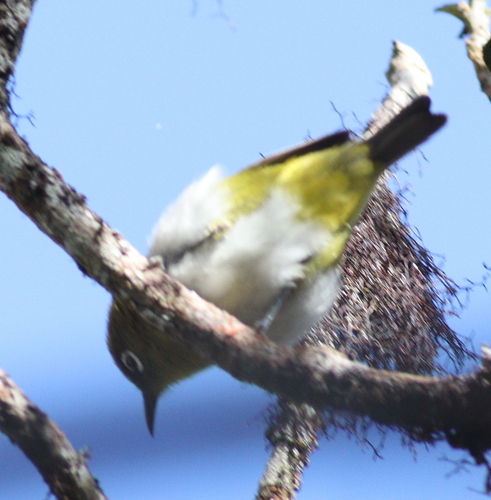 sri lanka white-eye
 indian white-eye
Em resumo
A marca de campo mais confiável para separar o sri lanka white-eye do indian white-eye é a combinação de tamanho geral e tom da plumagem: o sri lanka white-eye é visivelmente maior e tem um dorso verde-oliva mais escuro e opaco, com mais amarelo no peito e uma mancha mais escura entre o olho e o bico. O indian white-eye é menor, mais amarelo-esverdeado e tem um amarelo mais limitado restrito à garganta e ao ânus. Ambas as espécies apresentam um anel ocular branco conspícuo, mas as lore mais escuras e o peito amarelo mais amplo do sri lanka white-eye são fundamentais na comparação direta. Diferenças específicas de padrão de asa imatura ou juvenil não são descritas nas fontes, então concentre-se na cor geral, tamanho e detalhes faciais.
Dicas de identificação
- O tamanho é um separador primário: O sri lanka white-eye é cerca de 2–3 cm maior que o indian white-eye. Em bandos mistos ou zonas sobrepostas, procure pelo pássaro maior e mais robusto.
- Cor do dorso: O sri lanka white-eye tem um dorso verde-oliva escuro e opaco; o indian white-eye é mais amarelo-esverdeado acima, especialmente na raça do Sri Lanka (egregia).
- Amarelo no peito: O sri lanka white-eye mostra mais amarelo no peito, misturando-se à garganta e ao queixo, enquanto o amarelo do indian white-eye está principalmente na garganta e no ânus, com o peito e a barriga mais cinza-esbranquiçados.
- Padrão facial: O sri lanka white-eye tem uma mancha mais escura entre o olho e o bico (lore escuras e uma faixa escura abaixo do olho), que contrasta com o rosto mais brilhante do indian white-eye.
- Anel ocular: Ambos têm um anel ocular branco conspícuo, mas no sri lanka white-eye ele é destacado pelas lore mais escuras, fazendo com que o anel pareça mais isolado.
- Cor da barriga: O sri lanka white-eye tem uma barriga cinza-esbranquiçada, enquanto a barriga do indian white-eye é cinza-esbranquiçada ou às vezes amarelada, dependendo da subespécie.
- Cor do bico: O sri lanka white-eye tem um bico escuro com uma base ardósia na mandíbula inferior; o bico do indian white-eye é menos distintamente marcado.
- Cor das pernas: Ambas as espécies têm pernas escuras; isso não é um separador útil.
- Cor da íris: A íris do sri lanka white-eye pode ser amarela a marrom-avermelhada, mas isso é sutil e raramente diagnóstico em campo.
- Comportamento de agrupamento: Bandos grandes e coesos nas terras altas do Sri Lanka são provavelmente sri lanka white-eye, especialmente acima de 4000 pés.
- Habitat e elevação: No Sri Lanka, o indian white-eye é encontrado em elevações mais baixas (pássaros menores e mais brilhantes), enquanto o sri lanka white-eye domina as terras altas.
- Sem padrão de asa específico para idade: Não há diferenças descritas nos padrões de asa ou de voo de juvenis ou imaturos entre essas espécies; concentre-se no tamanho e na cor.
- Sexos semelhantes: Ambas as espécies mostram pouco dimorfismo sexual; todas as marcas de campo se aplicam a ambos os sexos.
- Confusão de subespécies: O indian white-eye no Sri Lanka (raça egregia) é menor e mais brilhante que o sri lanka white-eye, o que ajuda na comparação direta.
- Quando em dúvida: Se o pássaro é pequeno, brilhante amarelo-esverdeado e em baixa elevação, é provável que seja um indian white-eye. Se maior, mais opaco e nas terras altas, é um sri lanka white-eye.
Tamanho
O sri lanka white-eye é distintamente maior (cerca de 11 cm de comprimento) em comparação com o indian white-eye (8–9 cm). Essa diferença de tamanho é geralmente aparente quando ambas as espécies são vistas na mesma área, especialmente nas terras altas centrais do Sri Lanka, onde as duas podem se sobrepor em certas elevações. O sri lanka white-eye também parece mais robusto e com cauda mais longa em comparação direta. Nenhum dado de massa ou comprimento de asa é fornecido, mas a diferença de comprimento é consistente entre as fontes.
Plumagem
- Adultos: O sri lanka white-eye tem partes superiores verde-oliva escuras, um rabo verde mais claro e uma coroa e testa mais escuras. O amarelo no peito é mais extenso, misturando-se ao queixo e à garganta verde-amarelada, e a barriga é cinza-esbranquiçada. As lore são escuras, e há uma faixa escura abaixo do olho, com uma base ardósia na mandíbula inferior. O indian white-eye é mais amarelo-esverdeado acima, com amarelo restrito principalmente à garganta e ao ânus, e uma barriga cinza-esbranquiçada (às vezes amarelada). O dorso é mais brilhante e menos oliva do que o sri lanka white-eye, especialmente na raça do Sri Lanka (egregia). Ambas as espécies têm um anel ocular branco, mas o do sri lanka white-eye é destacado pelas lore mais escuras e um rosto mais sombreado.
- Juvenis/imaturos: Nenhuma diferença específica de padrão de asa ou de voo relacionada à idade é descrita para qualquer uma das espécies. As principais marcas de campo permanecem as de cor geral e padrão facial, não painéis de asa superior ou marcas de voo.
Comportamento
O sri lanka white-eye é notavelmente sociável, formando frequentemente grandes bandos fora da temporada de reprodução, e é tipicamente visto nas terras altas acima de 4000 pés. O indian white-eye forrageia em grupos menores e é mais disseminado em florestas abertas e jardins em elevações mais baixas. Ambas as espécies são ativas, ágeis e se alimentam de insetos e néctar, mas o comportamento de agrupamento do sri lanka white-eye nas terras altas pode ser uma pista contextual útil.
Habitat
O sri lanka white-eye é endêmico do Sri Lanka e é encontrado principalmente em florestas, jardins e plantações das terras altas centrais, substituindo o indian white-eye acima de 4000 pés. O indian white-eye é amplamente distribuído pelo subcontinente indiano, ocupando florestas abertas, jardins e às vezes plantações, mas geralmente está ausente das elevações mais altas onde o sri lanka white-eye domina. No Sri Lanka, o indian white-eye (raça egregia) é menor e ocorre em elevações mais baixas com um dorso e garganta mais brilhantes.
sri lanka white-eye · indian white-eye · Minhas aves difíceis