

spotted forktail vs himalayan rubythroat
Enicurus maculatus versus Calliope pectoralis
Jogue um quiz com spotted forktail e himalayan rubythroat
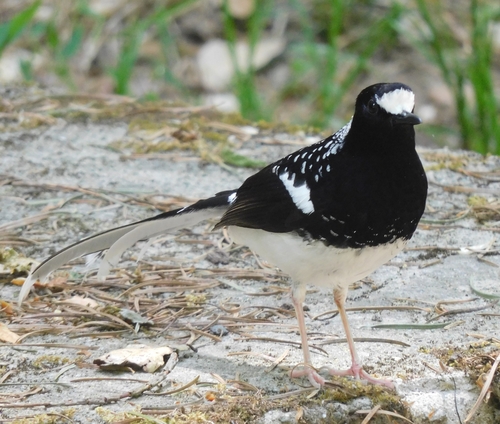 spotted forktail
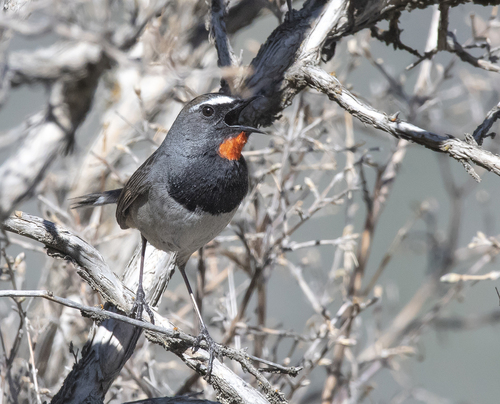 himalayan rubythroat
Em resumo
A marca de campo mais confiável para separar o spotted forktail do himalayan rubythroat é o impressionante dorso preto do spotted forktail, fortemente salpicado de branco, e sua cauda profundamente bifurcada, preta e branca, visível em todas as idades e especialmente óbvia em voo. O himalayan rubythroat não apresenta manchas brancas nas costas e, em vez disso, exibe uma parte superior marrom ou cinza uniforme, com machos ostentando uma vibrante mancha de garganta escarlate e base/pontas da cauda brancas, mas sem manchas. Os forktails são maiores, com caudas mais longas e sempre associados a águas correntes, enquanto os rubythroats são menores, eretos e mais frequentemente encontrados em arbustos ou florestas abertas. Se você vê um dorso fortemente manchado e uma ampla faixa branca na asa, você tem um spotted forktail; se o pássaro é uniforme por cima com um padrão facial forte e, nos machos, uma garganta vermelha, é um himalayan rubythroat.
Dicas de identificação
- Padrão do dorso (todas as idades): O spotted forktail sempre tem um dorso preto com manchas brancas ousadas; o himalayan rubythroat nunca mostra manchas brancas nas costas.
- Forma e padrão da cauda: A cauda do spotted forktail é muito longa, profundamente bifurcada e com padrão preto e branco ousado; a cauda do himalayan rubythroat é mais curta, não bifurcada, acinzentada com base e pontas brancas (não tão impressionante ou contrastante).
- Faixa na asa: O spotted forktail tem uma ampla faixa branca na asa visível tanto empoleirado quanto em voo; o himalayan rubythroat não possui faixa na asa, com asas marrons uniformes.
- Testa branca: Ambas as espécies podem mostrar uma testa branca, mas no forktail ela é mais ampla e destacada pela coroa preta e dorso manchado; no rubythroat, especialmente nos machos, faz parte de um padrão facial mais complexo com um supercílio e (em algumas subespécies) uma faixa submoustachial.
- Garganta e partes inferiores (machos): O macho do himalayan rubythroat tem uma vibrante mancha de garganta escarlate bordada por preto e cinza, com barriga branca e lados pretos na garganta e peito; o spotted forktail nunca mostra vermelho ou preto na garganta ou peito.
- Confusão entre fêmeas/imaturos: A fêmea do himalayan rubythroat é de um marrom acinzentado sem brilho por cima, com um supercílio difuso e garganta esbranquiçada, mas ainda assim não possui manchas brancas ou faixa na asa; a fêmea/imatura do forktail sempre mostra dorso manchado e faixa branca na asa.
- Contexto do habitat: O spotted forktail quase nunca é encontrado longe de riachos de águas rápidas; se você vê um pássaro com um dorso manchado em um riacho florestal ou desfiladeiro cheio de pedras, é um forktail. O himalayan rubythroat é encontrado em florestas abertas, arbustos ou matas, raramente perto da água.
- Comportamento: O forktail é ativo, frequentemente balançando sua longa cauda e se movendo ao longo das pedras em riachos; o rubythroat é mais ereto, empoleira-se em locais abertos para cantar ou se esconde em coberturas densas.
- Tamanho e estrutura: O forktail é muito maior e com cauda mais longa, com um corpo mais alongado; o rubythroat é menor, compacto e com forma semelhante a um tordo.
- Visão em voo: Em voo, o forktail exibe uma ampla faixa branca na asa e dorso manchado; o rubythroat mostra asas marrons uniformes e um padrão de cauda menos contrastante.
- Voz: O chamado do forktail é um 'KREE' áspero e estridente, especialmente em voo; a canção do rubythroat é mais musical e variável, com chamados mais suaves.
- Diferenças sexuais: Apenas o macho do rubythroat mostra uma garganta vermelha; os sexos do forktail são semelhantes.
- Movimento sazonal: Ambas as espécies podem descer para altitudes mais baixas no inverno, mas a preferência de habitat (riacho vs. arbusto) continua sendo um forte separador.
- Erros comuns: Não confunda a testa branca ou o branco na cauda do rubythroat com as ousadas manchas brancas e faixa na asa do forktail; sempre verifique as manchas nas costas e a forma da cauda.
- Quando em dúvida: Se você vê um pássaro com uma cauda longa e profundamente bifurcada e manchas brancas ousadas nas costas, é um spotted forktail. Se o pássaro é uniforme por cima, com um padrão facial forte e (nos machos) uma garganta vermelha, é um himalayan rubythroat.
Tamanho
O spotted forktail é substancialmente maior e mais pesado (41 g vs. 23 g) e parece ter um corpo mais longo com uma cauda proporcionalmente muito mais longa e profundamente bifurcada. O himalayan rubythroat é visivelmente menor e mais compacto, com uma cauda mais curta e uma postura mais ereta, semelhante a um tordo. Essa diferença de tamanho é geralmente óbvia quando vistos lado a lado ou com experiência, mas pode ser mais difícil de julgar à distância ou em isolamento.
Plumagem
- Todas as idades, todas as estações: O spotted forktail sempre mostra um dorso preto com manchas brancas ousadas e uma ampla faixa branca na asa, além de uma cauda preta e branca profundamente bifurcada. Essas marcas estão presentes tanto em adultos quanto em imaturos e são visíveis tanto empoleirados quanto em voo. A testa branca também é uma característica constante.
- Himalayan Rubythroat (macho adulto): Sem manchas brancas nas costas. As partes superiores são de um marrom acinzentado ou preto, com uma testa branca e supercílio, e uma impressionante mancha de garganta escarlate bordada por preto e cinza. A cauda é acinzentada com base e pontas brancas, mas nunca bifurcada ou manchada. As partes inferiores são brancas com lados pretos na garganta e peito.
- Himalayan Rubythroat (fêmea): Marrom acinzentado sem brilho por cima, sem manchas brancas ou faixa na asa, com um supercílio difuso e partes inferiores escuras. A garganta é esbranquiçada, às vezes com uma curta faixa moustachial. O padrão da cauda (base/pontas brancas) é sutil e não tão ousado quanto o padrão da cauda do forktail.
- Em voo: A faixa branca do forktail e o dorso manchado são visíveis de cima, enquanto o himalayan rubythroat mostra asas marrons uniformes e partes superiores com apenas um sutil branco na cauda.
Comportamento
O spotted forktail é quase sempre visto ao longo de riachos de águas rápidas, frequentemente pulando em pedras ou forrageando na borda da água, e é frequentemente visto em voo sobre a água, exibindo sua cauda e faixa brancas. Seus movimentos são ativos e ele frequentemente balança sua cauda. O himalayan rubythroat é tímido, geralmente encontrado sozinho ou em pares em florestas arbustivas ou abertas, frequentemente empoleirando-se ereto em arbustos baixos ou cantando de poleiros expostos. É menos provável que seja visto perto da água e mais provável que se esconda em coberturas densas, especialmente fêmeas e pássaros não reprodutores.
Habitat
O spotted forktail está intimamente ligado a riachos de montanha cheios de pedras, desfiladeiros florestais e canais à beira da estrada em florestas montanhosas ou montanhosas, tipicamente a 1200–3600 m na época de reprodução e descendo para cerca de 600 m no inverno. É raramente encontrado longe de água corrente. O himalayan rubythroat prefere florestas abertas, arbustos e matas, frequentemente em altitudes elevadas no verão, mas descendo para altitudes mais baixas no inverno. Não está associado a riachos e é mais provável que seja encontrado em habitats secos ou arbustivos, às vezes em áreas abertas, mas raramente perto de água de fluxo rápido.
Voz
O spotted forktail emite um 'KREE' estridente e agudo, especialmente em voo, e algumas notas estridentes quando empoleirado. A canção do himalayan rubythroat é uma série de notas estridentes e variáveis emitidas de um poleiro exposto; as fêmeas emitem uma nota curta e rouca seguida por um assobio com inflexão ascendente, e o chamado de alarme é um 'skyap' agudo. O chamado do forktail é mais áspero e penetrante, enquanto as vocalizações do rubythroat são mais suaves e variadas.
spotted forktail · himalayan rubythroat · Minhas aves difíceis