

Énicure tacheté vs Rossignol à gorge rubis
Enicurus maculatus contre Calliope pectoralis
Faire un quiz avec Énicure tacheté et Rossignol à gorge rubis
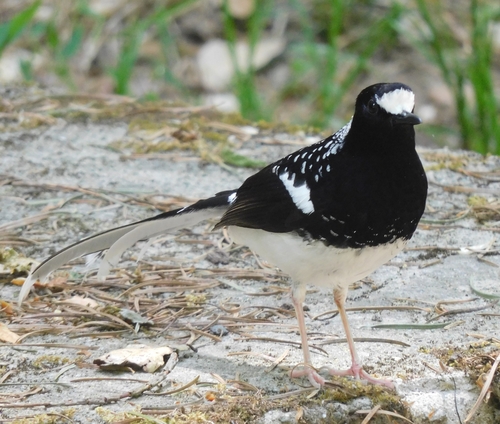 Énicure tacheté
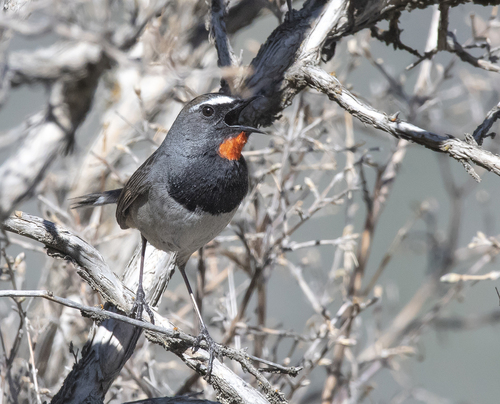 Rossignol à gorge rubis
En bref
Le marqueur de terrain le plus fiable pour séparer l'Énicure tacheté du Rossignol à gorge rubis est le dos noir frappant de l'Énicure tacheté, fortement tacheté de blanc, et sa queue profondément fourchue, noir et blanc, visible à tous les âges et particulièrement évidente en vol. Le Rossignol à gorge rubis n'a aucune tache blanche sur le dos et présente plutôt une partie supérieure brunâtre ou ardoisée, avec des mâles arborant une vive tache de gorge écarlate et une base/pointes de queue blanches, mais sans taches. Les Énicures sont plus grands, avec une queue plus longue, et toujours associés à des eaux courantes, tandis que les Rossignols à gorge rubis sont plus petits, droits, et plus souvent trouvés dans des broussailles ou des bois ouverts. Si vous voyez un dos fortement tacheté et une large barre alaire blanche, vous avez un Énicure tacheté ; si l'oiseau est uni au-dessus avec un fort motif facial et, chez les mâles, une gorge rouge, c'est un Rossignol à gorge rubis.
Conseils d’identification
- Motif du dos (tous âges) : L'Énicure tacheté a toujours un dos noir avec de fortes taches blanches ; le Rossignol à gorge rubis ne montre jamais de taches blanches sur le dos.
- Forme et motif de la queue : La queue de l'Énicure tacheté est très longue, profondément fourchue, et fortement marquée de noir et blanc ; la queue du Rossignol à gorge rubis est plus courte, non fourchue, noirâtre avec une base et des pointes blanches (pas aussi frappante ou contrastée).
- Barre alaire : L'Énicure tacheté a une large barre alaire blanche visible à la fois en perchoir et en vol ; le Rossignol à gorge rubis n'a pas de barre alaire, avec des ailes brunâtres unies.
- Front blanc : Les deux espèces peuvent montrer un front blanc, mais chez l'Énicure, il est plus large et délimité par la couronne noire et le dos tacheté ; chez le Rossignol à gorge rubis, surtout chez les mâles, il fait partie d'un motif facial plus complexe avec un supercil et (dans certaines sous-espèces) une bande sous-moustachiale.
- Gorge et parties inférieures (mâles) : Le mâle Rossignol à gorge rubis a une vive tache de gorge écarlate bordée de noir et de gris, avec un ventre blanc et des côtés noirs à la gorge et à la poitrine ; l'Énicure tacheté ne montre jamais de rouge ou de noir sur la gorge ou la poitrine.
- Confusion femelle/immature : La femelle Rossignol à gorge rubis est d'un brun grisâtre terne au-dessus avec un supercil diffus et une gorge blanchâtre, mais elle manque toujours de taches blanches ou de barre alaire ; la femelle/immature Énicure montre toujours un dos tacheté et une barre alaire blanche.
- Contexte d'habitat : L'Énicure tacheté n'est presque jamais trouvé loin des ruisseaux à courant rapide ; si vous voyez un oiseau avec un dos tacheté dans un ruisseau forestier ou un ravin jonché de rochers, c'est un Énicure. Le Rossignol à gorge rubis se trouve dans des bois ouverts, des broussailles, ou des buissons, rarement près de l'eau.
- Comportement : L'Énicure est actif, souvent en train de fouetter sa longue queue et de se déplacer le long des rochers dans les ruisseaux ; le Rossignol à gorge rubis est plus droit, se perche à découvert pour chanter, ou se cache dans une couverture dense.
- Taille et structure : L'Énicure est beaucoup plus grand et a une queue plus longue, avec un corps plus allongé ; le Rossignol à gorge rubis est plus petit, compact, et de forme semblable à celle d'un rouge-gorge.
- Vue en vol : En vol, l'Énicure fait briller une large barre alaire blanche et un dos tacheté ; le Rossignol à gorge rubis montre des ailes brunâtres unies et un motif de queue moins contrasté.
- Voix : L'appel de l'Énicure est un 'KREE' aigu et strident, surtout en vol ; le chant du Rossignol à gorge rubis est plus musical et variable, avec des appels plus doux.
- Différences sexuelles : Seul le mâle Rossignol à gorge rubis montre une gorge rouge ; les sexes de l'Énicure sont semblables.
- Mouvement saisonnier : Les deux espèces peuvent descendre à des altitudes plus basses en hiver, mais la préférence d'habitat (ruisseau vs. broussailles) reste un fort séparateur.
- Pièges courants : Ne confondez pas le front blanc ou le blanc dans la queue du Rossignol à gorge rubis avec les fortes taches blanches et la barre alaire de l'Énicure ; vérifiez toujours les taches sur le dos et la forme de la queue.
- En cas de doute : Si vous voyez un oiseau avec une longue queue profondément fourchue et de fortes taches blanches sur le dos, c'est un Énicure tacheté. Si l'oiseau est uni au-dessus, avec un fort motif facial et (chez les mâles) une gorge rouge, c'est un Rossignol à gorge rubis.
Taille
L'Énicure tacheté est substantiellement plus grand et plus lourd (41 g contre 23 g) et semble avoir un corps plus long avec une queue proportionnellement beaucoup plus longue et profondément fourchue. Le Rossignol à gorge rubis est visiblement plus petit et plus compact, avec une queue plus courte et une posture plus droite, semblable à celle d'un rouge-gorge. Cette différence de taille est généralement évidente lorsqu'on les voit côte à côte ou avec de l'expérience, mais peut être plus difficile à juger à distance ou en isolement.
Plumage
- Tous âges, toutes saisons : L'Énicure tacheté montre toujours un dos noir avec de fortes taches blanches et une large barre alaire blanche, plus une queue profondément fourchue noir et blanc. Ces marques sont présentes chez les adultes et les immatures et sont visibles à la fois en perchoir et en vol. Le front blanc est également une caractéristique constante.
- Rossignol à gorge rubis (mâle adulte) : Pas de taches blanches sur le dos. Les parties supérieures sont brun ardoisé ou noirâtre, avec un front blanc et un supercil, et une frappante tache de gorge écarlate bordée de noir et de gris. La queue est noirâtre avec une base et des pointes blanches, mais jamais fourchue ou tachetée. Les parties inférieures sont blanches avec des côtés noirs à la gorge et à la poitrine.
- Rossignol à gorge rubis (femelle) : Brun grisâtre terne au-dessus, pas de taches blanches ni de barre alaire, avec un supercil diffus et des parties inférieures fumées. La gorge est blanchâtre, parfois avec une courte bande sous-moustachiale. Le motif de la queue (base/pointes blanches) est subtil et pas aussi frappant que le motif de la queue de l'Énicure.
- En vol : La barre alaire blanche et le dos tacheté de l'Énicure tacheté sont visibles d'en haut, tandis que le Rossignol à gorge rubis montre des ailes et des parties supérieures brunâtres unies avec seulement un blanc subtil dans la queue.
Comportement
L'Énicure tacheté est presque toujours vu le long des ruisseaux à courant rapide, sautant souvent sur des rochers ou cherchant de la nourriture au bord de l'eau, et est fréquemment vu en vol au-dessus de l'eau, faisant briller sa queue et sa barre alaire blanches. Ses mouvements sont actifs et il fouette souvent sa queue. Le Rossignol à gorge rubis est timide, généralement trouvé seul ou en paires dans des bois broussailleux ou ouverts, se perchant souvent droit sur de petits buissons ou chantant depuis des perchoirs exposés. Il est moins susceptible d'être vu près de l'eau et plus susceptible de se cacher dans une couverture dense, surtout les femelles et les oiseaux non reproducteurs.
Habitat
L'Énicure tacheté est étroitement lié aux ruisseaux de montagne jonchés de rochers, aux ravins boisés, et aux canaux en bord de route dans les forêts vallonnées ou montagneuses, typiquement à 1200–3600 m pendant la saison de reproduction et descendant à environ 600 m en hiver. Il est rarement trouvé loin des eaux courantes. Le Rossignol à gorge rubis préfère les bois ouverts, les broussailles, et les buissons, souvent à des altitudes élevées en été mais descendant à des altitudes plus basses en hiver. Il n'est pas associé aux ruisseaux et est plus susceptible d'être trouvé dans des habitats secs ou broussailleux, parfois dans des zones ouvertes mais rarement près d'eaux à courant rapide.
Voix
L'Énicure tacheté émet un 'KREE' aigu et strident, surtout en vol, et quelques notes grinçantes lorsqu'il est perché. Le chant du Rossignol à gorge rubis est une série de notes grinçantes et variables délivrées depuis un perchoir exposé ; les femelles émettent une courte note rauque suivie d'un sifflement à inflexion ascendante, et l'appel d'alarme est un 'skyap' aigu. L'appel de l'Énicure est plus dur et plus perçant, tandis que les vocalisations du Rossignol à gorge rubis sont plus douces et plus variées.
Énicure tacheté · Rossignol à gorge rubis · Mes oiseaux difficiles