

Torrentero Moteado vs Ruiseñor Pechinegro del Himalaya
Enicurus maculatus frente a Calliope pectoralis
Juega un quiz con Torrentero Moteado y Ruiseñor Pechinegro del Himalaya
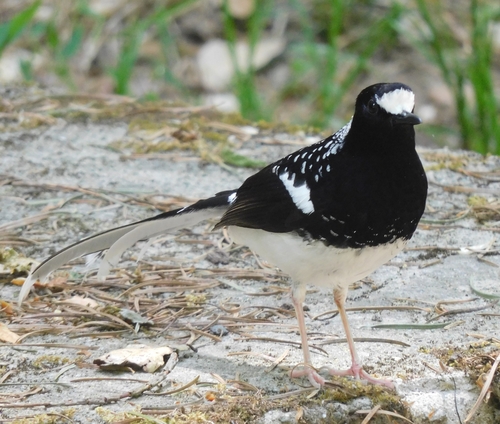 Torrentero Moteado
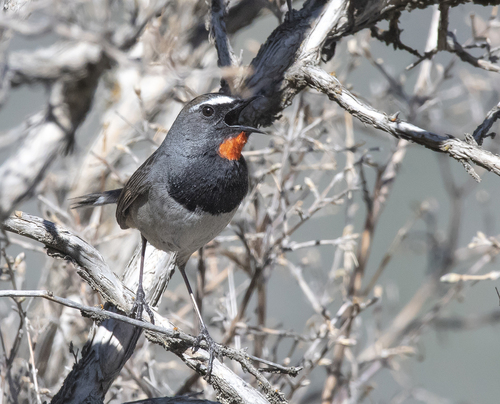 Ruiseñor Pechinegro del Himalaya
En breve
La marca de campo más confiable para separar el Torrentero Moteado del Ruiseñor Pechinegro del Himalaya es la llamativa espalda negra del Torrentero Moteado, fuertemente moteada de blanco, y su cola negra y blanca, profundamente ahorquillada, visible en todas las edades y especialmente obvia en vuelo. El Ruiseñor Pechinegro del Himalaya carece de cualquier moteado blanco en la espalda y en su lugar muestra una parte superior marrón o pizarra uniforme, con los machos exhibiendo un parche de garganta escarlata vívido y una base/puntas de cola blancas, pero sin manchas. Los Torrentero son más grandes, con colas más largas, y siempre se asocian con agua corriente, mientras que los ruiseñores son más pequeños, erguido, y se encuentran más a menudo en matorrales o bosques abiertos. Si ves una espalda audazmente moteada y una amplia barra alar blanca, tienes un Torrentero Moteado; si el ave es uniforme en la parte superior con un fuerte patrón facial y, en los machos, una garganta roja, es un Ruiseñor Pechinegro del Himalaya.
Consejos de identificación
- Patrón de espalda (todas las edades): El Torrentero Moteado siempre tiene una espalda negra con manchas blancas audaces; el Ruiseñor Pechinegro del Himalaya nunca muestra ningún moteado blanco en la espalda.
- Forma y patrón de la cola: La cola del Torrentero Moteado es muy larga, profundamente ahorquillada y con un patrón audaz en blanco y negro; la cola del Ruiseñor Pechinegro del Himalaya es más corta, no ahorquillada, de color negro con base y puntas blancas (no tan llamativa o contrastante).
- Barra alar: El Torrentero Moteado tiene una amplia barra alar blanca visible tanto posado como en vuelo; el Ruiseñor Pechinegro del Himalaya carece de cualquier barra alar, con alas marrón uniforme.
- Frente blanca: Ambas especies pueden mostrar una frente blanca, pero en el Torrentero es más ancha y está delimitada por la corona negra y la espalda moteada; en el Ruiseñor, especialmente en los machos, es parte de un patrón facial más complejo con un supercilio y (en algunas subespecies) una franja submoustachial.
- Garganta y partes inferiores (machos): El macho del Ruiseñor Pechinegro del Himalaya tiene un parche de garganta escarlata vívido bordeado de negro y gris, con un vientre blanco y lados negros en la garganta y el pecho; el Torrentero Moteado nunca muestra rojo o negro en la garganta o el pecho.
- Confusión hembra/inmaduro: La hembra del Ruiseñor Pechinegro del Himalaya es de un marrón grisáceo apagado en la parte superior con un supercilio difuso y garganta blanquecina, pero aún carece de cualquier moteado blanco o barra alar; la hembra/inmaduro del Torrentero siempre muestra una espalda moteada y barra alar blanca.
- Contexto de hábitat: El Torrentero Moteado casi nunca se encuentra lejos de arroyos de rápido flujo; si ves un ave con una espalda moteada en un arroyo forestal o un barranco lleno de rocas, es un Torrentero. El Ruiseñor Pechinegro del Himalaya se encuentra en bosques abiertos, matorrales o matorrales densos, raramente cerca del agua.
- Comportamiento: El Torrentero es activo, a menudo moviendo su larga cola y desplazándose por las rocas en los arroyos; el Ruiseñor es más erguido, se posa en lugares abiertos para cantar, o se oculta en la cubierta densa.
- Tamaño y estructura: El Torrentero es mucho más grande y de cola más larga, con un cuerpo más alargado; el Ruiseñor es más pequeño, compacto y de forma similar a un petirrojo.
- Vista en vuelo: En vuelo, el Torrentero muestra una amplia barra alar blanca y una espalda moteada; el Ruiseñor muestra alas marrón uniforme y un patrón de cola menos contrastante.
- Voz: El llamado del Torrentero es un 'KREE' áspero y chirriante, especialmente en vuelo; el canto del Ruiseñor es más musical y variable, con llamados más suaves.
- Diferencias sexuales: Solo el macho del Ruiseñor muestra una garganta roja; los sexos del Torrentero son similares.
- Movimiento estacional: Ambas especies pueden descender a elevaciones más bajas en invierno, pero la preferencia de hábitat (arroyo vs. matorral) sigue siendo un fuerte separador.
- Errores comunes: No confundas la frente blanca o el blanco en la cola del Ruiseñor con el moteado blanco audaz y la barra alar del Torrentero; siempre verifica las manchas en la espalda y la forma de la cola.
- Cuando tengas dudas: Si ves un ave con una cola larga y profundamente ahorquillada y manchas blancas audaces en la espalda, es un Torrentero Moteado. Si el ave es uniforme en la parte superior, con un fuerte patrón facial y (en los machos) una garganta roja, es un Ruiseñor Pechinegro del Himalaya.
Tamaño
El Torrentero Moteado es sustancialmente más grande y pesado (41 g vs. 23 g) y parece tener un cuerpo más largo con una cola proporcionalmente mucho más larga y profundamente ahorquillada. El Ruiseñor Pechinegro del Himalaya es notablemente más pequeño y compacto, con una cola más corta y una postura más erguida, similar a un petirrojo. Esta diferencia de tamaño suele ser obvia cuando se ven uno al lado del otro o con experiencia, pero puede ser más difícil de juzgar a distancia o en aislamiento.
Plumaje
- Todas las edades, todas las estaciones: El Torrentero Moteado siempre muestra una espalda negra con manchas blancas audaces y una amplia barra alar blanca, además de una cola negra y blanca profundamente ahorquillada. Estas marcas están presentes tanto en adultos como en inmaduros y son visibles tanto posados como en vuelo. La frente blanca también es una característica constante.
- Ruiseñor Pechinegro del Himalaya (macho adulto): Sin manchas blancas en la espalda. Las partes superiores son de color marrón pizarra o negro, con una frente blanca y supercilio, y un llamativo parche de garganta escarlata bordeado de negro y gris. La cola es de color negro con base y puntas blancas, pero nunca ahorquillada o moteada. Las partes inferiores son blancas con lados negros en la garganta y el pecho.
- Ruiseñor Pechinegro del Himalaya (hembra): Marrón grisáceo apagado en la parte superior, sin manchas blancas ni barra alar, con un supercilio difuso y partes inferiores ahumadas. La garganta es blanquecina, a veces con una corta franja moustachial. El patrón de la cola (base/puntas blancas) es sutil y no tan audaz como el patrón de la cola del Torrentero.
- En vuelo: La barra alar blanca y la espalda moteada del Torrentero Moteado son visibles desde arriba, mientras que el Ruiseñor Pechinegro del Himalaya muestra alas marrón uniforme y partes superiores con solo un sutil blanco en la cola.
Comportamiento
El Torrentero Moteado se ve casi siempre a lo largo de arroyos de rápido flujo, a menudo saltando sobre rocas o forrajeando en el borde del agua, y se ve frecuentemente en vuelo sobre el agua, mostrando su cola y barra alar blancas. Sus movimientos son activos y a menudo mueve su cola. El Ruiseñor Pechinegro del Himalaya es tímido, generalmente se encuentra solo o en parejas en matorrales o bosques abiertos, a menudo posado erguido en arbustos bajos o cantando desde perchas expuestas. Es menos probable que se vea cerca del agua y más probable que se oculte en la cubierta densa, especialmente las hembras y las aves no reproductivas.
Hábitat
El Torrentero Moteado está estrechamente vinculado a arroyos de montaña llenos de rocas, barrancos boscosos y canales a lo largo de la carretera en bosques montañosos o colinos, típicamente a 1200–3600 m en la temporada de cría y descendiendo a unos 600 m en invierno. Rara vez se encuentra lejos de agua corriente. El Ruiseñor Pechinegro del Himalaya prefiere bosques abiertos, matorrales y matorrales densos, a menudo a gran altitud en verano, pero descendiendo a elevaciones más bajas en invierno. No se asocia con arroyos y es más probable que se encuentre en hábitats secos o arbustivos, a veces en áreas abiertas pero raramente cerca de agua de rápido flujo.
Voz
El Torrentero Moteado emite un 'KREE' agudo y chirriante, especialmente en vuelo, y algunos sonidos chirriantes cuando está posado. El canto del Ruiseñor Pechinegro del Himalaya es una serie de notas chirriantes y variables emitidas desde una percha expuesta; las hembras emiten una nota corta y áspera seguida de un silbido con inflexión ascendente, y el llamado de alarma es un 'skyap' agudo. El llamado del Torrentero es más áspero y penetrante, mientras que las vocalizaciones del Ruiseñor son más suaves y variadas.
Torrentero Moteado · Ruiseñor Pechinegro del Himalaya · Mis aves difíciles