

anu-preto vs groove-billed ani
Crotophaga ani versus Crotophaga sulcirostris
Jogue um quiz com anu-preto e groove-billed ani
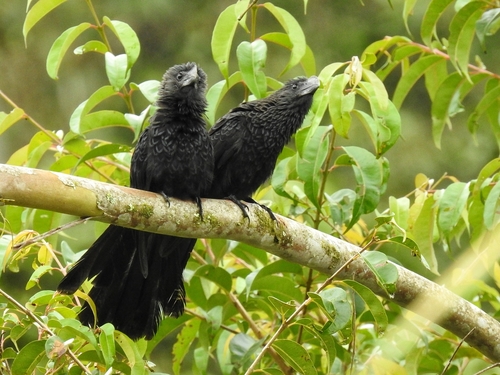 anu-preto
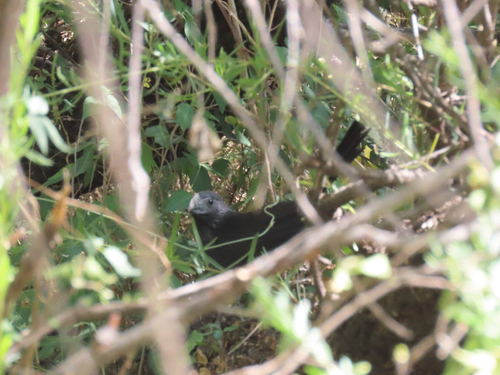 groove-billed ani
Em resumo
A marca de campo mais confiável entre anu-preto e groove-billed ani é o bico: anu-preto tem um bico visivelmente mais profundo e inchado, com uma crista superior mais suave, enquanto groove-billed ani apresenta sulcos longitudinais distintos ao longo da mandíbula superior. Ambas as espécies são pretas brilhantes com caudas longas e podem ser confusas, especialmente porque alguns anu-preto mostram sulcos parciais e há sobreposição no tamanho do bico. O tamanho é útil, mas sutil: anu-preto é geralmente mais robusto e pesado. A voz e a amplitude são frequentemente os separadores mais práticos em campo, especialmente onde ambas as espécies podem ocorrer. O estilo de voo e o comportamento em grupo são semelhantes, então a atenção cuidadosa à forma do bico e às vocalizações é fundamental.
Dicas de identificação
- A forma do bico é a marca de campo primária: anu-preto tem um bico profundo e inchado, com uma crista superior suave ou apenas levemente sulcada; o bico do groove-billed ani é mais esguio e sempre apresenta sulcos longitudinais distintos ao longo da mandíbula superior. Essa marca funciona para todas as idades e sexos.
- Cuidado com a sobreposição no tamanho do bico: Alguns anu-preto podem ter bicos tão pequenos quanto os do groove-billed, e podem mostrar sulcos leves na base. Sempre verifique a profundidade e o inchaço geral do bico, não apenas os sulcos.
- Tamanho e robustez: anu-preto é geralmente mais pesado e robusto (97 g vs 74,5 g), mas isso é sutil e melhor utilizado quando ambas as espécies são vistas juntas.
- Comprimento e forma da cauda: Ambas as espécies têm caudas muito longas e pretas, quase tão longas quanto o corpo. A forma da cauda não é um separador confiável.
- Plumagem: Ambas são pretas brilhantes em todas as idades, sem diferenças significativas de cor ou padrão. Não confie na plumagem para separação.
- Estilo de voo: Ambas as espécies têm um voo fraco, instável ou picado, com batidas e deslizamentos alternados. O estilo de voo é semelhante e não é diagnóstico.
- Comportamento em grupo: Ambas são gregárias e barulhentas, frequentemente em grupos. O comportamento social não as separa.
- Habitat: Ambas ocorrem em áreas abertas e semi-abertas, incluindo campos e pastagens. O habitat não é um separador confiável onde as distribuições se sobrepõem.
- Voz: anu-preto emite um chamado choroso 'ooo-leeek', distinto se ouvido. Os chamados do groove-billed ani são diferentes; a voz é frequentemente o melhor separador em campo.
- Distribuição: No sul do Texas e no norte do México, apenas o groove-billed ani ocorre. No sul da Flórida e no Caribe, apenas o anu-preto está presente. Nas zonas de sobreposição, use o bico e a voz.
- Cor da íris: O anu-preto é notado por ter uma íris marrom, mas isso é sutil e geralmente não visível em campo.
- Comportamento alimentar: Ambas forrageiam no chão e podem remover carrapatos do gado; isso não é um separador.
- Ninho e reprodução: Ambas as espécies fazem ninhos comunais, mas isso não é uma marca de campo para identificação.
- Presença sazonal: O groove-billed ani se retira da borda norte de sua distribuição no inverno; o anu-preto é residente em toda a sua distribuição.
- Quando em dúvida: Concentre-se na forma do bico e nos sulcos, e ouça os chamados. Se ambos forem ambíguos, considere a distribuição e a estação.
Tamanho
O anu-preto é o maior dos dois, com uma massa corporal média de cerca de 97 g em comparação com os 74,5 g do groove-billed ani [wikidata]. Em comprimento, o anu-preto mede em média 35 cm (14 pol), enquanto o groove-billed mede cerca de 34 cm (13 pol) [wikipedia]. A diferença é sutil em campo, mas o anu-preto frequentemente parece mais robusto e pesado, especialmente quando visto ao lado do groove-billed. Ambos têm caudas longas, mas as proporções gerais do anu-preto são ligeiramente mais robustas.
Plumagem
Ambas as espécies são pretas brilhantes em geral, sem diferenças significativas de cor sazonais ou relacionadas à idade notadas nas fontes. Plumagens juvenis e imaturas não são descritas como distintas ou diagnósticas em nenhuma das espécies, e não há marcas específicas de padrão de asa superior ou de voo para aves jovens. A principal diferença não está na plumagem, mas na estrutura do bico: o groove-billed ani sempre apresenta sulcos óbvios correndo longitudinalmente ao longo da mandíbula superior, enquanto o bico do anu-preto é mais profundo, mais inchado e tipicamente liso (embora alguns indivíduos possam mostrar sulcos leves na base). Ambos têm caudas longas e pretas e não apresentam painéis contrastantes ou marcas de asa em todas as idades.
Comportamento
Ambas as espécies são altamente sociais, geralmente encontradas em grupos barulhentos. Elas se alimentam principalmente no chão, correndo em vez de saltando, e frequentemente forrageiam em áreas abertas. Em voo, ambas exibem um voo fraco, instável ou picado, com batidas e deslizamentos alternados, e nenhuma delas é particularmente forte ou direta no ar. O anu-preto é notado por ser especialmente gregário e conspícuo, mas isso não é um separador confiável do groove-billed ani, que também forma grupos. Ambas as espécies podem ser vistas associando-se a animais pastando para remover insetos ou carrapatos.
Habitat
Ambos os anis preferem habitats abertos e semi-abertos, incluindo pastagens, campos cultivados, savanas e pomares. O anu-preto é amplamente distribuído do sul da Flórida através do Caribe e grande parte da América do Sul, enquanto o groove-billed ani se distribui do sul do Texas e México através da América Central até o norte da América do Sul e a costa do Pacífico. Onde suas distribuições se sobrepõem (por exemplo, partes da América Central e do norte da América do Sul), as preferências de habitat são muito semelhantes e não são um separador confiável em campo. O groove-billed ani é mais provável de ser encontrado na borda norte da distribuição (por exemplo, sul do Texas), enquanto o anu-preto está ausente lá.
Voz
A voz é frequentemente o separador mais prático em campo. O anu-preto emite um chamado choroso 'ooo-leeek'. Os chamados do groove-billed ani não são descritos em detalhes nas fontes aqui, mas as duas espécies são notadas como sendo melhor distinguidas pela voz onde se sobrepõem. Se você ouvir o chamado característico do anu-preto, isso é diagnóstico. Os chamados do groove-billed ani são geralmente mais agudos e menos prolongados, mas sempre verifique guias locais para detalhes.