

Smooth-billed Ani vs Groove-billed Ani
Crotophaga ani contro Crotophaga sulcirostris
Fai un quiz con Smooth-billed Ani e Groove-billed Ani
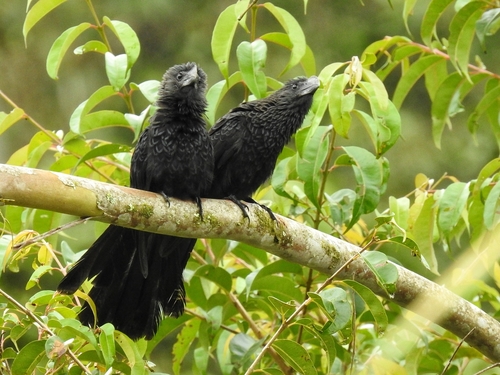 Smooth-billed Ani
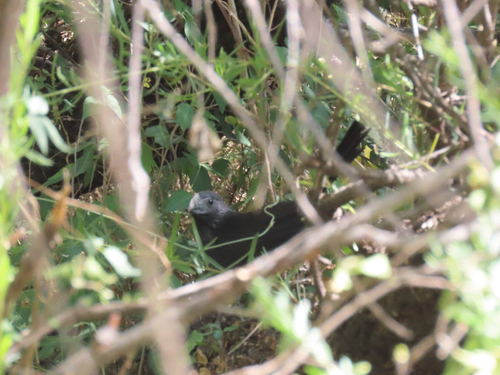 Groove-billed Ani
In breve
Il segno distintivo più affidabile tra Smooth-billed Ani e Groove-billed Ani è il becco: Smooth-billed Ani ha un becco visibilmente più profondo e gonfio con una cresta superiore più liscia, mentre Groove-billed Ani mostra scanalature lunghe e distinte lungo la mandibola superiore. Entrambe le specie sono nere lucide con lunghe code e possono essere confuse, specialmente poiché alcuni Smooth-billed Anis mostrano scanalature parziali e sovrapposizioni nella dimensione del becco. La dimensione è utile ma sottile: Smooth-billed Ani è generalmente più robusto e pesante. La voce e l'areale sono spesso i separatori più pratici sul campo, specialmente dove entrambe le specie possono verificarsi. Lo stile di volo e il comportamento di gruppo sono simili, quindi prestare attenzione alla forma del becco e alle vocalizzazioni è fondamentale.
Consigli di identificazione
- La forma del becco è il segno distintivo principale: Smooth-billed Ani ha un becco profondo e gonfio con una cresta superiore liscia o solo leggermente scanalata; il becco di Groove-billed Ani è più snello e mostra sempre scanalature lunghe e distinte lungo la mandibola superiore. Questo segno funziona per tutte le età e sessi.
- Attenzione alla sovrapposizione nella dimensione del becco: Alcuni Smooth-billed Anis possono avere becchi piccoli come quelli di Groove-billed e possono mostrare scanalature deboli alla base. Controlla sempre la profondità e il gonfiore complessivi del becco, non solo le scanalature.
- Dimensione e robustezza: Smooth-billed Ani è generalmente più pesante e robusto (97 g contro 74,5 g), ma questo è sottile e meglio utilizzato quando entrambe le specie sono viste insieme.
- Lunghezza e forma della coda: Entrambe le specie hanno code molto lunghe e nere, quasi lunghe quanto il corpo. La forma della coda non è un separatore affidabile.
- Piumaggio: Entrambi sono neri lucidi a tutte le età, senza differenze significative di colore o motivo. Non fare affidamento sul piumaggio per la separazione.
- Stile di volo: Entrambe le specie hanno un volo debole, instabile o a scatti con battiti e planate alternati. Il volo è simile e non diagnostico.
- Comportamento di gruppo: Entrambi sono gregari e rumorosi, spesso in gruppi. Il comportamento sociale non li separa.
- Habitat: Entrambi si trovano in paesi aperti e semi-aperti, inclusi campi e pascoli. L'habitat non è un separatore affidabile dove gli areali si sovrappongono.
- Voce: Smooth-billed Ani emette un richiamo lamentoso 'ooo-leeek', distintivo se udito. I richiami di Groove-billed Ani sono diversi; la voce è spesso il miglior separatore sul campo.
- Areale: Nel Texas meridionale e nel Messico settentrionale, si trova solo Groove-billed Ani. Nella Florida meridionale e nei Caraibi, è presente solo Smooth-billed Ani. Nelle zone di sovrapposizione, usa il becco e la voce.
- Colore dell'iride: Si nota che Smooth-billed Ani ha un'iride marrone, ma questo è sottile e di solito non visibile sul campo.
- Comportamento alimentare: Entrambi si nutrono a terra e possono rimuovere zecche dal bestiame; questo non è un separatore.
- Nido e riproduzione: Entrambe le specie nidificano in modo comunitario, ma questo non è un segno distintivo per l'identificazione.
- Presenza stagionale: Groove-billed Ani si ritira dal bordo settentrionale del suo areale in inverno; Smooth-billed Ani è residente in tutto il suo areale.
- Quando hai dubbi: Concentrati sulla forma del becco e sulle scanalature, e ascolta i richiami. Se entrambi sono ambigui, considera l'areale e la stagione.
Taglia
Smooth-billed Ani è il più grande dei due, con una massa corporea media di circa 97 g rispetto ai 74,5 g di Groove-billed Ani [wikidata]. In lunghezza, Smooth-billed misura in media 35 cm (14 in), mentre Groove-billed misura circa 34 cm (13 in) [wikipedia]. La differenza è sottile sul campo, ma Smooth-billed Ani appare spesso più robusto e pesante, specialmente quando visto accanto a Groove-billed. Entrambi hanno lunghe code, ma le proporzioni complessive di Smooth-billed sono leggermente più robuste.
Piumaggio
Entrambe le specie sono nere lucide nel complesso, senza differenze di colore significative legate alla stagione o all'età notate nelle fonti. I piumaggi giovanili e immaturi non sono descritti come distintivi o diagnostici in nessuna delle due specie, e non ci sono segni specifici sulle ali superiori o modelli di volo per i giovani uccelli. La differenza chiave non è nel piumaggio ma nella struttura del becco: Groove-billed Ani mostra sempre scanalature evidenti che corrono longitudinalmente lungo la mandibola superiore, mentre il becco di Smooth-billed Ani è più profondo, più gonfio e tipicamente liscio (anche se alcuni individui possono mostrare scanalature deboli alla base). Entrambi hanno lunghe code nere e mancano di pannelli contrastanti o segni sulle ali a tutte le età.
Comportamento
Entrambe le specie sono altamente sociali, di solito si trovano in gruppi rumorosi. Si nutrono principalmente a terra, correndo piuttosto che saltando, e spesso cercano cibo in aree aperte. In volo, entrambe mostrano un volo debole, instabile o a scatti con battiti e planate alternati, e nessuna delle due è particolarmente forte o diretta in aria. Smooth-billed Ani è noto per essere particolarmente gregario e appariscente, ma questo non è un separatore affidabile da Groove-billed Ani, che forma anch'esso gruppi. Entrambe le specie possono essere viste associarsi con animali al pascolo per rimuovere insetti o zecche.
Habitat
Entrambi gli anis preferiscono habitat aperti e semi-aperti, inclusi pascoli, campi coltivati, savane e frutteti. Smooth-billed Ani è diffuso dalla Florida meridionale attraverso i Caraibi e gran parte del Sud America, mentre Groove-billed Ani si estende dal Texas meridionale e dal Messico attraverso l'America Centrale fino al nord del Sud America e alla costa del Pacifico. Dove i loro areali si sovrappongono (ad es., parti dell'America Centrale e del nord del Sud America), le preferenze di habitat sono molto simili e non sono un separatore affidabile sul campo. Groove-billed Ani è più probabile che venga trovato al bordo settentrionale dell'areale (ad es., Texas meridionale), mentre Smooth-billed è assente lì.
Voce
La voce è spesso il separatore più pratico sul campo. Smooth-billed Ani emette un richiamo lamentoso distintivo 'ooo-leeek'. I richiami di Groove-billed Ani non sono descritti in dettaglio nelle fonti qui, ma le due specie sono notate per essere meglio distinte dalla voce dove si sovrappongono. Se senti il richiamo caratteristico di Smooth-billed Ani, è diagnostico. I richiami di Groove-billed Ani sono generalmente più acuti e meno prolungati, ma controlla sempre le guide locali per specifiche.
Smooth-billed Ani · Groove-billed Ani · I miei uccelli difficili