

short-toed rock-thrush vs cape rock-thrush
Monticola brevipes versus Monticola rupestris
Jogue um quiz com short-toed rock-thrush e cape rock-thrush
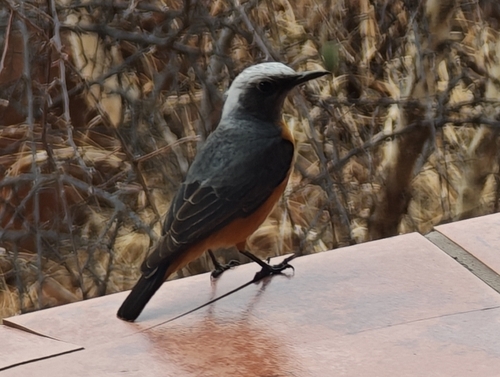 short-toed rock-thrush
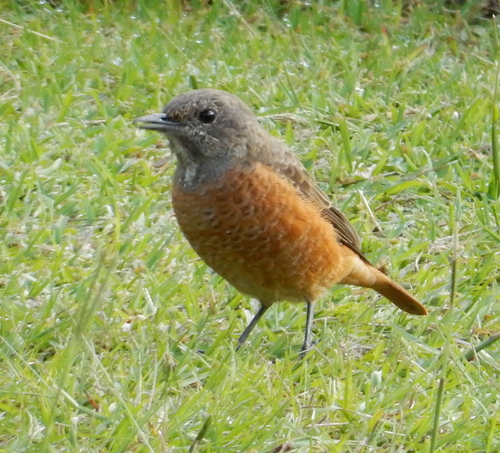 cape rock-thrush
Em resumo
A marca de campo mais confiável para separar o short-toed rock-thrush do cape rock-thrush é a plumagem dos machos adultos: os machos do cape rock-thrush apresentam uma cabeça azul-acinzentada com partes inferiores laranja ricas e penas de cauda externas avermelhadas, enquanto o short-toed rock-thrush não possui essa combinação. As fêmeas e os imaturos do cape rock-thrush também têm partes inferiores laranja mais ricas do que as de outros thrushes rochosos, incluindo o short-toed. Os imaturos do cape rock-thrush apresentam manchas cor de palha na parte superior e escamas pretas na parte inferior, o que pode ajudar em encontros difíceis com juvenis/primeiro ano. O habitat também pode ajudar: o cape rock-thrush prefere áreas rochosas montanhosas no leste e sul da África do Sul, enquanto o short-toed é encontrado em áreas de arbustos mais secos, principalmente mais ao norte e a oeste. O tamanho não é um separador forte em campo, mas o cape rock-thrush é descrito como uma espécie grande e robusta.
Dicas de identificação
- O juvenil/imaturo do cape rock-thrush apresenta manchas cor de palha na parte superior e escamas pretas na parte inferior—se você ver essas marcas, especialmente em um pássaro jovem, é cape, não short-toed.
- O macho adulto do cape rock-thrush tem uma cabeça azul-acinzentada e partes inferiores laranja ricas; os machos do short-toed não têm essa combinação e parecem mais simples.
- As penas de cauda externas avermelhadas são visíveis tanto no macho quanto na fêmea do cape rock-thrush; isso é menos óbvio ou ausente no short-toed, então um flash de rufo na cauda é uma forte pista para o cape.
- As fêmeas do cape rock-thrush têm partes inferiores laranja muito mais ricas do que as fêmeas do short-toed; se o pássaro for uma fêmea e parecer especialmente brilhante por baixo, incline-se para o cape.
- O cape rock-thrush é maior e mais robusto do que o short-toed, mas isso é sutil e melhor usado como evidência de apoio.
- O habitat é uma pista forte: o cape rock-thrush está quase sempre em terrenos rochosos e montanhosos com vegetação dispersa; o short-toed prefere áreas de arbustos secos, muitas vezes longe de encostas rochosas.
- A distribuição pode ajudar: o cape rock-thrush está principalmente no leste/sul da África do Sul, Lesoto e Eswatini; o short-toed é mais amplamente distribuído em partes mais secas de Angola, Botswana, Namíbia e África do Sul.
- Se você ouvir uma canção assobiada e musical (tsee-tsee-tseet-chee-chweeeoo), é o cape rock-thrush; a canção do short-toed não é descrita aqui, então um assobio distintivo aponta para o cape.
- Ambas as espécies empoleiram-se eretas em rochas, então a postura sozinha não é diagnóstica.
- Se você ver um pássaro com uma cabeça marrom e partes inferiores laranja muito ricas, especialmente com lados da cauda avermelhados, é provável que seja uma fêmea do cape rock-thrush.
- Se o pássaro estiver em um habitat de montanha rochosa ou penhasco, especialmente no leste da África do Sul ou Lesoto, é mais provável que seja cape; se em arbustos secos e abertos, especialmente mais ao norte ou a oeste, é mais provável que seja short-toed.
- Em habitat misto ou ambíguo, confie na plumagem e na cor da cauda em vez do contexto.
- Os imaturos do cape rock-thrush podem ser confundidos com outros thrushes manchados, mas a combinação de manchas cor de palha acima e escamas pretas abaixo é distintiva.
- Se você não conseguir ver bem a cor da cabeça ou as partes inferiores, procure as penas de cauda avermelhadas em voo ou quando o pássaro balança a cauda.
- Se tudo mais falhar, considere a probabilidade com base na localização e no habitat, mas tenha cuidado—plumagem é mais confiável do que a distribuição para esses dois.
Tamanho
O short-toed rock-thrush tem uma massa corporal registrada de 33,0g [wikidata], enquanto o cape rock-thrush é descrito como um thrush grande e robusto (19–21 cm de comprimento [wikipedia]), provavelmente mais pesado e volumoso em aparência. Na prática, o cape rock-thrush parecerá ligeiramente maior e mais robusto, especialmente quando empoleirado, mas isso é sutil e nem sempre confiável à distância ou em condições de visualização ruins. O tamanho sozinho raramente é diagnóstico entre esses dois.
Plumagem
- Imaturos/juvenis: Os imaturos do cape rock-thrush são distintos com manchas cor de palha na parte superior e escamas pretas na parte inferior. Os imaturos do short-toed rock-thrush não são descritos em detalhes aqui, mas não mencionam essas marcas específicas, então um juvenil fortemente manchado/escamado é provavelmente um cape.
- Machos adultos: Os machos do cape rock-thrush têm uma cabeça azul-acinzentada, partes inferiores laranja e penas de cauda externas avermelhadas, com asas e costas marrons. Os machos do short-toed rock-thrush não apresentam essa combinação de cabeça azul-acinzentada/partes inferiores laranja.
- Fêmeas adultas: As fêmeas do cape rock-thrush têm uma cabeça marrom e partes inferiores laranja muito mais ricas do que outras fêmeas de thrushes rochosos, incluindo o short-toed. As penas de cauda externas são avermelhadas, como as do macho. As fêmeas do short-toed são menos vividamente marcadas por baixo.
- Cauda: Ambos os sexos do cape rock-thrush apresentam penas de cauda externas avermelhadas, uma marca de campo útil se vistas bem. Isso é menos pronunciado ou ausente no short-toed.
Comportamento
Ambas as espécies são thrushes rochosos típicos, frequentemente empoleirando-se eretas em rochas ou poleiros proeminentes. O cape rock-thrush é descrito como residente, às vezes fazendo movimentos altitudinais, mas não há diferença comportamental específica observada que separaria confiavelmente esses dois em campo.
Habitat
O cape rock-thrush é encontrado em áreas rochosas montanhosas com vegetação dispersa, principalmente no leste e sul da África do Sul, Lesoto e Eswatini. O short-toed rock-thrush prefere áreas de arbustos secos subtropicais ou tropicais e é encontrado em Angola, Botswana, Namíbia e África do Sul, geralmente em habitats mais secos e abertos do que o cape rock-thrush. A sobreposição é possível na África do Sul, mas o cape é mais provável em uplands rochosos, enquanto o short-toed é mais provável em arbustos secos.
Voz
Os machos do cape rock-thrush têm uma canção assobiada descrita como tsee-tsee-tseet-chee-chweeeoo e podem imitar outros pássaros. Não há descrição vocal para o short-toed rock-thrush aqui, então a canção só é útil se o assobio distintivo do cape for ouvido.
short-toed rock-thrush · cape rock-thrush · Minhas aves difíceis