

tuju vs bacurau-de-cauda-barrada
Lurocalis semitorquatus versus Nyctiprogne leucopyga
Jogue um quiz com tuju e bacurau-de-cauda-barrada
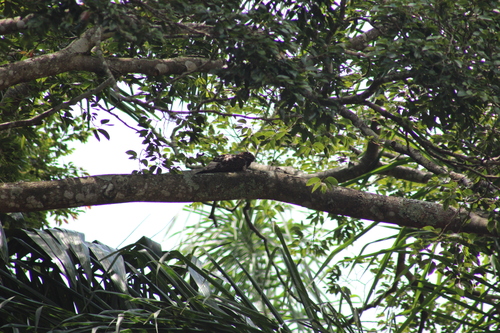 tuju
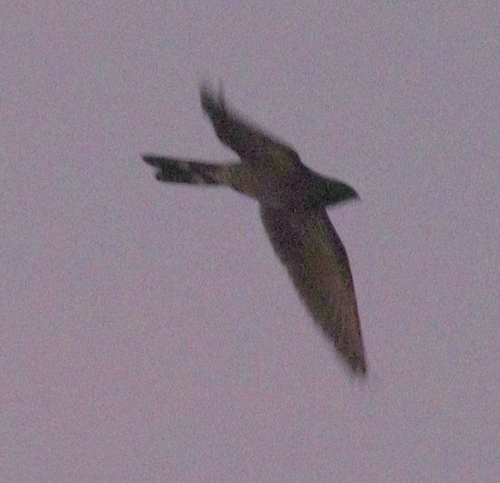 bacurau-de-cauda-barrada
Em resumo
A marca de campo mais confiável para separar o tuju do bacurau-de-cauda-barrada é a presença de uma faixa branca ousada na metade da cauda no bacurau-de-cauda-barrada, visível em voo e quando empoleirado, que o tuju não possui. Ambas as espécies são bacuraus de cauda curta, com plumagem escura e sem branco nas asas, mas o tuju é maior e mais robusto, com uma cauda mais curta e partes inferiores mais marcadas. O bacurau-de-cauda-barrada é menor, mais esbelto e apresenta uma cauda ligeiramente bifurcada com uma faixa branca conspícua; sua plumagem é mais simples e mais clara em imaturos. Diferenças estruturais e preferências de habitat também ajudam: o bacurau-de-cauda-barrada é frequentemente visto caçando baixo sobre a água ao crepúsculo, enquanto o tuju prefere habitats florestais e está menos ligado à água. As vocalizações diferem, mas ambas são sutis e raramente diagnósticas em campo.
Dicas de identificação
- Faixa branca na cauda (todas as idades): O bacurau-de-cauda-barrada sempre mostra uma faixa branca ousada na metade da cauda, visível em voo e frequentemente quando empoleirado. O tuju nunca mostra uma faixa branca na metade da cauda—procure isso primeiro em qualquer vista.
- Formato e comprimento da cauda: Ambos têm caudas curtas, mas a do tuju é especialmente curta e com ponta quadrada, enquanto a do bacurau-de-cauda-barrada é curta, mas ligeiramente bifurcada. Em voo, a cauda do bacurau-de-cauda-barrada pode parecer mais pontuda ou bifurcada, especialmente quando aberta.
- Padrão da cauda: A cauda do tuju é marrom com barras amarelas/cinzentas e uma faixa estreita amarelada ou esbranquiçada na ponta (não na metade da cauda). A cauda do bacurau-de-cauda-barrada é escura com uma faixa branca clara no meio—nunca na ponta.
- Marcas nas asas: Ambas as espécies não têm manchas brancas ousadas nas asas, ao contrário de muitos outros bacuraus. Não confie apenas no padrão das asas para separar esses dois.
- Marcas nas partes superiores e inferiores: O tuju é mais fortemente marcado acima e abaixo, com manchas e barras ruivas e amareladas. O bacurau-de-cauda-barrada é mais simples e mais claro em geral, especialmente em imaturos, mas ambos são cripticamente marrons.
- Manchas na garganta: O bacurau-de-cauda-barrada tem manchas brancas nos lados da garganta, que podem ser vistas em boas vistas. O tuju tem uma garganta branca, mas não tão distintamente manchada nos lados.
- Tamanho e robustez: O tuju é visivelmente maior e mais pesado. Se vistos lado a lado ou com uma boa noção de escala, isso pode ajudar, mas cuidado com a sobreposição com outros bacuraus.
- Bico e penugem: O bacurau-de-cauda-barrada tem um bico muito largo, mas curto, sem as penas rictais alongadas típicas de muitos bacuraus. Isso é sutil e raramente visível em campo.
- Estilo de voo: O bacurau-de-cauda-barrada voa rapidamente e baixo sobre a água com batidas de asa rasas e planagens. O tuju é mais propenso a ser visto caçando acima ou ao longo das bordas da floresta e clareiras, não sobre água aberta.
- Comportamento de empoleiramento: O bacurau-de-cauda-barrada frequentemente empoleira-se em ramos finos perto da água, às vezes em pequenos grupos. O tuju é mais solitário e associado a florestas.
- Preferência de habitat: Se o pássaro for visto regularmente sobre rios ou lagos ao crepúsculo, o bacurau-de-cauda-barrada é muito mais provável. Em florestas densas ou longe da água, o tuju é favorecido.
- Vocalizações: Se ouvido, o tuju emite um "gweek" agudo e espaçado; o bacurau-de-cauda-barrada emite um chamado contínuo, semelhante a um sapo. Use com cautela, pois ambos são sutis.
- Sexo e idade: Ambas as espécies mostram fraco dimorfismo sexual, e os imaturos do bacurau-de-cauda-barrada são apenas ligeiramente mais claros e simples do que os adultos. A faixa branca na cauda está presente em todas as idades do bacurau-de-cauda-barrada.
- Armadilhas: Não confunda a estreita faixa amarelada ou esbranquiçada na ponta da cauda do tuju com a ousada faixa na metade da cauda do bacurau-de-cauda-barrada. Em pouca luz, a faixa branca da cauda do bacurau-de-cauda-barrada é frequentemente a única marca confiável.
- Quando em dúvida: Foque no padrão da cauda e no contexto do habitat—essas são as características mais consistentemente diagnósticas para separação em campo.
Tamanho
O tuju é claramente maior, medindo 19–21 cm de comprimento e pesando 79–89 g [wikipedia]. O bacurau-de-cauda-barrada é menor, medindo 16,5–19 cm e pesando 23–28 g [wikipedia]. A diferença de tamanho é notável em comparação direta, com o tuju parecendo mais robusto e pesado, enquanto o bacurau-de-cauda-barrada é mais esbelto e leve. Ambos têm caudas curtas, mas a do tuju é proporcionalmente ainda mais curta e quadrada. Dados sobre envergadura estão disponíveis apenas para o bacurau-de-cauda-barrada (12,9–14,1 cm), mas ambas as espécies têm asas longas e pontudas em relação ao seu tamanho.
Plumagem
- Plumagem juvenil/imatura: Os imaturos do bacurau-de-cauda-barrada são ligeiramente mais simples e claros do que os adultos, mas ainda mostram a faixa branca diagnóstica na cauda, que está presente desde uma idade jovem [wikipedia]. Os imaturos do tuju não são descritos em detalhes, mas não há menção de uma faixa branca na cauda ou qualquer característica comparável.
- Plumagem adulta: O tuju é marrom escuro a negro por cima, com manchas e pintas ruivas e amareladas, e uma cauda marrom com barras amarelas/cinzentas e uma faixa terminal estreita amarelada ou esbranquiçada (não uma faixa na metade da cauda). As partes inferiores são fortemente marcadas com marrom, amarelo e ruivo. As asas são escuras com manchas atenuadas, sem marcas brancas ousadas [wikipedia]. O bacurau-de-cauda-barrada é cripticamente marrom com asas longas e pontudas e uma cauda curta, um pouco bifurcada. A característica chave é a faixa branca na metade da cauda (nas três penas mais externas da cauda) e manchas brancas nos lados da garganta. As asas não têm marcas brancas. Ambos os sexos são semelhantes em ambas as espécies, e o dimorfismo sexual é fraco.
Comportamento
O bacurau-de-cauda-barrada é frequentemente visto voando baixo e rapidamente sobre rios, lagos e outros corpos d'água ao crepúsculo, se alimentando em voo contínuo com batidas de asa rápidas e rasas e planagens [wikipedia]. Frequentemente empoleira-se em ramos horizontais finos perto da água, às vezes em pequenos grupos. O tuju também forrageia principalmente ao crepúsculo, mas é mais frequentemente associado a florestas tropicais de baixa altitude, bordas de floresta e clareiras, em vez de água aberta. Seu voo está menos ligado a cursos d'água e mais a habitats florestais. Ambas as espécies são insetívoras aéreas, mas seus contextos de forrageio preferidos diferem.
Habitat
O tuju é encontrado em uma ampla gama na América Central e do Sul, habitando principalmente florestas tropicais de baixa altitude, bordas de floresta, clareiras e ocasionalmente florestas secundárias ou plantações [wikipedia]. É menos comumente encontrado perto de água aberta. O bacurau-de-cauda-barrada, em contraste, está fortemente associado a habitats próximos à água—rios, riachos, pântanos, lagos e florestas ou savanas de baixa altitude adjacentes, sempre em baixas elevações abaixo de 200–300 m [wikipedia]. Se você vê um bacurau voando regularmente baixo sobre a água ao crepúsculo, o bacurau-de-cauda-barrada é muito mais provável.
Voz
O tuju emite um chamado "constantemente repetido, mas bem espaçado ewIT ... ewIT ... ewIT ..." ou um chamado agudo, ligeiramente líquido "g'wik" ou "gweek", tanto em voo quanto quando empoleirado [wikipedia]. O chamado do bacurau-de-cauda-barrada é um "gole-kwoik-kwak" de baixo volume, semelhante a um sapo, repetido de forma constante [wikipedia]. Ambos são sutis e podem ser difíceis de distinguir em campo, mas o chamado do tuju é mais agudo e mais espaçado, enquanto o do bacurau-de-cauda-barrada é mais baixo e contínuo. As vocalizações geralmente não são a marca de campo mais confiável, a menos que sejam ouvidas claramente.