

Motmot

タンビヨタカ 対 オビオヨタカ

Lurocalis semitorquatus 対 Nyctiprogne leucopyga

タンビヨタカとオビオヨタカのクイズ
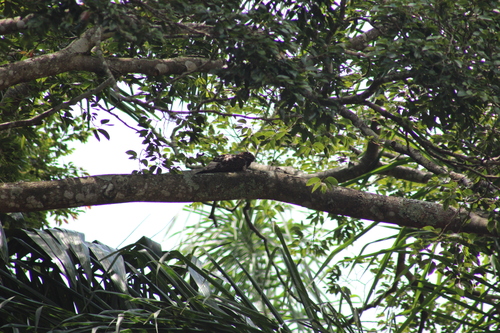
タンビヨタカ (Lurocalis semitorquatus) タンビヨタカ
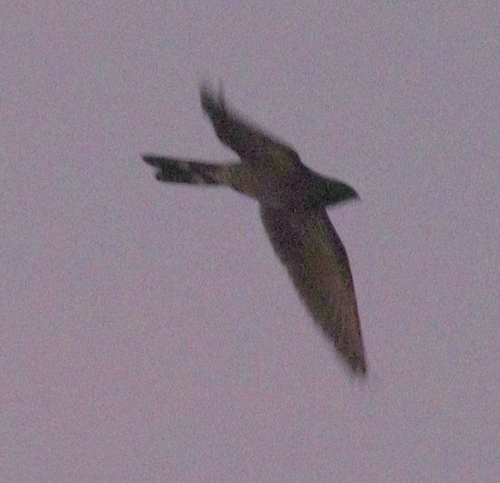
オビオヨタカ (Nyctiprogne leucopyga) オビオヨタカ

メディア

読み込み中…

要点

ショートテールナイトホークとバンドテールナイトホークを区別する最も信頼できるフィールドマークは、バンドテールに見られるミッドテールを横切る太い白いバンドの存在であり、飛行中や止まっているときに確認できますが、ショートテールナイトホークには完全に欠けています。両種は短い尾を持つ暗色のナイトジャーで、翼に白色はありませんが、ショートテールはより大きく、ずんぐりした体形で、尾はより短く、腹部にはより重い斑点があります。バンドテールナイトホークは小さく、より細身で、目立つ白いバンドのあるやや分かれた尾を示します。成鳥の羽毛はよりシンプルで淡いです。構造的な違いや生息地の好みも役立ちます:バンドテールは夕暮れ時に水面近くを低く飛ぶことが多いのに対し、ショートテールは森林の生息地を好み、水にあまり依存しません。声の違いもありますが、どちらも微妙で、フィールドでは診断的な特徴としては稀です。

識別のコツ

  1. 白い尾のバンド(すべての年齢): バンドテールナイトホークは常にミッドテールを横切る太い白いバンドを示し、飛行中や止まっているときに確認できます。ショートテールナイトホークはミッドテールの白いバンドを示さないため、どの視点でもこれを最初に探してください。
  2. 尾の形と長さ: 両者とも短い尾を持っていますが、ショートテールナイトホークの尾は特に短く、四角い先端を持っています。一方、バンドテールの尾は短いですが、やや分かれています。飛行中、バンドテールの尾は特に扇がれたときにより尖って見えることがあります。
  3. 尾のパターン: ショートテールナイトホークの尾は茶色で、黄褐色/灰色のバーと先端に狭い黄褐色または白っぽいバンドがあります(ミッドテールではありません)。バンドテールの尾は暗色で、中央に明確な白いバンドがあります—先端にはありません。
  4. 翼のマーキング: 両種とも翼に太い白い斑点がなく、多くの他のナイトホークとは異なります。これら二種を区別するために翼のパターンだけに頼らないでください。
  5. 上面と下面のマーキング: ショートテールナイトホークは上面と下面により重いマーキングがあり、赤褐色と黄褐色の斑点やバーがあります。バンドテールは全体的によりシンプルで淡いですが、特に幼鳥ではそうです。しかし、両者ともに擬態的な茶色です。
  6. 喉の斑点: バンドテールナイトホークは喉の側面に白い斑点があり、良い視界で確認できます。ショートテールは白い喉を持っていますが、側面の斑点はそれほど明確ではありません。
  7. サイズと体重: ショートテールナイトホークは明らかに大きく、重い体を持っています。並べて見たり、スケール感を持って見ることができれば、これが役立ちますが、他のナイトジャーとの重複に注意してください。
  8. くちばしと毛: バンドテールは非常に広いが短いくちばしを持ち、多くのナイトジャーに典型的な長いリクタル毛が欠けています。これは微妙で、フィールドではほとんど見えません。
  9. 飛行スタイル: バンドテールナイトホークは水面を低く、急速に飛び、浅い羽ばたきと滑空をします。ショートテールは森林の端や開けた場所の上を飛ぶことが多く、開けた水面の上を飛ぶことは少ないです。
  10. 休息行動: バンドテールは水の近くの細い枝に休むことが多く、時には小さな群れで見られます。ショートテールはより孤独で森林に関連しています。
  11. 生息地の好み: 夕暮れ時に川や湖の上を定期的に飛んでいる鳥が見られた場合、バンドテールの可能性が高いです。深い森林や水から離れた場所では、ショートテールが好まれます。
  12. 声: 聞こえた場合、ショートテールは鋭く、間隔を置いた「ewIT」または「gweek」を出します。バンドテールは低音で、カエルのような連続した呼び声を出します。どちらも微妙なので注意して使用してください。
  13. 性別と年齢: 両種は弱い性差を示し、幼鳥のバンドテールは成鳥よりわずかに淡く、シンプルです。白い尾のバンドはバンドテールのすべての年齢に存在します。
  14. 落とし穴: ショートテールの尾の狭い黄褐色または白っぽい端のバンドをバンドテールの太いミッドテールバンドと混同しないでください。光が悪い場合、バンドテールの白い尾のバンドはしばしば唯一の信頼できるマークです。
  15. 疑わしい場合: 尾のパターンと生息地の文脈に焦点を当ててください—これらはフィールドでの区別に最も一貫して診断的な特徴です。

大きさ

ショートテールナイトホークは明らかに大きく、全長19〜21 cm、体重79〜89 gです [wikipedia]。バンドテールナイトホークは小さく、全長16.5〜19 cm、体重23〜28 gです [wikipedia]。サイズの違いは直接比較で明らかで、ショートテールはずんぐりして重い体に見え、バンドテールはより細身で軽量です。両者とも短い尾を持っていますが、ショートテールの尾は相対的にさらに短く、四角い形をしています。翼幅のデータはバンドテールにのみ利用可能で(12.9〜14.1 cm)、両種ともにサイズに対して長く尖った翼を持っています。

羽色

行動

バンドテールナイトホークは夕暮れ時に川、湖、その他の水域の上を低く急速に飛ぶことが多く、急速で浅い羽ばたきと滑空で餌を取ります [wikipedia]。水の近くの細い水平の枝に休むことが多く、時には小さな群れで見られます。ショートテールナイトホークも主に夕暮れ時に餌を取りますが、開けた水面よりも低地の常緑林、森林の端、開けた場所に関連することが多いです。その飛行は水流にあまり依存せず、森林の生息地により関連しています。両種ともに空中の昆虫食者ですが、好ましい餌取りの文脈は異なります。

生息環境

ショートテールナイトホークは中央アメリカと南アメリカ全域に広く分布し、主に低地の常緑林、森林の端、開けた場所、時には二次森林やプランテーションに生息しています [wikipedia]。開けた水の近くではあまり見られません。対照的に、バンドテールナイトホークは水の近くの生息地—川、流れ、湿地、湖、隣接する低地の森林やサバンナに強く関連しており、常に200〜300 m未満の低い標高に生息しています [wikipedia]。夕暮れ時に水の上を低く飛んでいるナイトホークを見た場合、バンドテールの可能性が高いです。

声

ショートテールナイトホークは「常に繰り返されるが間隔を置いたewIT ... ewIT ... ewIT ...」または鋭く、やや液体の「g'wik」または「gweek」という呼び声を出します。これらは飛行中や止まっているときに聞かれます [wikipedia]。バンドテールナイトホークの呼び声は低音で、カエルのような「gole-kwoik-kwak」を安定して繰り返します [wikipedia]。どちらも微妙で、フィールドで区別するのが難しいことがありますが、ショートテールの呼び声は鋭く、間隔があり、バンドテールの呼び声は低音で連続的です。声は通常、よく聞かれない限り、最も信頼できるフィールドマークではありません。

より良い説明を送る

比較と同じ項目を使ってください。文章はすぐに公開されます。

The most reliable field mark to separate Short-tailed Nighthawk from Band-tailed Nighthawk is the presence of a bold white band across the mid-tail in Band-tailed, visible in flight and when perched, which Short-tailed Nighthawk completely lacks. Both species are short-tailed, dark-plumaged nightjars with no white in the wings, but Short-tailed is larger and bulkier, with a stubbier tail and more heavily marked underparts. Band-tailed Nighthawk is smaller, more slender, and shows a slightly forked tail with a conspicuous white band; its plumage is plainer and paler in immatures. Structural differences and habitat preferences also help: Band-tailed is often seen hawking low over water at dusk, while Short-tailed prefers forested habitats and is less tied to water. Vocalizations differ, but both are subtle and rarely diagnostic in the field.

  1. White tail band (all ages): Band-tailed Nighthawk always shows a bold white band across the mid-tail, visible in flight and often when perched. Short-tailed Nighthawk never shows a mid-tail white band—look for this first in any view.
  2. Tail shape and length: Both have short tails, but Short-tailed Nighthawk's is especially short and square-tipped, while Band-tailed's is short but slightly forked. In flight, Band-tailed's tail may appear more pointed or forked, especially when fanned.
  3. Tail pattern: Short-tailed Nighthawk's tail is brown with tawny/grayish bars and a narrow buffy or whitish band at the tip (not mid-tail). Band-tailed's tail is dark with a clear white band across the middle—never at the tip.
  4. Wing markings: Both species lack bold white patches in the wings, unlike many other nighthawks. Do not rely on wing pattern alone to separate these two.
  5. Upperpart and underpart markings: Short-tailed Nighthawk is more heavily marked above and below, with rufous and buff spots and bars. Band-tailed is plainer and paler overall, especially in immatures, but both are cryptically brown.
  6. Throat patches: Band-tailed Nighthawk has white patches on the sides of the throat, which can be seen in good views. Short-tailed has a white throat, but not as distinctly patchy on the sides.
  7. Size and bulk: Short-tailed Nighthawk is noticeably larger and heavier-bodied. If seen side by side or with a good sense of scale, this can help, but beware overlap with other nightjars.
  8. Bill and bristles: Band-tailed has a very wide but short bill, lacking the elongated rictal bristles typical of many nightjars. This is subtle and rarely visible in the field.
  9. Flight style: Band-tailed Nighthawk flies rapidly and low over water with shallow wingbeats and glides. Short-tailed is more likely to be seen hawking above or along forest edges and clearings, not over open water.
  10. Roosting behavior: Band-tailed often roosts on thin branches near water, sometimes in small groups. Short-tailed is more solitary and forest-associated.
  11. Habitat preference: If the bird is seen regularly over rivers or lakes at dusk, Band-tailed is far more likely. In deep forest or away from water, Short-tailed is favored.
  12. Vocalizations: If heard, Short-tailed gives a sharp, spaced "ewIT" or "gweek"; Band-tailed gives a low, frog-like, continuous call. Use with caution, as both are subtle.
  13. Sex and age: Both species show weak sexual dimorphism, and immature Band-tailed are only slightly paler and plainer than adults. The white tail band is present in all ages of Band-tailed.
  14. Pitfalls: Do not confuse the narrow buffy or whitish terminal band of Short-tailed's tail with the bold mid-tail band of Band-tailed. In poor light, the white tail band of Band-tailed is often the only reliable mark.
  15. When in doubt: Focus on tail pattern and habitat context—these are the most consistently diagnostic features for field separation.

Short-tailed Nighthawk is distinctly larger, measuring 19–21 cm in length and weighing 79–89 g [wikipedia]. Band-tailed Nighthawk is smaller at 16.5–19 cm and weighs 23–28 g [wikipedia]. The size difference is noticeable in direct comparison, with Short-tailed appearing bulkier and heavier-bodied, while Band-tailed is more slender and lightweight. Both have short tails, but the Short-tailed's is proportionally even shorter and squarer. Wingspan data is only available for Band-tailed (12.9–14.1 cm), but both species have long, pointed wings relative to their size.

  • Juvenile/immature plumage: Band-tailed Nighthawk immatures are slightly plainer and paler than adults, but still show the diagnostic white tail band, which is present from a young age [wikipedia]. Short-tailed Nighthawk immatures are not described in detail, but no mention is made of a white tail band or any comparable feature.
  • Adult plumage: Short-tailed Nighthawk is dark brown to blackish above, with rufous and buff spots and speckles, and a brown tail with tawny/grayish bars and a narrow buffy or whitish terminal band (not a mid-tail band). Underparts are heavily marked with brown, buff, and tawny. The wings are dark with muted spots, lacking any bold white markings [wikipedia]. Band-tailed Nighthawk is cryptically brown with long, pointed wings and a short, somewhat forked tail. The key feature is the white band across the mid-tail (on the three outermost tail feathers), and white patches on the sides of the throat. The wings have no white markings. Both sexes are similar in both species, and sexual dimorphism is weak.

Band-tailed Nighthawk is often seen flying low and rapidly over rivers, lakes, and other bodies of water at dusk, feeding in continuous flight with rapid, shallow wingbeats and glides [wikipedia]. It frequently roosts on thin horizontal branches near water, sometimes in small groups. Short-tailed Nighthawk forages mostly at dusk as well, but is more often associated with lowland evergreen forest, forest edges, and clearings rather than open water. Its flight is less tied to watercourses and more to forested habitats. Both species are aerial insectivores, but their preferred foraging contexts differ.

Short-tailed Nighthawk is found in a wide range across Central and South America, primarily inhabiting lowland evergreen forests, forest edges, clearings, and occasionally secondary forests or plantations [wikipedia]. It is less commonly found near open water. Band-tailed Nighthawk, in contrast, is strongly associated with habitats near water—rivers, streams, marshes, lakes, and adjacent lowland forests or savannahs, always at low elevations below 200–300 m [wikipedia]. If you see a nighthawk regularly flying low over water at dusk, Band-tailed is much more likely.

Short-tailed Nighthawk gives a "constantly repeated but well-spaced ewIT ... ewIT ... ewIT ..." or a sharp, slightly liquid "g'wik" or "gweek" call, both in flight and when perched [wikipedia]. Band-tailed Nighthawk's call is a low-volume, frog-like "gole-kwoik-kwak" repeated steadily [wikipedia]. Both are subtle and can be hard to distinguish in the field, but Short-tailed's call is sharper and more spaced out, while Band-tailed's is lower and more continuous. Vocalizations are not usually the most reliable field mark unless heard well.

変更を破棄しますか?

保存していない編集があります。今離れると失われます。

タンビヨタカ · オビオヨタカ · 苦手な鳥