

Short-tailed Nighthawk vs Band-tailed Nighthawk
Lurocalis semitorquatus contro Nyctiprogne leucopyga
Fai un quiz con Short-tailed Nighthawk e Band-tailed Nighthawk
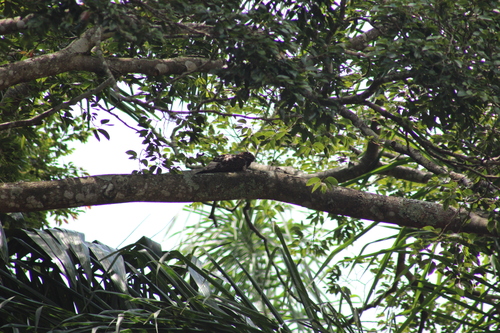 Short-tailed Nighthawk
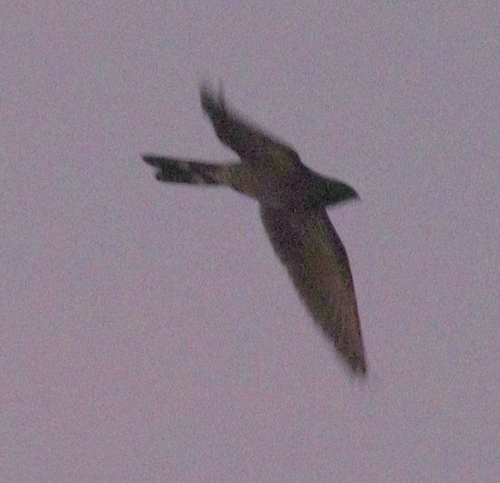 Band-tailed Nighthawk
In breve
Il segno di campo più affidabile per separare il Short-tailed Nighthawk dal Band-tailed Nighthawk è la presenza di una banda bianca audace attraverso il centro della coda nel Band-tailed, visibile in volo e quando è posato, che il Short-tailed Nighthawk manca completamente. Entrambe le specie sono nightjars a coda corta e piumaggio scuro senza bianco nelle ali, ma il Short-tailed è più grande e più robusto, con una coda più tozza e parti inferiori più marcate. Il Band-tailed Nighthawk è più piccolo, più snello e mostra una coda leggermente forked con una banda bianca evidente; il suo piumaggio è più semplice e più chiaro negli immaturi. Le differenze strutturali e le preferenze di habitat aiutano anche: il Band-tailed è spesso visto volare basso sopra l'acqua al crepuscolo, mentre il Short-tailed preferisce habitat forestali ed è meno legato all'acqua. Le vocalizzazioni differiscono, ma entrambe sono sottili e raramente diagnostiche sul campo.
Consigli di identificazione
- Banda bianca sulla coda (tutte le età): Il Band-tailed Nighthawk mostra sempre una banda bianca audace attraverso il centro della coda, visibile in volo e spesso quando è posato. Il Short-tailed Nighthawk non mostra mai una banda bianca centrale sulla coda—cerca questo per primo in qualsiasi vista.
- Forma e lunghezza della coda: Entrambi hanno code corte, ma quella del Short-tailed Nighthawk è particolarmente corta e quadrata, mentre quella del Band-tailed è corta ma leggermente forked. In volo, la coda del Band-tailed può apparire più appuntita o forked, specialmente quando è aperta.
- Pattern della coda: La coda del Short-tailed Nighthawk è marrone con barre fulve/grigiastre e una stretta banda buffa o bianca alla punta (non centrale). La coda del Band-tailed è scura con una chiara banda bianca al centro—mai alla punta.
- Marcature delle ali: Entrambe le specie mancano di macchie bianche audaci nelle ali, a differenza di molti altri nighthawks. Non fare affidamento solo sul pattern delle ali per separare questi due.
- Marcature delle parti superiori e inferiori: Il Short-tailed Nighthawk è più marcato sopra e sotto, con macchie e barre rufous e buff. Il Band-tailed è più semplice e più chiaro nel complesso, specialmente negli immaturi, ma entrambi sono cripto-brown.
- Macchie sulla gola: Il Band-tailed Nighthawk ha macchie bianche sui lati della gola, che possono essere viste in buone viste. Il Short-tailed ha una gola bianca, ma non così distintamente macchiata sui lati.
- Dimensione e robustezza: Il Short-tailed Nighthawk è visibilmente più grande e più pesante. Se visti fianco a fianco o con una buona percezione della scala, questo può aiutare, ma fai attenzione alla sovrapposizione con altri nightjars.
- Becco e setole: Il Band-tailed ha un becco molto largo ma corto, privo delle setole rictali allungate tipiche di molti nightjars. Questo è sottile e raramente visibile sul campo.
- Stile di volo: Il Band-tailed Nighthawk vola rapidamente e basso sopra l'acqua con battiti d'ala superficiali e planate. Il Short-tailed è più probabile che venga visto volare sopra o lungo i bordi delle foreste e le radure, non sopra acque aperte.
- Comportamento di riposo: Il Band-tailed spesso si posa su rami sottili vicino all'acqua, a volte in piccoli gruppi. Il Short-tailed è più solitario e associato alla foresta.
- Preferenza di habitat: Se l'uccello viene visto regolarmente sopra fiumi o laghi al crepuscolo, il Band-tailed è molto più probabile. Nella foresta profonda o lontano dall'acqua, il Short-tailed è favorito.
- Vocalizzazioni: Se udito, il Short-tailed emette un "ewIT" o "gweek" acuto e distanziato; il Band-tailed emette un richiamo continuo, simile a una rana, a basso volume. Usa con cautela, poiché entrambi sono sottili.
- Sesso e età: Entrambe le specie mostrano un debole dimorfismo sessuale, e gli immaturi del Band-tailed sono solo leggermente più chiari e più semplici degli adulti. La banda bianca sulla coda è presente in tutte le età del Band-tailed.
- Trappole: Non confondere la stretta banda terminale buffa o bianca della coda del Short-tailed con la banda centrale audace del Band-tailed. In scarsa luce, la banda bianca della coda del Band-tailed è spesso l'unico segno affidabile.
- Quando in dubbio: Concentrati sul pattern della coda e sul contesto dell'habitat—questi sono i tratti più costantemente diagnostici per la separazione sul campo.
Taglia
Il Short-tailed Nighthawk è nettamente più grande, misurando 19–21 cm di lunghezza e pesando 79–89 g [wikipedia]. Il Band-tailed Nighthawk è più piccolo a 16.5–19 cm e pesa 23–28 g [wikipedia]. La differenza di dimensione è evidente nel confronto diretto, con il Short-tailed che appare più robusto e pesante, mentre il Band-tailed è più snello e leggero. Entrambi hanno code corte, ma quella del Short-tailed è proporzionalmente ancora più corta e quadrata. I dati sull'apertura alare sono disponibili solo per il Band-tailed (12.9–14.1 cm), ma entrambe le specie hanno ali lunghe e appuntite rispetto alla loro dimensione.
Piumaggio
- Piumaggio giovanile/immaturo: Gli immaturi del Band-tailed Nighthawk sono leggermente più semplici e più chiari degli adulti, ma mostrano ancora la banda bianca diagnostica sulla coda, presente fin da giovane età [wikipedia]. Gli immaturi del Short-tailed Nighthawk non sono descritti in dettaglio, ma non si fa menzione di una banda bianca sulla coda o di alcuna caratteristica comparabile.
- Piumaggio adulto: Il Short-tailed Nighthawk è marrone scuro fino al nero sopra, con macchie e puntini rufous e buff, e una coda marrone con barre fulve/grigiastre e una stretta banda terminale buffa o bianca (non una banda centrale). Le parti inferiori sono fortemente marcate con marrone, buff e fulvo. Le ali sono scure con macchie attenuate, prive di qualsiasi marcatura bianca audace [wikipedia]. Il Band-tailed Nighthawk è cripto-marrone con ali lunghe e appuntite e una coda corta, leggermente forked. La caratteristica chiave è la banda bianca attraverso il centro della coda (sulle tre piume esterne della coda), e macchie bianche sui lati della gola. Le ali non hanno marcature bianche. Entrambi i sessi sono simili in entrambe le specie, e il dimorfismo sessuale è debole.
Comportamento
Il Band-tailed Nighthawk è spesso visto volare basso e rapidamente sopra fiumi, laghi e altri corpi d'acqua al crepuscolo, nutrendosi in volo continuo con battiti d'ala rapidi e superficiali e planate [wikipedia]. Si posa frequentemente su rami orizzontali sottili vicino all'acqua, a volte in piccoli gruppi. Il Short-tailed Nighthawk si nutre principalmente al crepuscolo, ma è più spesso associato a foreste sempreverdi di pianura, bordi forestali e radure piuttosto che a acque aperte. Il suo volo è meno legato ai corsi d'acqua e più agli habitat forestali. Entrambe le specie sono insettivori aerei, ma i loro contesti di foraggiamento preferiti differiscono.
Habitat
Il Short-tailed Nighthawk si trova in un'ampia gamma attraverso l'America Centrale e Meridionale, abitualmente in foreste sempreverdi di pianura, bordi forestali, radure e occasionalmente in foreste secondarie o piantagioni [wikipedia]. È meno comunemente trovato vicino ad acque aperte. Il Band-tailed Nighthawk, al contrario, è fortemente associato a habitat vicino all'acqua—fiumi, torrenti, paludi, laghi e foreste o savane di pianura adiacenti, sempre a basse altitudini sotto i 200–300 m [wikipedia]. Se vedi un nighthawk volare regolarmente basso sopra l'acqua al crepuscolo, il Band-tailed è molto più probabile.
Voce
Il Short-tailed Nighthawk emette un "ewIT ... ewIT ... ewIT ..." costantemente ripetuto ma ben distanziato o un richiamo acuto, leggermente liquido "g'wik" o "gweek", sia in volo che quando è posato [wikipedia]. Il richiamo del Band-tailed Nighthawk è un "gole-kwoik-kwak" a basso volume, simile a una rana, ripetuto costantemente [wikipedia]. Entrambi sono sottili e possono essere difficili da distinguere sul campo, ma il richiamo del Short-tailed è più acuto e più distanziato, mentre quello del Band-tailed è più basso e continuo. Le vocalizzazioni non sono di solito il segno di campo più affidabile a meno che non siano udite bene.
Short-tailed Nighthawk · Band-tailed Nighthawk · I miei uccelli difficili