

calhandra-cornuda vs calhandra-bastarda
Eremophila alpestris versus Melanocorypha bimaculata
Jogue um quiz com calhandra-cornuda e calhandra-bastarda
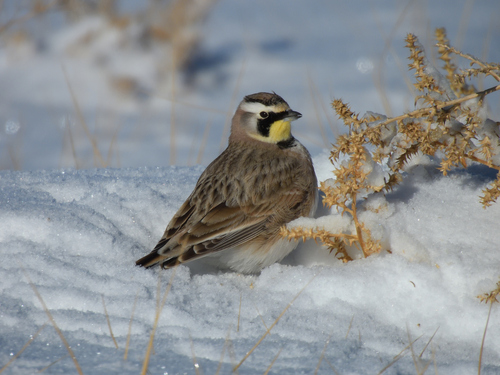 calhandra-cornuda
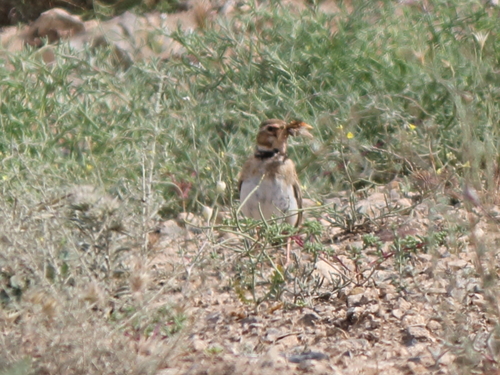 calhandra-bastarda
Em resumo
A marca de campo mais confiável entre a calhandra-cornuda e a calhandra-bastarda é o padrão da cabeça e do rosto: a calhandra-cornuda apresenta uma máscara preta e amarela (ou preta e branca em algumas raças) marcante com pequenos 'chifres' nos machos, enquanto a calhandra-bastarda tem um rosto muito mais simples. Em voo, a calhandra-cornuda exibe uma cauda preta forte com contraste corporal claro, enquanto a calhandra-bastarda mostra uma cauda curta com uma ponta branca, mas sem bordas brancas, e asas curtas e largas com penas de baixo cinza-marrom. A calhandra-bastarda também é visivelmente mais pesada e robusta. A voz e o habitat podem ajudar, mas o padrão da cabeça e os contrastes da cauda/asas são os mais decisivos.
Dicas de identificação
- Padrão da cabeça e do rosto: A calhandra-cornuda (todas as idades, especialmente machos adultos) apresenta uma máscara facial preta e amarela (ou preta e branca em algumas raças) ousada com uma linha preta através do olho e um babador preto; os machos têm pequenos 'chifres' pretos (tufts). A calhandra-bastarda tem um rosto simples, sem máscara ou chifres.
- Padrão da cauda em voo: A calhandra-cornuda tem uma cauda principalmente preta, com apenas as penas centrais mais claras, criando um contraste nítido com o corpo, visível em todas as idades e estações. A cauda da calhandra-bastarda é curta, com uma ponta branca, mas carece de bordas brancas e não contrasta fortemente com o corpo.
- Forma da asa e penas de baixo: A calhandra-bastarda tem asas curtas e largas com penas de baixo cinza-marrom; as asas da calhandra-cornuda são mais longas e pontiagudas, sem a aparência larga e romba.
- Tamanho e robustez do corpo: A calhandra-bastarda é visivelmente mais pesada e robusta do que a calhandra-cornuda. Se os pássaros estiverem lado a lado, a diferença de tamanho é clara, mas tenha cuidado com pássaros solitários ou vistas distantes.
- Bico e jizz: A calhandra-cornuda é mais esbelta, com um bico mais fino e uma postura mais ereta. A calhandra-bastarda parece mais robusta e pesada, com um bico mais grosso e uma postura mais horizontal.
- Plumagem acima e abaixo: Ambas são marrom-cinza acima e claras abaixo, mas apenas a calhandra-cornuda tem o forte contraste facial e da cauda; a calhandra-bastarda é, em geral, mais simples.
- Variação de sexo e idade: O macho da calhandra-cornuda em plumagem de reprodução é o mais distintivo, mas mesmo fêmeas e imaturos mostram algum padrão facial e a cauda preta. A calhandra-bastarda tem sempre o rosto simples.
- Estilo de voo: A calhandra-cornuda frequentemente canta em voo com movimentos ondulantes e flutuantes; a calhandra-bastarda é mais direta e menos exibida.
- Contexto do habitat: A calhandra-cornuda é encontrada em habitats abertos, frequentemente frios ou costeiros; a calhandra-bastarda prefere estepes quentes e secas ou terras cultiváveis. Se o ambiente é frio e aberto, suspeite da calhandra-cornuda; se seco e continental, suspeite da calhandra-bastarda.
- Vocalização: Se você ouvir chamadas agudas e tilintantes ou um fraco trinado ascendente, isso apoia a calhandra-cornuda. A voz da calhandra-bastarda não é descrita aqui, então a ausência dessas chamadas não é diagnóstica.
- Armadilhas: Calhandras-cornudas imaturas podem parecer menos marcadas, mas ainda mostrarão algum padrão facial e a cauda preta. Calhandras-bastardas distantes podem parecer ter um rosto claro em luz forte, mas nunca mostram a máscara ou chifres.
- Confusão sazonal: No inverno, o padrão facial da calhandra-cornuda pode ser mais apagado, mas ainda presente; a calhandra-bastarda permanece simples durante todo o ano.
- Comportamento em bandos: Ambas podem ser vistas em bandos, mas os bandos de calhandra-cornuda são frequentemente em solo nu ou margens, enquanto os bandos de calhandra-bastarda estão em estepes ou terras agrícolas.
- Contexto geográfico: A calhandra-cornuda é amplamente distribuída pelo hemisfério norte, especialmente em zonas frias ou alpinas; a calhandra-bastarda é restrita a estepes mais quentes da Turquia para o leste.
- Quando em dúvida: Priorize o padrão da cabeça e o contraste da cauda em voo; essas são as marcas mais confiáveis para todas as idades e estações.
Tamanho
A calhandra-bastarda é substancialmente mais pesada (massa corporal ~54g [wikidata]) do que a calhandra-cornuda (28–48g [wikipedia]), e parece mais robusta no geral. A calhandra-cornuda é menor (16–20 cm de comprimento) e mais esbelta, com uma cauda proporcionalmente mais longa. As asas da calhandra-bastarda são curtas e largas, dando-lhe uma aparência mais robusta em voo, enquanto a calhandra-cornuda é mais aerodinâmica.
Plumagem
- Juvenil/imatura/vistas de voo: A calhandra-cornuda de todas as idades mostra um forte contraste entre uma cauda principalmente preta (exceto pelas penas centrais) e um corpo mais claro, especialmente visível em voo. A calhandra-bastarda em voo mostra uma cauda curta com uma ponta branca (mas sem bordas brancas) e penas de baixo cinza-marrom; seu padrão de asa e cauda é distinto da calhandra-cornuda, carecendo do contraste da cauda preta.
- Plumagem de reprodução adulta: O macho da calhandra-cornuda é inconfundível com sua máscara facial preta e amarela (ou preta e branca em algumas raças) e pequenos 'chifres' pretos (tufts). A calhandra-bastarda não possui nenhum padrão de cabeça, parecendo muito mais simples.
- Não-reprodução/fêmea/imatura: A calhandra-cornuda ainda mostra algum padrão facial, embora menos ousado, e a cauda preta permanece uma marca forte. A calhandra-bastarda permanece com o rosto simples durante todo o ano.
- Partes superiores: A calhandra-cornuda é marrom-cinza acima, mais clara abaixo; a calhandra-bastarda é semelhante, mas carece do forte contraste facial e do padrão da cauda.
Comportamento
A calhandra-cornuda frequentemente se alimenta e se move em solo aberto e nu ou margens, às vezes em pequenos bandos. Seu voo é ondulante e frequentemente acompanhado por voos cantantes, especialmente na época de reprodução. A calhandra-bastarda é mais provável de ser encontrada em estepes ou terras agrícolas áridas, movendo-se em um voo mais direto e menos flutuante, e é menos provável que exiba voos cantantes aéreos.
Habitat
A calhandra-cornuda é encontrada em solo aberto, frequentemente perto de margens no inverno (daí o nome europeu), e em tundras ou prados alpinos no verão. A calhandra-bastarda prefere estepes temperadas quentes, planícies áridas ou campos cultivados em sua faixa da Turquia até a Ásia Central. A sobreposição é rara, mas o contexto do habitat pode ajudar: a calhandra-cornuda é mais provável em ambientes frios, abertos ou costeiros; a calhandra-bastarda em estepes mais secas, quentes e continentais.
Voz
A calhandra-cornuda emite chamadas agudas, sibilantes ou tilintantes e um fraco trinado ascendente em voo. Essas são geralmente mais suaves e mais altas do que as chamadas típicas de calhandra. A voz da calhandra-bastarda não é descrita nas fontes fornecidas, então a vocalização é menos confiável para separação, a menos que as distintivas chamadas altas e tilintantes da calhandra-cornuda sejam ouvidas.
calhandra-cornuda · calhandra-bastarda · Minhas aves difíceis