

Alondra Cornuda vs Calandria Bimaculada
Eremophila alpestris frente a Melanocorypha bimaculata
Juega un quiz con Alondra Cornuda y Calandria Bimaculada
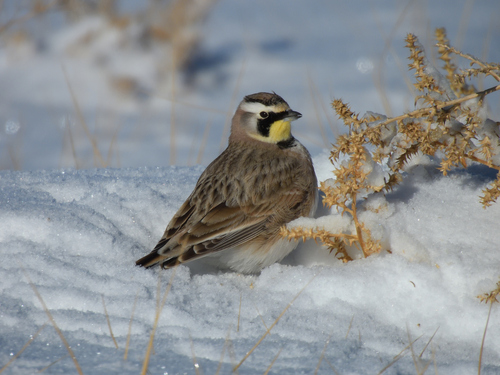 Alondra Cornuda
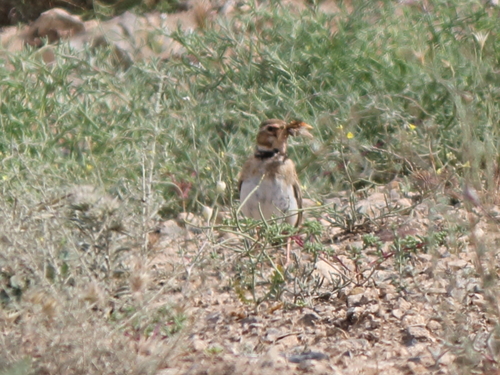 Calandria Bimaculada
En breve
La marca de campo más confiable entre la Alondra Cornuda y la Calandria Bimaculada es el patrón de la cabeza y la cara: la Alondra Cornuda muestra una llamativa máscara negra y amarilla (o negra y blanca en algunas razas) con pequeños 'cuernos' en los machos, mientras que la Calandria Bimaculada tiene una cara mucho más simple. En vuelo, la Alondra Cornuda exhibe una fuerte cola negra con un contraste pálido en el cuerpo, mientras que la Calandria Bimaculada muestra una cola corta con una punta blanca pero sin bordes blancos, y alas cortas y anchas con plumas de vuelo marrón grisáceo. La Calandria Bimaculada también es notablemente más pesada y robusta. La voz y el hábitat pueden ayudar, pero el patrón de la cabeza y los contrastes de la cola/alas son los más decisivos.
Consejos de identificación
- Patrón de la cabeza y la cara: La Alondra Cornuda (todas las edades, especialmente machos adultos) muestra una máscara facial negra y amarilla (o negra y blanca en algunas razas) con una línea negra a través del ojo y un babero negro; los machos tienen pequeños 'cuernos' negros (mechones). La Calandria Bimaculada tiene una cara simple sin máscara ni cuernos.
- Patrón de la cola en vuelo: La Alondra Cornuda tiene una cola mayormente negra con solo las plumas centrales más pálidas, creando un fuerte contraste con el cuerpo, visible en todas las edades y estaciones. La cola de la Calandria Bimaculada es corta con una punta blanca pero carece de bordes blancos y no contrasta fuertemente con el cuerpo.
- Forma del ala y plumas de vuelo: La Calandria Bimaculada tiene alas cortas y anchas con plumas de vuelo marrón grisáceo; las alas de la Alondra Cornuda son más largas y puntiagudas, careciendo del aspecto ancho y romo.
- Tamaño y robustez del cuerpo: La Calandria Bimaculada es notablemente más pesada y robusta que la Alondra Cornuda. Si los pájaros están uno al lado del otro, la diferencia de tamaño es clara, pero cuidado con los pájaros solitarios o vistas distantes.
- Pico y apariencia: La Alondra Cornuda es más esbelta, con un pico más fino y una postura más erguida. La Calandria Bimaculada parece más robusta y pesada, con un pico más grueso y una postura más horizontal.
- Plumaje arriba y abajo: Ambos son marrón grisáceo arriba y pálidos abajo, pero solo la Alondra Cornuda tiene el fuerte contraste de la cara y la cola; la Calandria Bimaculada es en general más simple.
- Variación de sexo y edad: El macho de la Alondra Cornuda en plumaje de cría es el más distintivo, pero incluso las hembras y los inmaduros muestran algún patrón facial y la cola negra. La Calandria Bimaculada siempre tiene la cara simple.
- Estilo de vuelo: La Alondra Cornuda a menudo canta en vuelo con movimientos ondulantes y ligeros; la Calandria Bimaculada tiene un vuelo más directo y menos ostentoso.
- Contexto del hábitat: La Alondra Cornuda se encuentra en hábitats abiertos, a menudo fríos o costeros; la Calandria Bimaculada prefiere estepas cálidas y secas o tierras cultivables. Si el entorno es frío y abierto, sospeche de la Alondra Cornuda; si es seco y continental, sospeche de la Calandria Bimaculada.
- Vocalización: Si escucha llamadas agudas, tintineantes o un débil trino ascendente, esto apoya a la Alondra Cornuda. La voz de la Calandria Bimaculada no se describe aquí, por lo que la ausencia de estas llamadas no es diagnóstica.
- Trampas: Las Alondras Cornudas inmaduras pueden parecer menos marcadas, pero aún mostrarán algún patrón facial y la cola negra. Las Calandrias Bimaculadas distantes pueden parecer tener una cara pálida en luz fuerte, pero nunca muestran la máscara o los cuernos.
- Confusión estacional: En invierno, el patrón facial de la Alondra Cornuda puede ser más apagado, pero aún presente; la Calandria Bimaculada permanece simple durante todo el año.
- Comportamiento en bandada: Ambos pueden verse en bandadas, pero las bandadas de la Alondra Cornuda a menudo están en suelo desnudo o costas, mientras que las bandadas de la Calandria Bimaculada están en estepas o tierras agrícolas.
- Contexto geográfico: La Alondra Cornuda está ampliamente distribuida en el hemisferio norte, especialmente en zonas frías o alpinas; la Calandria Bimaculada está restringida a estepas más cálidas desde Turquía hacia el este.
- Cuando tenga dudas: Priorice el patrón de la cabeza y el contraste de la cola en vuelo; estas son las marcas más confiables para todas las edades y estaciones.
Tamaño
La Calandria Bimaculada es sustancialmente más pesada (masa corporal ~54g [wikidata]) que la Alondra Cornuda (28–48g [wikipedia]), y parece más robusta en general. La Alondra Cornuda es más pequeña (16–20 cm de longitud) y más esbelta, con una cola proporcionalmente más larga. Las alas de la Calandria Bimaculada son cortas y anchas, dándole un aspecto más robusto en vuelo, mientras que la Alondra Cornuda es más aerodinámica.
Plumaje
- Juvenil/inmaduro/vistas en vuelo: La Alondra Cornuda de todas las edades muestra un fuerte contraste entre una cola mayormente negra (excepto por las plumas centrales) y un cuerpo más pálido, especialmente visible en vuelo. La Calandria Bimaculada en vuelo muestra una cola corta con una punta blanca (pero sin bordes blancos) y plumas de vuelo marrón grisáceo; su patrón de ala y cola es distintivo de la Alondra Cornuda, careciendo del contraste de la cola negra.
- Plumaje de cría adulto: El macho de la Alondra Cornuda es inconfundible con su máscara facial negra y amarilla (o negra y blanca en algunas razas) y pequeños 'cuernos' negros (mechones). La Calandria Bimaculada carece de cualquier patrón de cabeza, apareciendo mucho más simple.
- No reproductor/hembra/inmaduro: La Alondra Cornuda aún muestra algún patrón facial, aunque menos audaz, y la cola negra sigue siendo una marca fuerte. La Calandria Bimaculada permanece con la cara simple durante todo el año.
- Partes superiores: La Alondra Cornuda es marrón grisáceo arriba, más pálida abajo; la Calandria Bimaculada es similar pero carece del fuerte contraste facial y patrón de cola.
Comportamiento
La Alondra Cornuda a menudo se alimenta y se mueve en suelo abierto y desnudo o costas, a veces en pequeñas bandadas. Su vuelo es ondulante y a menudo acompañado de vuelos cantando, especialmente en la temporada de cría. La Calandria Bimaculada es más probable que se encuentre en estepas o tierras agrícolas áridas, moviéndose en un vuelo más directo y menos ligero, y es menos probable que muestre vuelos de canto aéreo.
Hábitat
La Alondra Cornuda se encuentra en suelo abierto, a menudo cerca de costas en invierno (de ahí el nombre europeo), y en tundra o praderas alpinas en verano. La Calandria Bimaculada prefiere estepas templadas cálidas, llanuras áridas o campos cultivados en su rango desde Turquía hasta Asia Central. La superposición es rara, pero el contexto del hábitat puede ayudar: la Alondra Cornuda es más probable que se encuentre en entornos fríos, abiertos o costeros; la Calandria Bimaculada en estepas más secas, cálidas y continentales.
Voz
La Alondra Cornuda emite llamadas agudas, susurrantes o tintineantes y un débil trino ascendente en vuelo. Estas son generalmente más suaves y más altas que las llamadas típicas de las alondras. La voz de la Calandria Bimaculada no se describe en las fuentes proporcionadas, por lo que la vocalización es menos confiable para la separación a menos que se escuchen las distintivas llamadas altas y tintineantes de la Alondra Cornuda.