

Allodola golagialla vs Calandra asiatica
Eremophila alpestris contro Melanocorypha bimaculata
Fai un quiz con Allodola golagialla e Calandra asiatica
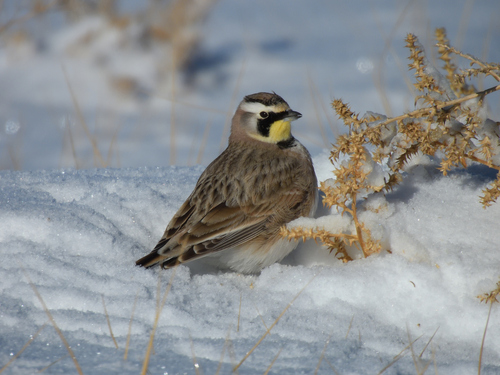 Allodola golagialla
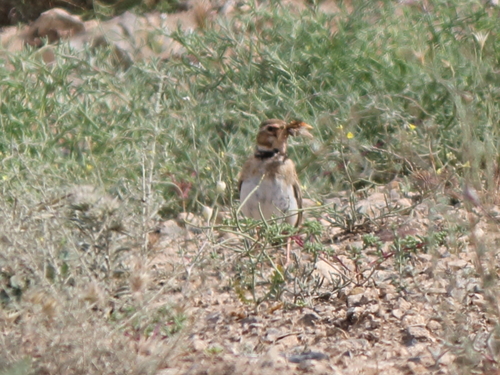 Calandra asiatica
In breve
Il segno di campo più affidabile tra Allodola golagialla e Calandra asiatica è il modello della testa e del viso: l'Allodola golagialla mostra una maschera nera e gialla (o nera e bianca in alcune razze) con piccole 'corna' nei maschi, mentre la Calandra asiatica ha un viso molto più semplice. In volo, l'Allodola golagialla mostra una forte coda nera con un contrasto chiaro del corpo, mentre la Calandra asiatica mostra una coda corta con una punta bianca ma senza bordi bianchi, e ali corte e larghe con sottocoperte grigio-marroni. La Calandra asiatica è anche notevolmente più pesante e massiccia. La voce e l'habitat possono aiutare, ma il modello della testa e i contrasti coda/ala sono i più decisivi.
Consigli di identificazione
- Head and face pattern: Allodola golagialla (tutte le età, specialmente i maschi adulti) mostra una maschera facciale nera e gialla (o nera e bianca in alcune razze) audace con una linea nera attraverso l'occhio e un bavero nero; i maschi hanno piccole 'corna' nere (ciuffi). La Calandra asiatica ha un viso semplice senza maschera o corna.
- Tail pattern in flight: L'Allodola golagialla ha una coda per lo più nera con solo le piume centrali più chiare, creando un forte contrasto con il corpo, visibile in tutte le età e stagioni. La coda della Calandra asiatica è corta con una punta bianca ma priva di bordi bianchi e non è fortemente contrastante con il corpo.
- Wing shape and underwing: La Calandra asiatica ha ali corte e larghe con sottocoperte grigio-marroni; le ali dell'Allodola golagialla sono più lunghe e appuntite, prive dell'aspetto largo e smussato.
- Body size and bulk: La Calandra asiatica è notevolmente più pesante e massiccia rispetto all'Allodola golagialla. Se gli uccelli sono affiancati, la differenza di dimensione è chiara, ma attenzione agli uccelli solitari o alle viste distanti.
- Bill and jizz: L'Allodola golagialla è più snella, con un becco più fine e una postura più eretta. La Calandra asiatica appare più robusta e pesante, con un becco più spesso e una postura più orizzontale.
- Plumage above and below: Entrambi sono marrone-grigi sopra e chiari sotto, ma solo l'Allodola golagialla ha un forte contrasto facciale e di coda; la Calandra asiatica è complessivamente più semplice.
- Sex and age variation: Il maschio dell'Allodola golagialla in piumaggio nuziale è il più distintivo, ma anche le femmine e gli immaturi mostrano un certo modello facciale e la coda nera. La Calandra asiatica ha sempre un viso semplice.
- Flight style: L'Allodola golagialla spesso canta in volo con movimenti ondulati e leggeri; la Calandra asiatica è più probabile che abbia un volo più diretto e meno appariscente.
- Habitat context: L'Allodola golagialla si trova in habitat aperti, spesso freddi o costieri; la Calandra asiatica preferisce steppe calde e secche o terreni coltivabili. Se l'ambiente è freddo e aperto, sospettare l'Allodola golagialla; se secco e continentale, sospettare la Calandra asiatica.
- Vocalization: Se senti richiami acuti, tintinnanti o un debole trill ascendente, questo supporta l'Allodola golagialla. La voce della Calandra asiatica non è descritta qui, quindi l'assenza di questi richiami non è diagnostica.
- Pitfalls: Gli immaturi dell'Allodola golagialla possono apparire meno marcati ma mostreranno comunque un certo modello facciale e la coda nera. Le Calandre asiatiche distanti possono sembrare avere un viso chiaro in forte luce, ma non mostrano mai la maschera o le corna.
- Seasonal confusion: In inverno, il modello facciale dell'Allodola golagialla può essere più opaco, ma è comunque presente; la Calandra asiatica rimane semplice tutto l'anno.
- Flock behavior: Entrambi possono essere visti in stormi, ma gli stormi di Allodola golagialla sono spesso su terreno nudo o coste, mentre gli stormi di Calandra asiatica sono su steppe o terreni agricoli.
- Geographic context: L'Allodola golagialla è diffusa nell'emisfero settentrionale, specialmente in zone fredde o alpine; la Calandra asiatica è limitata a steppe più calde dalla Turchia verso est.
- When in doubt: Dai priorità al modello della testa e al contrasto della coda in volo; questi sono i segni più affidabili per tutte le età e stagioni.
Taglia
La Calandra asiatica è sostanzialmente più pesante (massa corporea ~54g [wikidata]) rispetto all'Allodola golagialla (28–48g [wikipedia]), e appare più massiccia nel complesso. L'Allodola golagialla è più piccola (16–20 cm di lunghezza) e più snella, con una coda proporzionalmente più lunga. Le ali della Calandra asiatica sono corte e larghe, conferendole un aspetto più robusto in volo, mentre l'Allodola golagialla è più aerodinamica.
Piumaggio
- Juvenile/immature/flight views: L'Allodola golagialla di tutte le età mostra un forte contrasto tra una coda per lo più nera (eccetto per le piume centrali) e un corpo più chiaro, specialmente visibile in volo. La Calandra asiatica in volo mostra una coda corta con una punta bianca (ma senza bordi bianchi) e sottocoperte grigio-marroni; il suo modello di ali e coda è distintivo rispetto all'Allodola golagialla, privo del contrasto della coda nera.
- Adult breeding plumage: Il maschio dell'Allodola golagialla è inconfondibile con la sua maschera facciale nera e gialla (o nera e bianca in alcune razze) e piccole 'corna' nere (ciuffi). La Calandra asiatica non ha alcun modello di testa simile, apparendo molto più semplice.
- Non-breeding/female/immature: L'Allodola golagialla mostra ancora un certo modello facciale, sebbene meno audace, e la coda nera rimane un segno forte. La Calandra asiatica rimane sempre con un viso semplice durante tutto l'anno.
- Upperparts: L'Allodola golagialla è marrone-grigia sopra, più chiara sotto; la Calandra asiatica è simile ma priva del forte contrasto facciale e del modello di coda.
Comportamento
L'Allodola golagialla spesso si nutre e si muove in terreni aperti e nudi o lungo le coste, a volte in piccoli stormi. Il suo volo è ondulato e spesso accompagnato da voli cantati, specialmente in stagione di riproduzione. La Calandra asiatica è più probabile trovarla in steppe o terreni agricoli aridi, muovendosi in un volo più diretto e meno leggero, ed è meno probabile che mostri voli cantati aerei.
Habitat
L'Allodola golagialla si trova su terreni aperti, spesso vicino alle coste in inverno (da cui il nome europeo), e in tundra o prati alpini in estate. La Calandra asiatica preferisce steppe temperate calde, pianure aride o campi coltivati nel suo areale dalla Turchia all'Asia Centrale. L'overlap è raro, ma il contesto dell'habitat può aiutare: l'Allodola golagialla è più probabile in ambienti freddi, aperti o costieri; la Calandra asiatica in steppe più secche, calde e continentali.
Voce
L'Allodola golagialla emette richiami acuti, sibilanti o tintinnanti e un debole trill ascendente in volo. Questi sono generalmente più morbidi e più alti rispetto ai richiami tipici delle allodole. La voce della Calandra asiatica non è descritta nelle fonti fornite, quindi la vocalizzazione è meno affidabile per la separazione a meno che non si sentano i distintivi richiami alti e tintinnanti dell'Allodola golagialla.
Allodola golagialla · Calandra asiatica · I miei uccelli difficili