

scarlet-chested sunbird vs white-bellied sunbird
Chalcomitra senegalensis versus Cinnyris talatala
Jogue um quiz com scarlet-chested sunbird e white-bellied sunbird
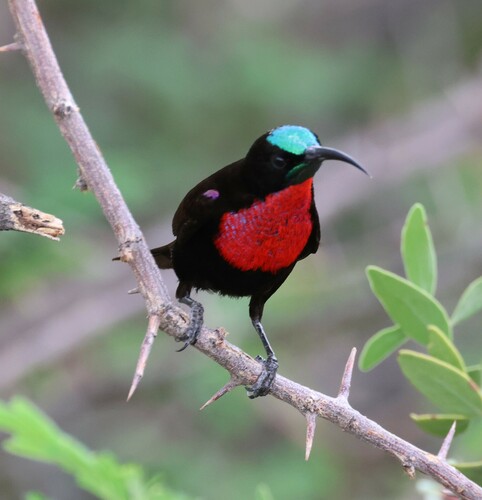 scarlet-chested sunbird
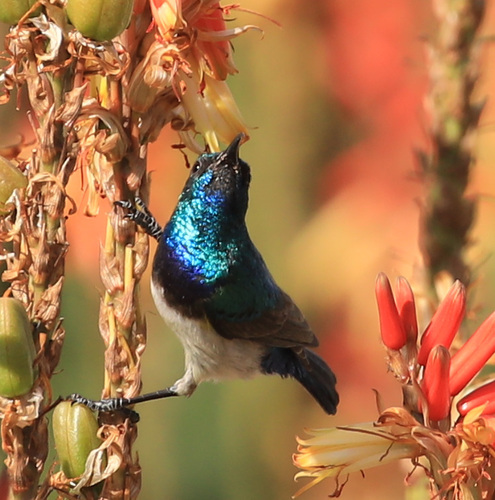 white-bellied sunbird
Em resumo
A marca de campo mais confiável para separar o scarlet-chested sunbird do white-bellied sunbird é o peito escarlate vívido do macho (scarlet-chested) em comparação com o barriga branca (white-bellied). As fêmeas são mais complicadas, mas as fêmeas scarlet-chested são uniformemente marrons escuras embaixo, sem barriga pálida ou supercílios, enquanto as fêmeas white-bellied apresentam uma barriga pálida ou esbranquiçada contrastante. Ambas as espécies se sobrepõem em grande parte do sul da África e podem ser encontradas em jardins e florestas, portanto, atenção cuidadosa à cor da parte inferior e ao padrão da cabeça é essencial. O tamanho não é um separador forte em campo, mas o scarlet-chested é geralmente ligeiramente maior e mais pesado. Pássaros imaturos e não reprodutores são melhor separados pelo contraste da parte inferior, já que nenhuma das espécies possui padrões de asas juvenis distintos descritos nas fontes.
Dicas de identificação
- Partes inferiores do macho: A marca de campo mais óbvia é o peito do macho: o scarlet-chested sunbird tem um peito escarlate vívido, enquanto o white-bellied sunbird tem uma barriga branca sem vermelho.
- Cabeça do macho: Machos scarlet-chested mostram uma mancha verde iridescente na coroa, que o white-bellied não possui. Procure por isso em boa luz.
- Partes inferiores da fêmea: As fêmeas scarlet-chested sunbirds são marrons escuras embaixo, sem barriga pálida, enquanto as fêmeas white-bellied têm uma barriga pálida ou esbranquiçada que contrasta com as partes superiores mais escuras.
- Supercílios (sobrancelha): A fêmea scarlet-chested não possui supercílios, enquanto as fêmeas white-bellied podem mostrar uma sobrancelha pálida fraca, útil em distâncias curtas.
- Pássaros imaturos: Juvenis e imaturos scarlet-chested sunbirds permanecem escuros embaixo, enquanto os imaturos white-bellied mostram uma barriga mais clara. Use essa marca se o pássaro não tiver as cores do macho adulto.
- Padrão da asa superior: Nenhum padrão de asa juvenil ou imaturo distinto é descrito para nenhuma das espécies, portanto, não confie em marcas de asa superior em voo.
- Tamanho: O scarlet-chested é ligeiramente maior e mais pesado, mas isso é sutil e não confiável, a menos que os pássaros estejam lado a lado.
- Bico e estrutura: Nenhuma diferença forte é notada nas fontes; ambos têm bicos e proporções típicas de sunbirds.
- Habitat: Ambas as espécies utilizam florestas e jardins, portanto, o contexto não é um separador confiável em áreas sobrepostas.
- Comportamento: Ambas as espécies se alimentam de néctar e se juntam a bandos mistos; o white-bellied é conhecido por caçar insetos no ar no final da tarde, mas isso não é diagnóstico.
- Voz: Nenhuma vocalização distintiva é descrita nas fontes; não confie em canções ou chamadas para separação.
- Armadilhas: Fêmeas e imaturos scarlet-chested sunbirds são frequentemente confundidos com white-bellied devido à sua aparência simples, mas sempre verifique a presença ou ausência de uma barriga pálida e supercílios.
- Iluminação: Cores iridescentes (peito escarlate, coroa verde) em machos scarlet-chested podem ser opacas ou invisíveis em luz fraca; confirme com a cor da parte inferior se houver dúvida.
- Distribuição: Ambas as espécies se sobrepõem amplamente no sul da África, portanto, não assuma a identificação com base apenas na localização.
- Estação: Nenhuma diferença de plumagem sazonal forte é descrita para nenhuma das espécies; use as mesmas marcas durante todo o ano.
Tamanho
O scarlet-chested sunbird é o maior dos dois, medindo cerca de 13–15 cm de comprimento e pesando 7,5–17,2 g para machos (fêmeas 6,8–15,3 g) [wikipedia]. O white-bellied sunbird é menor e mais leve, mas medidas precisas não são fornecidas nas notas. Em campo, essa diferença de tamanho é sutil e nem sempre confiável, especialmente quando os pássaros não estão lado a lado. A estrutura e o comportamento podem se sobrepor, portanto, o tamanho deve ser usado apenas como uma pista de apoio.
Plumagem
- Machos adultos: Machos scarlet-chested sunbird têm um peito escarlate brilhante e uma mancha de coroa verde iridescente. Machos white-bellied sunbird têm uma barriga branca e não possuem o escarlate extenso, mostrando em vez disso partes superiores verdes metálicas e uma garganta escura com uma barriga branca clara.
- Fêmeas adultas: Fêmeas scarlet-chested são marrons escuras no geral, sem barriga pálida ou supercílios. Fêmeas white-bellied têm uma barriga pálida ou esbranquiçada que contrasta com as partes superiores mais escuras e um supercílios fraco pode estar presente.
- Pássaros imaturos/juvenis: Nenhuma diferença distinta de padrão de asa superior ou de voo é descrita para nenhuma das espécies nas fontes. A separação depende da cor da parte inferior: imaturos scarlet-chested permanecem escuros embaixo, enquanto imaturos white-bellied mostram uma barriga mais clara.
- Em voo: Nenhuma marca de padrão de asa específica para idade (como painéis, bordas traseiras ou marcas em W) é notada para nenhuma das espécies.
Comportamento
Ambas as espécies são alimentadoras ativas de néctar e podem se juntar a bandos de espécies mistas em árvores floridas. O white-bellied sunbird é conhecido por caçar insetos no final da tarde e colher invertebrados da folhagem. O comportamento de forrageamento do scarlet-chested sunbird não é detalhado nas notas, mas ambos podem ser vistos em jardins e florestas, frequentemente pairando ou empoleirando-se enquanto se alimentam. As diferenças comportamentais são sutis e não confiáveis para separação.
Habitat
Ambas as espécies ocorrem amplamente no sul e centro da África e são encontradas em habitats semelhantes: florestas, jardins e áreas com plantas floridas. O scarlet-chested sunbird é notado até 2.400 m de elevação, mas há uma sobreposição significativa na distribuição e habitat com o white-bellied sunbird. O habitat sozinho não é um separador confiável onde ambas as espécies ocorrem.
scarlet-chested sunbird · white-bellied sunbird · Minhas aves difíceis