

Scarlet-chested Sunbird vs White-bellied Sunbird
Chalcomitra senegalensis contro Cinnyris talatala
Fai un quiz con Scarlet-chested Sunbird e White-bellied Sunbird
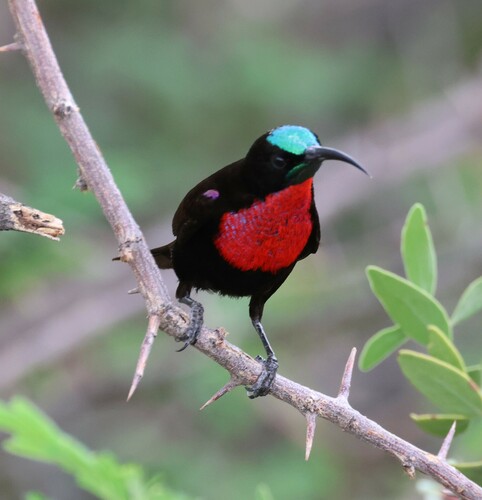 Scarlet-chested Sunbird
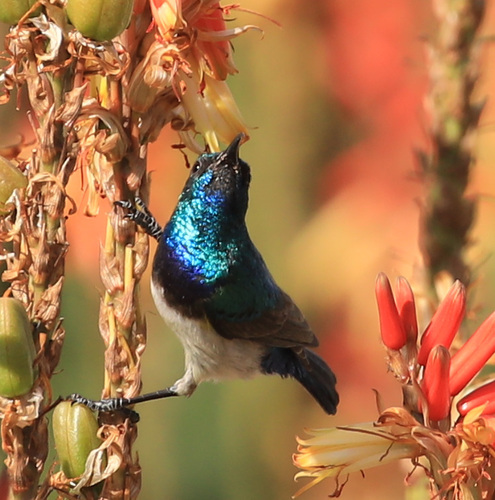 White-bellied Sunbird
In breve
Il segno distintivo più affidabile per separare il Scarlet-chested Sunbird dal White-bellied Sunbird è il petto scarlatto vivido del maschio (Scarlet-chested) rispetto al ventre bianco (White-bellied). Le femmine sono più difficili da distinguere, ma le femmine di Scarlet-chested sono uniformemente marroni scure sotto senza ventre chiaro o sopracciglio, mentre le femmine di White-bellied mostrano un ventre chiaro o biancastro in contrasto. Entrambe le specie si sovrappongono in gran parte dell'Africa meridionale e possono essere trovate in giardini e boschi, quindi è essenziale prestare attenzione al colore della parte inferiore e al motivo della testa. La dimensione non è un forte separatore sul campo, ma il Scarlet-chested è generalmente leggermente più grande e pesante. Gli uccelli immaturi e non in riproduzione sono meglio separati dal contrasto della parte inferiore, poiché nessuna delle due specie ha modelli distintivi di ali giovanili descritti nelle fonti.
Consigli di identificazione
- Parte inferiore del maschio: Il segno distintivo più evidente è il petto del maschio: il Scarlet-chested Sunbird ha un petto scarlatto vivido, mentre il White-bellied Sunbird ha un ventre bianco senza rosso.
- Testa del maschio: I maschi di Scarlet-chested mostrano una macchia verde iridescente sulla corona, che il White-bellied non ha. Cerca questo in buona luce.
- Parte inferiore della femmina: Le femmine di Scarlet-chested Sunbirds sono marroni scure sotto senza ventre chiaro, mentre le femmine di White-bellied hanno un ventre chiaro o biancastro che contrasta con le parti superiori più scure.
- Sopracciglio: La femmina di Scarlet-chested non ha alcun sopracciglio, mentre le femmine di White-bellied possono mostrare un debole sopracciglio chiaro, utile a distanza ravvicinata.
- Uccelli immaturi: Gli uccelli giovanili e immaturi di Scarlet-chested Sunbirds rimangono scuri sotto, mentre gli immaturi di White-bellied mostrano un ventre più chiaro. Usa questo segno se l'uccello non ha i colori del maschio adulto.
- Motivo dell'ala superiore: Non sono descritti modelli distintivi di ali giovanili o immaturi per nessuna delle due specie, quindi non fare affidamento sui segni delle ali superiori in volo.
- Dimensione: Il Scarlet-chested è leggermente più grande e pesante, ma questo è sottile e non affidabile a meno che gli uccelli non siano affiancati.
- Becco e struttura: Non sono notate forti differenze nelle fonti; entrambi hanno becchi e proporzioni tipiche degli uccelli sole.
- Habitat: Entrambe le specie utilizzano boschi e giardini, quindi il contesto non è un separatore affidabile nelle aree sovrapposte.
- Comportamento: Entrambe le specie si nutrono di nettare e si uniscono a stormi misti; il White-bellied è noto per la cattura di insetti in volo nel tardo pomeriggio, ma questo non è diagnostico.
- Voce: Non sono descritte vocalizzazioni distintive nelle fonti; non fare affidamento sul canto o sul richiamo per la separazione.
- Trappole: Le femmine e gli immaturi di Scarlet-chested Sunbirds sono spesso scambiati per White-bellied a causa del loro aspetto semplice, ma controlla sempre la presenza o l'assenza di un ventre chiaro e di un sopracciglio.
- Illuminazione: I colori iridescenti (petto scarlatto, corona verde) sui maschi di Scarlet-chested possono essere opachi o invisibili in scarsa luce; conferma con il colore della parte inferiore se hai dubbi.
- Distribuzione: Entrambe le specie si sovrappongono ampiamente nell'Africa meridionale, quindi non assumere l'identificazione basata solo sulla posizione.
- Stagione: Non sono descritte forti differenze di piumaggio stagionali per nessuna delle due specie; usa gli stessi segni tutto l'anno.
Taglia
Il Scarlet-chested Sunbird è il più grande dei due, misurando circa 13–15 cm di lunghezza e pesando 7.5–17.2 g per i maschi (femmine 6.8–15.3 g) [wikipedia]. Il White-bellied Sunbird è più piccolo e leggero, ma le misurazioni precise non sono fornite nelle note. Sul campo, questa differenza di dimensione è sottile e non sempre affidabile, specialmente quando gli uccelli non sono affiancati. La struttura e il jizz possono sovrapporsi, quindi la dimensione dovrebbe essere utilizzata solo come indizio di supporto.
Piumaggio
- Maschi adulti: I maschi di Scarlet-chested Sunbird hanno un petto scarlatto brillante e una macchia verde iridescente sulla corona. I maschi di White-bellied Sunbird hanno un ventre bianco e mancano del rosso esteso, mostrando invece parti superiori verdi metalliche e una gola scura con un chiaro ventre bianco.
- Femmine adulte: Le femmine di Scarlet-chested sono marroni scure nel complesso senza ventre chiaro o sopracciglio. Le femmine di White-bellied hanno un ventre chiaramente chiaro o biancastro che contrasta con le parti superiori più scure e può essere presente un debole sopracciglio.
- Uccelli immaturi/giovanili: Non sono descritte differenze distintive nei modelli di ali superiori o di volo per nessuna delle due specie nelle fonti. La separazione si basa sul colore della parte inferiore: gli immaturi di Scarlet-chested rimangono scuri sotto, mentre gli immaturi di White-bellied mostrano un ventre più chiaro.
- In volo: Non sono notati segni di modelli di ali specifici per età (come pannelli, bordi posteriori o segni a W) per nessuna delle due specie.
Comportamento
Entrambe le specie sono attivi nutrizionisti di nettare e possono unirsi a stormi misti in alberi fioriti. Il White-bellied Sunbird è noto per la cattura di insetti nel tardo pomeriggio e per la raccolta di invertebrati dalla vegetazione. Il comportamento di foraggiamento del Scarlet-chested Sunbird non è dettagliato nelle note, ma entrambi possono essere visti in giardini e boschi, spesso sospesi o posati mentre si nutrono. Le differenze comportamentali sono sottili e non affidabili per la separazione.
Habitat
Entrambe le specie si trovano ampiamente nell'Africa meridionale e centrale e sono presenti in habitat simili: boschi, giardini e aree con piante fiorite. Il Scarlet-chested Sunbird è noto fino a 2.400 m di altitudine, ma c'è una significativa sovrapposizione nella distribuzione e nell'habitat con il White-bellied Sunbird. L'habitat da solo non è un separatore affidabile dove entrambe le specie si trovano.
Scarlet-chested Sunbird · White-bellied Sunbird · I miei uccelli difficili