

Motmot

ヒムネタイヨウチョウ 対 シロハラタイヨウチョウ

Chalcomitra senegalensis 対 Cinnyris talatala

ヒムネタイヨウチョウとシロハラタイヨウチョウのクイズ
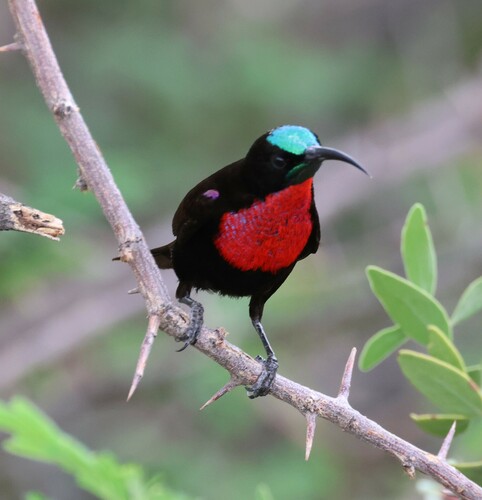
ヒムネタイヨウチョウ (Chalcomitra senegalensis) ヒムネタイヨウチョウ
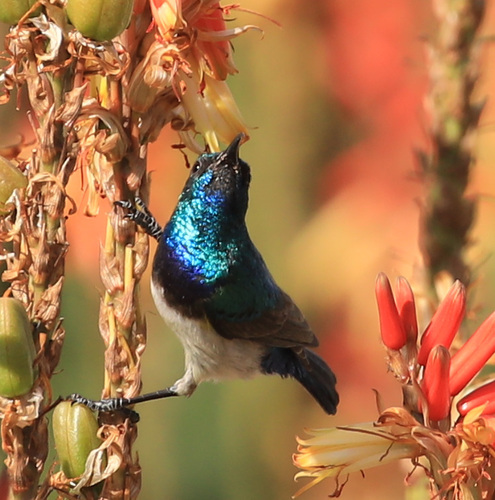
シロハラタイヨウチョウ (Cinnyris talatala) シロハラタイヨウチョウ

メディア

読み込み中…

要点

ヒムネタイヨウチョウとシロハラタイヨウチョウを区別する最も信頼できるフィールドマークは、オスの鮮やかなスカーレットの胸(ヒムネタイヨウチョウ)対白い腹(シロハラタイヨウチョウ)です。メスはより難しいですが、ヒムネタイヨウチョウのメスは腹部が均一に暗褐色で、淡い腹や眉斑がありませんが、シロハラタイヨウチョウのメスは対照的な淡いまたは白っぽい腹を示します。両種は南部アフリカの多くの地域で重なり合い、庭や森林に見られるため、腹部の色と頭部のパターンに注意を払うことが重要です。サイズはフィールドでの強い区別要因ではありませんが、ヒムネタイヨウチョウは一般的にわずかに大きく、重いです。未成熟および非繁殖の鳥は、腹部のコントラストによって最もよく区別されます。どちらの種も、情報源で説明されている特徴的な幼鳥の翼のパターンはありません。

識別のコツ

  1. オスの腹部: 最も明白なフィールドマークはオスの胸です:ヒムネタイヨウチョウは鮮やかなスカーレットの胸を持ち、シロハラタイヨウチョウは赤のない白い腹を持っています。
  2. オスの頭: ヒムネタイヨウチョウのオスは頭頂に虹色の緑の斑点を示し、シロハラタイヨウチョウにはありません。良い光の中でこれを探してください。
  3. メスの腹部: ヒムネタイヨウチョウのメスは腹部が暗褐色で淡い腹がなく、シロハラタイヨウチョウのメスは暗い上面と対照的な淡いまたは白っぽい腹を持っています。
  4. 眉斑: ヒムネタイヨウチョウのメスには眉斑がなく、シロハラタイヨウチョウのメスは近距離で役立つ淡い眉斑を示すことがあります。
  5. 未成熟の鳥: 幼鳥および未成熟のヒムネタイヨウチョウは腹部が暗いままですが、シロハラタイヨウチョウの未成熟は淡い腹を示します。鳥が成鳥のオスの色を欠いている場合は、このマークを使用してください。
  6. 上翼パターン: どちらの種についても特徴的な幼鳥または未成熟の翼のパターンは説明されていないため、飛行中の上翼マークには頼らないでください。
  7. サイズ: ヒムネタイヨウチョウはわずかに大きく、重いですが、これは微妙であり、鳥が並んでいない限り信頼できません。
  8. くちばしと構造: 情報源には強い違いは記載されていません。両方とも典型的なタイヨウチョウのくちばしと比率を持っています。
  9. 生息地: 両種は森林や庭を利用するため、重なり合う地域では文脈が信頼できる区別要因ではありません。
  10. 行動: 両種は蜜を食べ、混合群れに参加します。シロハラタイヨウチョウは午後遅くに空中で昆虫を捕らえることで知られていますが、これは診断的ではありません。
  11. 声: 情報源には区別可能な鳴き声は記載されておらず、歌や呼び声に頼って区別しないでください。
  12. 落とし穴: ヒムネタイヨウチョウのメスや未成熟は、その地味な外見のためにしばしばシロハラタイヨウチョウと間違えられますが、常に淡い腹と眉斑の有無を確認してください。
  13. 照明: ヒムネタイヨウチョウのオスの虹色の色(スカーレットの胸、緑の頭頂)は、暗い光の中では鈍く見えたり、見えなくなったりすることがあります。疑わしい場合は腹部の色で確認してください。
  14. 範囲: 両種は南部アフリカで広く重なり合うため、場所だけでIDを仮定しないでください。
  15. 季節: どちらの種についても強い季節的な羽毛の違いは説明されておらず、年間を通じて同じマークを使用してください。

大きさ

ヒムネタイヨウチョウは2種の中で大きく、全長約13〜15 cm、オスの体重は7.5〜17.2 g(メスは6.8〜15.3 g)です [wikipedia]。シロハラタイヨウチョウは小さく、軽いですが、正確な測定値はノートに記載されていません。フィールドでは、このサイズの違いは微妙であり、特に鳥が並んでいない場合は常に信頼できるわけではありません。構造とジズは重なり合う可能性があるため、サイズはあくまで補助的な手がかりとして使用すべきです。

羽色

行動

両種は活発な蜜の摂取者であり、花が咲く木で混合種の群れに参加することがあります。シロハラタイヨウチョウは午後遅くに昆虫を捕らえ、葉から無脊椎動物を採取することで知られています。ヒムネタイヨウチョウの採餌行動はノートに詳細が記載されていませんが、両方とも庭や森林で見ることができ、しばしばホバリングや止まり木にとまって食事をします。行動の違いは微妙であり、区別には信頼できません。

生息環境

両種は南部および中央アフリカ全体に広く分布し、類似の生息地(森林、庭、花の植物がある地域)に見られます。ヒムネタイヨウチョウは標高2400 mまで見られますが、シロハラタイヨウチョウとの間で範囲と生息地に大きな重なりがあります。両種が生息する場所では、生息地だけでは信頼できる区別要因ではありません。

より良い説明を送る

比較と同じ項目を使ってください。文章はすぐに公開されます。

The most reliable field mark to separate Scarlet-chested Sunbird from White-bellied Sunbird is the male's vivid scarlet breast (Scarlet-chested) versus the white belly (White-bellied). Females are trickier, but Scarlet-chested females are uniformly dark brown below with no pale belly or supercilium, while White-bellied females show a contrasting pale or whitish belly. Both species overlap in much of southern Africa and can be found in gardens and woodland, so careful attention to underpart color and head pattern is essential. Size is not a strong separator in the field, but Scarlet-chested is generally slightly larger and heavier. Immature and non-breeding birds are best separated by underpart contrast, as neither species has distinctive juvenile wing patterns described in the sources.

  1. Male underparts: The most obvious field mark is the male's breast: Scarlet-chested Sunbird has a vivid scarlet breast, while White-bellied Sunbird has a white belly with no red.
  2. Male head: Scarlet-chested males show an iridescent green patch on the crown, which White-bellied lacks. Look for this in good light.
  3. Female underparts: Female Scarlet-chested Sunbirds are dark brown below with no pale belly, while White-bellied females have a pale or whitish belly that contrasts with darker upperparts.
  4. Supercilium (eyebrow): Female Scarlet-chested lacks any supercilium, while White-bellied females may show a faint pale eyebrow, helpful at close range.
  5. Immature birds: Juvenile and immature Scarlet-chested Sunbirds remain dark below, while White-bellied immatures show a paler belly. Use this mark if the bird lacks adult male colors.
  6. Upperwing pattern: No distinctive juvenile or immature wing patterns are described for either species, so do not rely on upperwing marks in flight.
  7. Size: Scarlet-chested is slightly larger and heavier, but this is subtle and not reliable unless birds are side by side.
  8. Bill and structure: No strong differences are noted in the sources; both have typical sunbird bills and proportions.
  9. Habitat: Both species use woodland and gardens, so context is not a reliable separator in overlapping areas.
  10. Behavior: Both species feed on nectar and join mixed flocks; White-bellied is noted for aerial insect hawking in late afternoon, but this is not diagnostic.
  11. Voice: No distinguishing vocalizations are described in the sources; do not rely on song or call for separation.
  12. Pitfalls: Female and immature Scarlet-chested Sunbirds are often mistaken for White-bellied due to their plain appearance, but always check for the presence or absence of a pale belly and supercilium.
  13. Lighting: Iridescent colors (scarlet breast, green crown) on Scarlet-chested males can be dull or invisible in poor light; confirm with underpart color if in doubt.
  14. Range: Both species overlap widely in southern Africa, so do not assume ID based on location alone.
  15. Season: No strong seasonal plumage differences are described for either species; use the same marks year-round.

Scarlet-chested Sunbird is the larger of the two, measuring about 13–15 cm in length and weighing 7.5–17.2 g for males (females 6.8–15.3 g) [wikipedia]. White-bellied Sunbird is smaller and lighter, but precise measurements are not given in the notes. In the field, this size difference is subtle and not always reliable, especially when birds are not side by side. Structure and jizz may overlap, so size should only be used as a supporting clue.

  • Adult males: Scarlet-chested Sunbird males have a brilliant scarlet breast and an iridescent green crown patch. White-bellied Sunbird males have a white belly and lack the extensive scarlet, instead showing metallic green upperparts and a dark throat with a clear white belly.
  • Adult females: Scarlet-chested females are dark brown overall with no pale belly or supercilium. White-bellied females have a distinctly pale or whitish belly that contrasts with darker upperparts and a faint supercilium may be present.
  • Immature/juvenile birds: No distinctive upperwing or flight pattern differences are described for either species in the sources. Separation relies on underpart color: Scarlet-chested immatures remain dark below, while White-bellied immatures show a paler belly.
  • In flight: No age-specific wing pattern marks (such as panels, trailing edges, or W marks) are noted for either species.

Both species are active nectar feeders and may join mixed-species flocks at flowering trees. White-bellied Sunbird is noted for hawking insects in the late afternoon and gleaning invertebrates from foliage. Scarlet-chested Sunbird's foraging behavior is not detailed in the notes, but both can be seen in gardens and woodland, often hovering or perching while feeding. Behavioral differences are subtle and not reliable for separation.

Both species occur widely across southern and central Africa and are found in similar habitats: woodland, gardens, and areas with flowering plants. Scarlet-chested Sunbird is noted up to 2,400 m elevation, but there is significant overlap in range and habitat with White-bellied Sunbird. Habitat alone is not a reliable separator where both species occur.

変更を破棄しますか?

保存していない編集があります。今離れると失われます。

ヒムネタイヨウチョウ · シロハラタイヨウチョウ · 苦手な鳥