

Suimanga Pechiescarlata vs Suimanga Pechiblanco
Chalcomitra senegalensis frente a Cinnyris talatala
Juega un quiz con Suimanga Pechiescarlata y Suimanga Pechiblanco
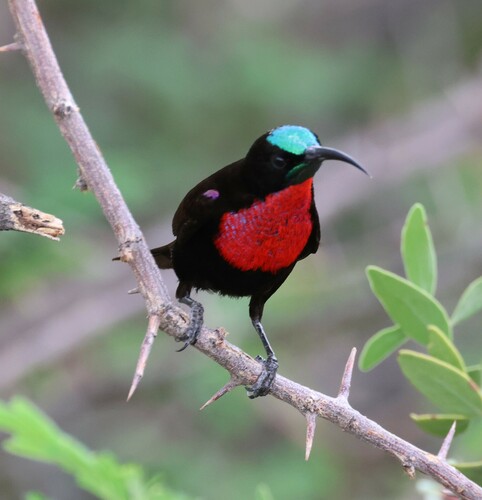 Suimanga Pechiescarlata
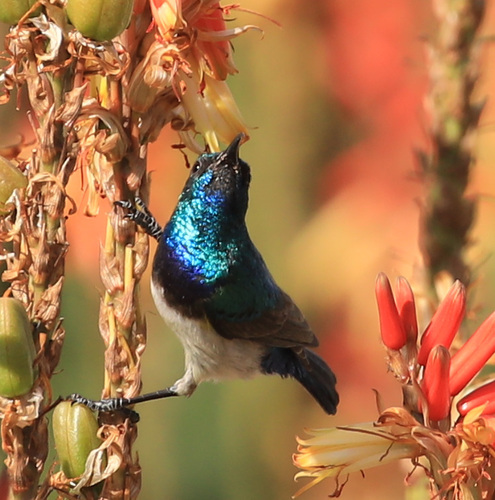 Suimanga Pechiblanco
En breve
La marca de campo más confiable para separar el Suimanga Pechiescarlata del Suimanga Pechiblanco es el vívido pecho escarlata del macho (Suimanga Pechiescarlata) frente al vientre blanco (Suimanga Pechiblanco). Las hembras son más complicadas, pero las hembras de Suimanga Pechiescarlata son uniformemente marrón oscuro por debajo sin vientre pálido o supercilio, mientras que las hembras de Suimanga Pechiblanco muestran un vientre pálido o blanquecino en contraste. Ambas especies se superponen en gran parte del sur de África y se pueden encontrar en jardines y bosques, por lo que es esencial prestar atención cuidadosa al color de las partes inferiores y al patrón de la cabeza. El tamaño no es un separador fuerte en el campo, pero el Suimanga Pechiescarlata es generalmente ligeramente más grande y pesado. Las aves inmaduras y no reproductoras se separan mejor por el contraste de las partes inferiores, ya que ninguna de las especies tiene patrones de alas juveniles distintivos descritos en las fuentes.
Consejos de identificación
- Partes inferiores del macho: La marca de campo más obvia es el pecho del macho: el Suimanga Pechiescarlata tiene un pecho escarlata vívido, mientras que el Suimanga Pechiblanco tiene un vientre blanco sin rojo.
- Cabeza del macho: Los machos de Suimanga Pechiescarlata muestran una mancha verde iridiscente en la corona, que el Suimanga Pechiblanco carece. Busca esto en buena luz.
- Partes inferiores de la hembra: Las hembras de Suimanga Pechiescarlata son marrón oscuro por debajo sin vientre pálido, mientras que las hembras de Suimanga Pechiblanco tienen un vientre pálido o blanquecino que contrasta con las partes superiores más oscuras.
- Supercilio (ceja): La hembra de Suimanga Pechiescarlata carece de supercilio, mientras que las hembras de Suimanga Pechiblanco pueden mostrar una débil ceja pálida, útil a corta distancia.
- Aves inmaduras: Las aves juveniles e inmaduras de Suimanga Pechiescarlata permanecen oscuras por debajo, mientras que las inmaduras de Suimanga Pechiblanco muestran un vientre más pálido. Usa esta marca si el ave carece de colores de macho adulto.
- Patrón de la parte superior del ala: No se describen patrones de alas juveniles o inmaduras distintivos para ninguna de las especies, así que no confíes en las marcas de la parte superior del ala en vuelo.
- Tamaño: El Suimanga Pechiescarlata es ligeramente más grande y pesado, pero esto es sutil y no confiable a menos que las aves estén una al lado de la otra.
- Pico y estructura: No se notan diferencias fuertes en las fuentes; ambos tienen picos y proporciones típicas de suimangas.
- Hábitat: Ambas especies utilizan bosques y jardines, por lo que el contexto no es un separador confiable en áreas superpuestas.
- Comportamiento: Ambas especies se alimentan de néctar y se unen a bandadas mixtas; el Suimanga Pechiblanco es conocido por cazar insectos en el aire por la tarde, pero esto no es diagnóstico.
- Voz: No se describen vocalizaciones distintivas en las fuentes; no confíes en el canto o llamado para la separación.
- Trampas: Las hembras y las aves inmaduras de Suimanga Pechiescarlata a menudo se confunden con el Suimanga Pechiblanco debido a su apariencia sencilla, pero siempre verifica la presencia o ausencia de un vientre pálido y supercilio.
- Iluminación: Los colores iridiscentes (pecho escarlata, corona verde) en los machos de Suimanga Pechiescarlata pueden ser apagados o invisibles en mala luz; confirma con el color de las partes inferiores si tienes dudas.
- Rango: Ambas especies se superponen ampliamente en el sur de África, así que no asumas la identificación solo por la ubicación.
- Estación: No se describen diferencias de plumaje estacional fuertes para ninguna de las especies; usa las mismas marcas durante todo el año.
Tamaño
El Suimanga Pechiescarlata es el más grande de los dos, midiendo aproximadamente 13–15 cm de longitud y pesando 7.5–17.2 g para los machos (hembras 6.8–15.3 g) [wikipedia]. El Suimanga Pechiblanco es más pequeño y ligero, pero no se dan medidas precisas en las notas. En el campo, esta diferencia de tamaño es sutil y no siempre confiable, especialmente cuando las aves no están una al lado de la otra. La estructura y el comportamiento pueden superponerse, por lo que el tamaño solo debe usarse como una pista de apoyo.
Plumaje
- Machos adultos: Los machos de Suimanga Pechiescarlata tienen un brillante pecho escarlata y una mancha de corona verde iridiscente. Los machos de Suimanga Pechiblanco tienen un vientre blanco y carecen del escarlata extenso, mostrando en su lugar partes superiores verdes metálicas y una garganta oscura con un vientre blanco claro.
- Hembras adultas: Las hembras de Suimanga Pechiescarlata son marrón oscuro en general sin vientre pálido o supercilio. Las hembras de Suimanga Pechiblanco tienen un vientre pálido o blanquecino que contrasta con las partes superiores más oscuras y puede estar presente un débil supercilio.
- Aves inmaduras/juveniles: No se describen diferencias distintivas en el patrón de la parte superior del ala o en el vuelo para ninguna de las especies en las fuentes. La separación depende del color de las partes inferiores: las inmaduras de Suimanga Pechiescarlata permanecen oscuras por debajo, mientras que las inmaduras de Suimanga Pechiblanco muestran un vientre más pálido.
- En vuelo: No se notan marcas de patrón de alas específicas de edad (como paneles, bordes traseros o marcas en forma de W) para ninguna de las especies.
Comportamiento
Ambas especies son alimentadoras activas de néctar y pueden unirse a bandadas de especies mixtas en árboles en flor. El Suimanga Pechiblanco es conocido por cazar insectos en la tarde y recoger invertebrados de la vegetación. El comportamiento de forrajeo del Suimanga Pechiescarlata no se detalla en las notas, pero ambas se pueden ver en jardines y bosques, a menudo flotando o posándose mientras se alimentan. Las diferencias de comportamiento son sutiles y no confiables para la separación.
Hábitat
Ambas especies ocurren ampliamente en el sur y centro de África y se encuentran en hábitats similares: bosques, jardines y áreas con plantas en flor. El Suimanga Pechiescarlata se ha observado hasta 2,400 m de elevación, pero hay una superposición significativa en el rango y hábitat con el Suimanga Pechiblanco. El hábitat por sí solo no es un separador confiable donde ocurren ambas especies.
Suimanga Pechiescarlata · Suimanga Pechiblanco · Mis aves difíciles