

samoan fantail vs new zealand fantail
Rhipidura nebulosa versus Rhipidura fuliginosa
Jogue um quiz com samoan fantail e new zealand fantail
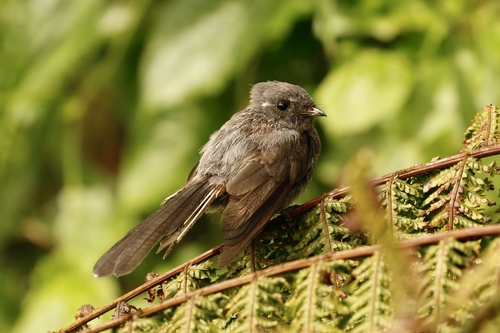 samoan fantail
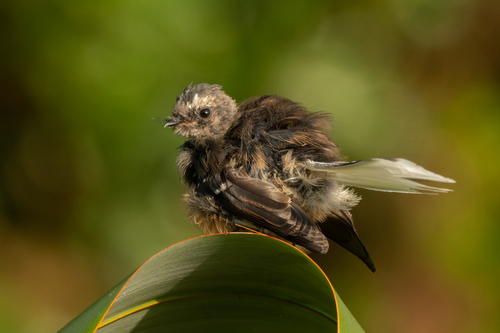 new zealand fantail
Em resumo
A maneira mais confiável de separar o samoan fantail do new zealand fantail é focando nas partes inferiores e no padrão da cauda: o samoan fantail tem uma plumagem predominantemente cinza-escura com um subcauda branco e cauda preta, enquanto o new zealand fantail apresenta partes inferiores amareladas ou alaranjadas, uma faixa peitoral escura e penas de cauda brancas ou com bordas brancas (exceto na rara morfa preta). Ambas as espécies abrem suas caudas, mas o padrão da cauda do new zealand fantail é mais contrastante, especialmente em voo. Os juvenis de ambas são mais marrons, mas o juvenil do new zealand fantail ainda apresenta algumas bordas de cauda claras. Ambas as espécies têm uma mancha branca atrás do olho, mas apenas o new zealand fantail tem uma faixa peitoral escura clara e barriga mais clara. O habitat e a distribuição também são pistas fortes: o samoan fantail é estritamente samoano, enquanto o new zealand fantail é encontrado apenas na Nova Zelândia. O tamanho é semelhante, mas não é uma marca de campo útil.
Dicas de identificação
- Padrão da cauda em voo ou quando aberta (todas as idades): O new zealand fantail sempre mostra bordas brancas ou penas de cauda externas brancas contrastando com penas centrais escuras; a cauda do samoan fantail é preta com um subcauda branco, sem as ousadas penas externas brancas.
- Cor das partes inferiores (adultos): O new zealand fantail tem partes inferiores amareladas ou alaranjadas com uma forte faixa peitoral escura; o samoan fantail é cinza-escuro por baixo, sem qualquer lavagem alaranjada ou amarelada e sem faixa peitoral.
- Garganta e peito: O new zealand fantail tem uma garganta branca nitidamente destacada por uma faixa peitoral escura; o samoan fantail tem uma garganta pálida (branca ou esfumaçada) mas sem faixa peitoral.
- Mancha branca atrás do olho: Ambas as espécies têm isso, então não é diagnóstico por si só.
- Plumagem juvenil: O juvenil do new zealand fantail é mais marrom, mas ainda mostra bordas claras ou brancas na cauda externa; o juvenil do samoan fantail é mais marrom no geral, mas não tem bordas brancas na cauda.
- Morfa preta (new zealand fantail): Rara e encontrada apenas em partes da Nova Zelândia; toda escura, exceto pela mancha branca atrás do olho, pode ser confundida com o samoan fantail, mas é extremamente rara e local.
- Forma e comportamento da cauda: Ambas as espécies abrem suas caudas, mas o padrão da cauda do new zealand fantail é mais marcante quando espalhada.
- Habitat e distribuição: O samoan fantail está apenas em Samoa (Upolu e Savaiʻi); o new zealand fantail está apenas na Nova Zelândia. Se você estiver fora dessas ilhas, não está vendo a outra espécie.
- Tamanho: Não é um separador útil; ambas são pequenos fantails com proporções semelhantes.
- Bico e estrutura: Nenhuma diferença diagnóstica notada nas fontes disponíveis.
- Voz: O new zealand fantail emite um chamado metálico de 'cheek' ou de tagarelice; o samoan fantail emite um piado baixo e pode imitar outras aves. Use com cautela, a menos que esteja familiarizado com os chamados locais.
- Comportamento: Ambas são inquietas e ativas, mas o new zealand fantail é especialmente confiante em torno de pessoas.
- Contexto: Se visto em jardins ou parques urbanos na Nova Zelândia, é o new zealand fantail; em Samoa, especialmente em florestas tropicais ou plantações, é o samoan fantail.
- Sexo e estação: Nenhum dimorfismo sexual significativo ou diferenças sazonais de plumagem notadas para qualquer uma das espécies.
- Armadilhas comuns: Não confie apenas na mancha branca atrás do olho; concentre-se no padrão da cauda e na cor das partes inferiores, especialmente em boa luz ou quando a cauda estiver aberta.
Tamanho
Ambas as espécies são pequenos fantails com caudas longas e abertas. O new zealand fantail tem uma massa média documentada de 7,2 g [wikidata], enquanto a massa do samoan fantail não é especificada, mas eles estão no mesmo gênero e parecem semelhantes em tamanho. No campo, o tamanho sozinho não é um separador confiável.
Plumagem
Aves juvenis e imaturas de ambas as espécies são mais marrons do que os adultos, mas o juvenil do new zealand fantail ainda mostra bordas claras ou brancas nas penas da cauda externa, o que está ausente no samoan fantail. O adulto do samoan fantail é predominantemente cinza-escuro por cima e por baixo, com um subcauda branco, cauda preta e uma garganta pálida (branca ou esfumaçada). Ele tem uma mancha branca atrás do olho. Os adultos do new zealand fantail são cinza-médio a cinza-escuro por cima, mas distintamente amarelados ou alaranjados por baixo, com uma garganta branca, uma forte faixa escura atravessando o peito e marcas brancas sobre o olho. A cauda é notavelmente padronizada: as penas externas da cauda são com bordas brancas ou totalmente brancas, contrastando com penas centrais escuras, especialmente quando abertas. A rara morfa preta do new zealand fantail é toda escura, exceto pela mancha branca atrás do olho, podendo ser confundida com o samoan fantail, mas é extremamente rara e geograficamente limitada. Ambas as espécies abrem suas caudas, mas o padrão da cauda do new zealand fantail é mais contrastante e óbvio em voo ou quando empoleirado com a cauda aberta.
Comportamento
Ambas as espécies são altamente ativas, mudando de poleiro para poleiro e frequentemente abrindo suas caudas. O new zealand fantail é conhecido por ser especialmente confiante, frequentemente se aproximando de pessoas em jardins e florestas, e quase nunca fica parado. O samoan fantail também é ativo e adaptável, mas não há menção específica de que se aproxime de humanos tão de perto. Ambas as espécies capturam insetos em voo e mostram a inquietude típica dos fantails.
Habitat
O samoan fantail é endêmico de Samoa, encontrado apenas nas ilhas Upolu e Savaiʻi, e prefere florestas tropicais primárias e secundárias, mas também ocorre em plantações e jardins. O new zealand fantail é o único fantail na Nova Zelândia, encontrado em uma ampla gama de habitats, incluindo florestas, jardins e parques urbanos. A distribuição é um forte separador: se você não estiver em Samoa, não está vendo o samoan fantail; se não estiver na Nova Zelândia, não está vendo o new zealand fantail.
Voz
O samoan fantail emite um piado baixo e às vezes é notado imitando outras espécies de aves. O new zealand fantail tem um chamado quase metálico de 'cheek', frequentemente repetido em uma série de tagarelice. As vocalizações não são o separador mais confiável, a menos que você esteja familiarizado com os chamados locais, mas o chamado do new zealand fantail é mais metálico e tagarelate.