

Motmot

サモアオウギビタキ 対 ニュージーランドオウギビタキ

Rhipidura nebulosa 対 Rhipidura fuliginosa

サモアオウギビタキとニュージーランドオウギビタキのクイズ
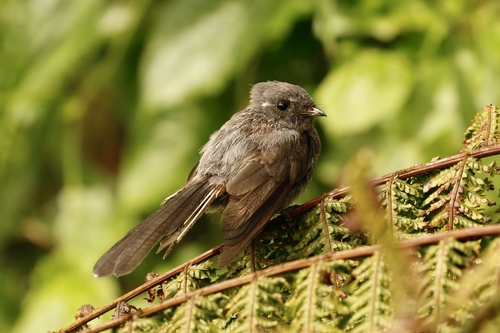
サモアオウギビタキ (Rhipidura nebulosa) サモアオウギビタキ
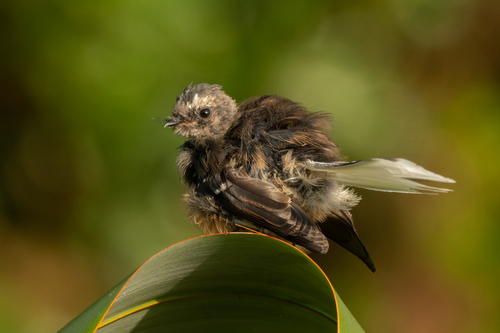
ニュージーランドオウギビタキ (Rhipidura fuliginosa) ニュージーランドオウギビタキ

メディア

読み込み中…

要点

サモアオウギビタキとニュージーランドオウギビタキを区別する最も信頼できる方法は、腹部と尾のパターンに焦点を当てることです:サモアオウギビタキは主に暗い灰褐色の羽毛を持ち、白い尾羽と黒い尾を持っていますが、ニュージーランドオウギビタキは黄色またはオレンジの腹部、暗い胸のバンド、白い縁取りまたは白い外尾羽(稀な黒変異を除く)を示します。両種は尾を扇ぎますが、ニュージーランドオウギビタキの尾のパターンは特に飛行中に対照的です。両方の幼鳥はより茶色ですが、ニュージーランドオウギビタキの幼鳥はまだいくつかの淡い尾の縁を示します。両種とも目の後ろに白い斑点がありますが、ニュージーランドオウギビタキだけが明確な暗い胸のバンドと淡い腹部を持っています。生息地と分布も強い手がかりです:サモアオウギビタキは厳密にサモアに生息し、ニュージーランドオウギビタキはニュージーランドにのみ見られます。サイズは似ていますが、フィールドマークとしては有用ではありません。

識別のコツ

  1. 飛行中または扇いでいるときの尾のパターン(すべての年齢): ニュージーランドオウギビタキは常に暗い中央の羽と対照的な白い縁取りまたは白い外尾羽を示します;サモアオウギビタキの尾は黒で白い尾羽を持ち、大胆な白い外尾羽が欠けています。
  2. 腹部の色(成鳥): ニュージーランドオウギビタキは強い暗い胸のバンドを持つ黄色またはオレンジの腹部を持っています;サモアオウギビタキは下側が暗い灰褐色で、オレンジや黄色の洗いがなく、胸のバンドがありません。
  3. 喉と胸: ニュージーランドオウギビタキは暗い胸のバンドで際立つ白い喉を持っています;サモアオウギビタキは淡い(白または煙のような)喉を持っていますが、胸のバンドはありません。
  4. 目の後ろの白い斑点: 両種ともこれを持っているため、単独では診断的ではありません。
  5. 幼鳥の羽毛: 幼鳥のニュージーランドオウギビタキはより茶色ですが、外尾に淡いまたは白い部分を示します;幼鳥のサモアオウギビタキは全体的により茶色ですが、白い尾の縁が欠けています。
  6. 黒変異(ニュージーランドオウギビタキ): 稀でニュージーランドの一部にのみ見られます;目の後ろの白い斑点を除いてすべて暗く、サモアオウギビタキと混同される可能性がありますが、非常に稀で地域的です。
  7. 尾の形と行動: 両種は尾を扇ぎますが、ニュージーランドオウギビタキの尾のパターンは広げたときにより際立っています。
  8. 生息地と分布: サモアオウギビタキはサモア(ウポル島とサバイ島)のみで見られます;ニュージーランドオウギビタキはニュージーランドのみに見られます。これらの島の外にいる場合、他の種を見ることはありません。
  9. サイズ: 有用な区別にはなりません;両方とも小さなオウギビタキで、比率は似ています。
  10. くちばしと構造: 利用可能な情報源には診断的な違いは記載されていません。
  11. 声: ニュージーランドオウギビタキは金属的な「チーク」またはおしゃべりの呼び声を出します;サモアオウギビタキは低いチュンという音を出し、他の鳥を模倣することがあります。地元の呼び声に慣れていない限り、注意して使用してください。
  12. 行動: 両方とも落ち着きがなく活発ですが、ニュージーランドオウギビタキは特に人間に対して信頼を寄せています。
  13. 文脈: ニュージーランドの庭や都市公園で見られた場合、それはニュージーランドオウギビタキです;サモアでは、特に熱帯雨林やプランテーションで見られた場合、それはサモアオウギビタキです。
  14. 性別と季節: 両種において重要な性的二形や季節的な羽毛の違いは記載されていません。
  15. 一般的な落とし穴: 目の後ろの白い斑点だけに頼らないでください;特に良い光の下や尾が扇がれているときに、尾のパターンと腹部の色に焦点を当ててください。

大きさ

両種は小さなオウギビタキで、長い扇状の尾を持っています。ニュージーランドオウギビタキの平均体重は7.2g [wikidata]として記録されていますが、サモアオウギビタキの体重は指定されていませんが、同じ属に属し、サイズは似ているようです。フィールドでは、サイズだけでは信頼できる区別にはなりません。

羽色

両種の幼鳥と未熟な鳥は成鳥よりも茶色ですが、ニュージーランドオウギビタキの幼鳥は外尾羽に淡い縁または白を示しますが、サモアオウギビタキにはそれが欠けています。成鳥のサモアオウギビタキは上面と下面が主に暗い灰褐色で、白い尾羽、黒い尾、淡い(白または煙のような)喉を持っています。目の後ろに白い斑点があります。ニュージーランドオウギビタキの成鳥は上面が中間から暗い灰色または灰褐色ですが、下面は明確に黄色またはオレンジで、白い喉、強い暗い胸のバンド、目の上に白い斑点があります。尾は際立ったパターンを持ち、外尾羽は白い縁取りまたは完全に白く、特に扇いでいるときに暗い中央の羽と対照的です。ニュージーランドオウギビタキの稀な黒変異は目の後ろの白い斑点を除いてすべて暗く、サモアオウギビタキと混同される可能性がありますが、非常に稀で地理的に限られています。両種は尾を扇ぎますが、ニュージーランドオウギビタキの尾のパターンは飛行中や尾を広げたときにより対照的で明白です。

行動

両種は非常に活発で、止まり木から止まり木へと飛び移り、頻繁に尾を扇ぎます。ニュージーランドオウギビタキは特に人に対して信頼を寄せていることで知られ、庭や森林で人に近づくことが多く、ほとんど静止することがありません。サモアオウギビタキも活発で適応力がありますが、人間に近づくことについての具体的な言及はありません。両種は空中で昆虫を捕まえ、典型的なオウギビタキの落ち着きのなさを示します。

生息環境

サモアオウギビタキはサモアに特有で、ウポル島とサバイ島にのみ見られ、主に原生林と二次林を好みますが、プランテーションや庭にも生息します。ニュージーランドオウギビタキはニュージーランドで唯一のオウギビタキで、森林、庭、都市公園など、幅広い生息地に見られます。分布は強い区別要因です:サモアにいない場合、サモアオウギビタキを見ることはありません;ニュージーランドにいない場合、ニュージーランドオウギビタキを見ることはありません。

声

サモアオウギビタキは低いチュンという音を出し、時には他の鳥の種を模倣することがあるとされています。ニュージーランドオウギビタキはほぼ金属的な「チーク」呼び声を持ち、しばしばおしゃべりの連続で繰り返されます。声は地元の呼び声に慣れていない限り、最も信頼できる区別要因ではありませんが、ニュージーランドオウギビタキの呼び声はより金属的でおしゃべりです。

より良い説明を送る

比較と同じ項目を使ってください。文章はすぐに公開されます。

The most reliable way to separate Samoan Fantail from New Zealand Fantail is by focusing on the underparts and tail pattern: Samoan Fantail has a mostly dark grey-brown plumage with a white undertail and black tail, while New Zealand Fantail shows yellowish or orange underparts, a dark chest band, and white-edged or white outer tail feathers (except in the rare black morph). Both species fan their tails, but the New Zealand Fantail’s tail pattern is more contrasting, especially in flight. Juveniles of both are browner, but the New Zealand Fantail juvenile still shows some pale tail edges. Both species have a white spot behind the eye, but only New Zealand Fantail has a clear dark chest band and paler belly. Habitat and range are also strong clues: Samoan Fantail is strictly Samoan, while New Zealand Fantail is only found in New Zealand. Size is similar, but not a useful field mark.

  1. Tail pattern in flight or when fanned (all ages): New Zealand Fantail always shows white edges or white outer tail feathers contrasting with dark central feathers; Samoan Fantail’s tail is black with a white undertail, lacking the bold white outer tail feathers.
  2. Underparts color (adults): New Zealand Fantail has yellowish or orange underparts with a strong dark chest band; Samoan Fantail is dark grey-brown below, lacking any orange or yellow wash and without a chest band.
  3. Throat and chest: New Zealand Fantail has a white throat sharply set off by a dark chest band; Samoan Fantail has a pale (white or smoky) throat but no chest band.
  4. White spot behind the eye: Both species have this, so it is not diagnostic on its own.
  5. Juvenile plumage: Juvenile New Zealand Fantail is browner but still shows pale or white in the outer tail; juvenile Samoan Fantail is browner overall but lacks white tail edges.
  6. Black morph (New Zealand Fantail): Rare and only in parts of New Zealand; all dark except white spot behind the eye, can be confused with Samoan Fantail but is extremely rare and local.
  7. Tail shape and behavior: Both species fan their tails, but New Zealand Fantail’s tail pattern is more striking when spread.
  8. Habitat and range: Samoan Fantail is only in Samoa (Upolu and Savaiʻi); New Zealand Fantail is only in New Zealand. If you are outside these islands, you are not seeing the other species.
  9. Size: Not a useful separator; both are small fantails with similar proportions.
  10. Bill and structure: No diagnostic differences noted in the available sources.
  11. Voice: New Zealand Fantail gives a metallic 'cheek' or chattering call; Samoan Fantail gives a low chirp and may imitate other birds. Use with caution unless familiar with local calls.
  12. Behavior: Both are restless and active, but New Zealand Fantail is especially confiding around people.
  13. Context: If seen in gardens or urban parks in New Zealand, it is New Zealand Fantail; in Samoa, especially in rainforest or plantations, it is Samoan Fantail.
  14. Sex and season: No significant sexual dimorphism or seasonal plumage differences noted for either species.
  15. Common pitfalls: Do not rely on the white spot behind the eye alone; focus on tail pattern and underparts color, especially in good light or when the tail is fanned.

Both species are small fantails with long, fanned tails. The New Zealand Fantail has a documented average mass of 7.2 g [wikidata], while the Samoan Fantail’s mass is not specified, but they are in the same genus and appear similar in size. In the field, size alone is not a reliable separator.

Juvenile and immature birds of both species are browner than adults, but the New Zealand Fantail juvenile still shows pale edges or white in the outer tail feathers, which is absent in Samoan Fantail. Adult Samoan Fantail is mostly dark grey-brown above and below, with a white undertail, black tail, and a pale (white or smoky) throat. It has a white spot behind the eye. New Zealand Fantail adults are mid-to-dark grey or grey-brown above, but distinctly yellowish or orange below, with a white throat, a strong dark band across the chest, and white markings over the eye. The tail is strikingly patterned: outer tail feathers are white-edged or fully white, contrasting with dark central feathers, especially when fanned. The rare black morph of New Zealand Fantail is all dark except for the white spot behind the eye, potentially confusing with Samoan Fantail, but is extremely rare and geographically limited. Both species fan their tails, but the New Zealand Fantail’s tail pattern is more contrasting and obvious in flight or when perched with tail spread.

Both species are highly active, flitting from perch to perch and frequently fanning their tails. New Zealand Fantail is noted for being especially confiding, often approaching people in gardens and forests, and is almost never still. Samoan Fantail is also active and adaptable, but there is no specific mention of it approaching humans as closely. Both species catch insects on the wing and show typical fantail restlessness.

Samoan Fantail is endemic to Samoa, found only on Upolu and Savaiʻi islands, and prefers primary and secondary rainforest but also occurs in plantations and gardens. New Zealand Fantail is the only fantail in New Zealand, found in a wide range of habitats including forests, gardens, and urban parks. Range is a strong separator: if you are not on Samoa, you are not seeing Samoan Fantail; if not in New Zealand, you are not seeing New Zealand Fantail.

Samoan Fantail gives a low chirp and is sometimes noted to imitate other bird species. New Zealand Fantail has an almost metallic 'cheek' call, often repeated in a chattering series. Vocalizations are not the most reliable separator unless you are familiar with the local calls, but New Zealand Fantail’s call is more metallic and chattery.

変更を破棄しますか?

保存していない編集があります。今離れると失われます。

サモアオウギビタキ · ニュージーランドオウギビタキ · 苦手な鳥