

red-tailed hawk vs ferruginous hawk
Buteo jamaicensis versus Buteo regalis
Jogue um quiz com red-tailed hawk e ferruginous hawk
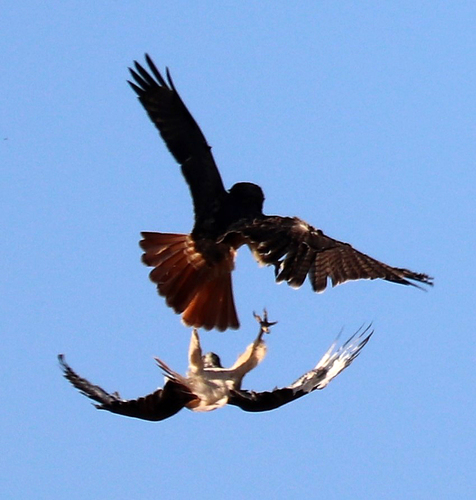 red-tailed hawk
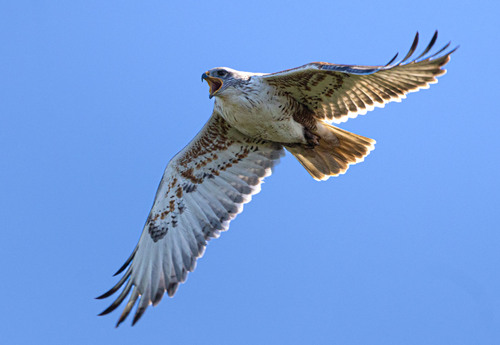 ferruginous hawk
Em resumo
A marca de campo mais confiável para separar o red-tailed hawk do ferruginous hawk é a cauda: os red-tailed hawks adultos apresentam uma cauda vermelha tijolo com uma única faixa escura, enquanto os ferruginous hawks sempre têm uma cauda clara sem tons vermelhos e frequentemente com uma base esbranquiçada. Em voo, os ferruginous hawks exibem 'janelas' pálidas proeminentes nas primárias e uma mancha ruiva na asa superior, que os red-tailed hawks não possuem. Os red-tailed hawks juvenis têm caudas marrons, listradas e uma faixa escura na barriga, enquanto os ferruginous hawks mostram um corpo inferior branco com um 'V' de penas escuras nas pernas. Estruturalmente, os ferruginous hawks têm asas mais longas e pernas com penas até os dedos, ao contrário dos red-tailed hawks, que têm pernas nuas. Ambas as espécies podem parecer volumosas empoleiradas, mas o ferruginous é ainda maior e com asas mais longas. O habitat e a distribuição se sobrepõem em áreas abertas, mas o red-tailed é muito mais disseminado e tolerante a paisagens modificadas pelo homem.
Dicas de identificação
- Cor da cauda (adulto): Os adultos do red-tailed hawk têm uma cauda vermelha tijolo com uma única faixa escura; o ferruginous hawk sempre tem uma cauda clara, nunca vermelha, frequentemente com uma base esbranquiçada. Esta é a marca mais confiável para adultos.
- Padrão da cauda (juvenil): Os red-tailed hawks juvenis têm caudas marrons com múltiplas (cerca de seis) faixas escuras; os juvenis do ferruginous hawk têm caudas claras com pouca ou nenhuma listragem.
- Padrão da parte inferior da asa (em voo): O ferruginous hawk mostra três 'janelas' pálidas na asa superior (duas nas primárias, uma mancha ruiva na base) e uma parte inferior da asa predominantemente clara com manchas ruivas nas patagiais e marcas escuras em forma de 'vírgula' nos pulsos. O red-tailed hawk não possui essas janelas e, em vez disso, tem barras patagiais escuras e uma parte inferior da asa mais uniforme.
- Marcas na barriga: O red-tailed hawk geralmente apresenta uma faixa horizontal escura na barriga (especialmente em formas claras e juvenis); o ferruginous hawk tem um corpo inferior branco limpo com um 'V' de penas escuras nas coxas.
- Penas nas pernas: O ferruginous hawk tem pernas com penas até os dedos (como um rough-legged hawk); o red-tailed hawk tem pernas amarelas nuas abaixo da articulação tibiotarsal.
- Padrão da cabeça: O ferruginous hawk tem uma cabeça branca com uma faixa escura atrás do olho; o red-tailed hawk geralmente tem uma cabeça marronácea sem uma faixa ocular forte.
- Forma e comprimento da asa: O ferruginous hawk tem asas mais longas e parece mais águia em voo, com asas que alcançam ou quase alcançam a ponta da cauda quando empoleiradas. O red-tailed hawk tem asas mais largas e é mais compacto.
- Tamanho e volume geral: O ferruginous hawk é maior, especialmente nas fêmeas, e tem um bico e pés proporcionalmente maiores. O red-tailed hawk ainda é robusto, mas menos maciço.
- Cor das pernas: O red-tailed hawk tem pernas e cera amarelas; as pernas do ferruginous hawk são com penas e não visivelmente amarelas.
- Estilo de voo: O ferruginous hawk planam com as asas em um leve ângulo e parece mais leve; o red-tailed hawk planam com asas largas e planas e um voo mais esforçado.
- Habitat: O red-tailed hawk é comum em quase qualquer habitat aberto ou semi-aberto, incluindo áreas urbanas e suburbanas; o ferruginous hawk é restrito a pastagens abertas e pradarias, raramente perto de florestas densas ou cidades.
- Escolha do poleiro: Os red-tailed hawks frequentemente empoleiram em postes de utilidade, cercas e árvores em uma ampla variedade de ambientes; os ferruginous hawks preferem poleiros em áreas abertas e são menos propensos a estar perto de atividade humana.
- Variabilidade da plumagem: O red-tailed hawk é altamente variável, especialmente no Oeste, com formas claras, escuras e intermediárias; o ferruginous hawk é menos variável, e mesmo as formas escuras mantêm penas claras na cauda e nas pernas.
- Cor da íris: Os jovens red-tailed hawks têm íris amareladas que escurecem com a idade; a cor da íris do ferruginous hawk não é uma marca de campo forte.
- Confusão com o rough-legged hawk: O ferruginous hawk compartilha pernas com penas com o rough-legged, mas é muito maior e mais volumoso, com uma cauda clara e uma mancha ruiva na asa superior; o red-tailed hawk não tem pernas com penas e tem uma cauda vermelha ou listrada.
Tamanho
O ferruginous hawk é o maior e com asas mais longas dos dois, com um comprimento de asa notavelmente maior (415–477 mm) e os pés maiores e mais robustos entre os Buteos. O red-tailed hawk ainda é um Buteo grande e pesado, mas geralmente tem asas mais curtas e uma silhueta mais compacta. Ambos os sexos de ambas as espécies se sobrepõem em tamanho, mas as fêmeas do ferruginous são especialmente grandes. No campo, o ferruginous frequentemente parece mais águia, com uma asa mais longa e mais larga e uma cabeça e bico proporcionalmente maiores.
Plumagem
Os red-tailed hawks juvenis e imaturos mostram uma cauda marrom com múltiplas faixas escuras (cerca de seis), um ventre claro com uma faixa horizontal escura e manchas escuras variáveis abaixo. Os adultos têm a icônica cauda vermelha tijolo com uma única faixa escura e um corpo inferior claro com uma faixa na barriga. Os ferruginous hawks, tanto em plumagens adultas quanto imaturas, têm uma cauda clara (nunca vermelha), partes inferiores brancas e um 'V' distinto de penas escuras nas pernas. Em voo, o ferruginous mostra três 'janelas' pálidas na asa superior (duas nas primárias e uma mancha ruiva na base), e uma parte inferior da asa manchada, mas predominantemente clara, com marcas patagiais ruivas e marcas escuras em forma de 'vírgula' nos pulsos. O red-tailed não possui essas janelas de asa pálidas e, em vez disso, mostra barras patagiais escuras e uma parte inferior da asa mais uniforme. O ferruginous tem pernas com penas até os dedos, ao contrário das pernas amarelas nuas do red-tailed. A cabeça do ferruginous é branca com uma faixa escura nos olhos, enquanto o red-tailed geralmente tem uma cabeça marronácea. Ambas as espécies são variáveis, mas esses contrastes se mantêm entre as formas.
Comportamento
Ambas as espécies são Buteos de asas largas que planam frequentemente e caçam de poleiros ou em voo. Os ferruginous hawks frequentemente planam com as asas em um leve ângulo e parecem mais águia em voo devido às suas longas asas e grande tamanho. Os red-tailed hawks planam com as asas ligeiramente levantadas, mas parecem mais compactos e largos. Os ferruginous hawks são mais propensos a serem vistos caçando em pastagens abertas ou pradarias, enquanto os red-tailed hawks são mais adaptáveis e frequentemente empoleiram ao longo de estradas, campos ou até mesmo em áreas urbanas. Ambos podem empoleirar-se de forma conspícua, mas o ferruginous é menos tolerante a distúrbios humanos.
Habitat
O red-tailed hawk é extremamente disseminado, encontrado em quase todos os habitats da América do Norte, exceto florestas contínuas e alta Ártica, e é comum em ambientes agrícolas, urbanos e suburbanos. O ferruginous hawk é mais restrito a áreas abertas, especialmente pastagens, pradarias e planícies áridas do interior ocidental. Embora suas distribuições se sobreponham no interior do Oeste, o ferruginous é muito menos provável em áreas florestadas ou altamente desenvolvidas. Se visto em um parque da cidade ou ao longo de uma rodovia movimentada, o red-tailed é muito mais provável.