

Poiana codarossa vs Ferruginous Hawk
Buteo jamaicensis contro Buteo regalis
Fai un quiz con Poiana codarossa e Ferruginous Hawk
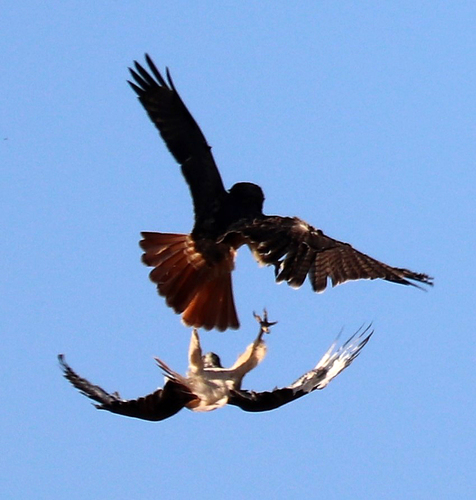 Poiana codarossa
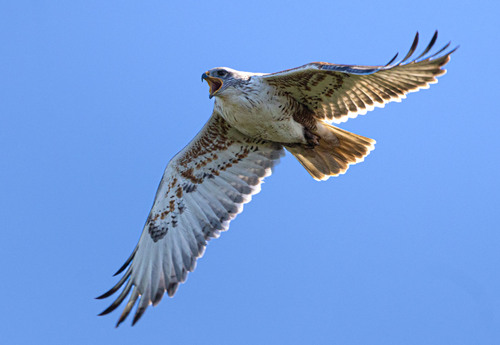 Ferruginous Hawk
In breve
Il segno di campo più affidabile per separare la Poiana codarossa dalla Ferruginous Hawk è la coda: le Poiane codarossa adulte mostrano una coda rosso mattone con una singola banda scura, mentre le Ferruginous Hawk hanno sempre una coda chiara senza toni rossi e spesso con una base biancastra. In volo, le Ferruginous Hawk mostrano 'finestre' chiare prominenti nelle primarie e una macchia rugginosa sulla parte superiore dell'ala, che le Poiane codarossa non hanno. Le Poiane codarossa juvenile hanno code marroni a bande e una banda scura sull'addome, mentre le Ferruginous Hawk mostrano un corpo inferiore bianco con una 'V' di piumaggio scuro alle gambe. Strutturalmente, le Ferruginous Hawk hanno ali più lunghe e hanno gambe piumate fino alle dita, a differenza della Poiana codarossa, che ha le gambe scoperte. Entrambe le specie possono apparire ingombranti quando sono posate, ma la Ferruginous è ancora più grande e con ali più lunghe. L'habitat e l'areale si sovrappongono in campagna aperta, ma la Poiana codarossa è molto più diffusa e tollerante nei paesaggi modificati dall'uomo.
Consigli di identificazione
- Colore della coda (adulto): Gli adulti della Poiana codarossa hanno una coda rosso mattone con una singola banda scura; la Ferruginous Hawk ha sempre una coda chiara, mai rossa, spesso con una base biancastra. Questo è il segno più affidabile per gli adulti.
- Schema della coda (juvenile): Le Poiane codarossa juvenile hanno code marroni con più (circa sei) bande scure; le juvenile della Ferruginous Hawk hanno code chiare con poche o nessuna banda.
- Schema dell'ala inferiore (in volo): La Ferruginous Hawk mostra tre 'finestre' chiare sulla parte superiore dell'ala (due nelle primarie, una macchia rugginosa alla base) e un'ala inferiore per lo più chiara con macchie rugginose e segni scuri a 'virgola' ai polsi. La Poiana codarossa non ha queste finestre e ha invece barre patagiali scure e un'ala inferiore più uniforme.
- Marcature dell'addome: La Poiana codarossa mostra tipicamente una banda addominale scura e orizzontale (soprattutto nelle forme chiare e nei juvenile); la Ferruginous Hawk ha un corpo inferiore bianco pulito con una 'V' di piumaggio scuro sulle cosce.
- Piumaggio delle gambe: La Ferruginous Hawk ha gambe piumate fino alle dita (come una Rough-legged Hawk); la Poiana codarossa ha gambe gialle scoperte sotto l'articolazione tibiotarsale.
- Schema della testa: La Ferruginous Hawk ha una testa bianca con una striscia scura dietro l'occhio; la Poiana codarossa ha solitamente una testa marrone con nessuna striscia oculare forte.
- Forma e lunghezza delle ali: La Ferruginous Hawk ha ali più lunghe e appare più simile a un'aquila in volo, con ali che raggiungono o quasi raggiungono la punta della coda quando è posata. La Poiana codarossa ha ali più larghe e più compatte.
- Dimensioni e volume complessivi: La Ferruginous Hawk è più grande, soprattutto nelle femmine, e ha un becco e piedi proporzionalmente più grandi. La Poiana codarossa è ancora robusta ma meno massiccia.
- Colore delle gambe: La Poiana codarossa ha gambe e cere gialle; le gambe della Ferruginous Hawk sono piumate e non visibilmente gialle.
- Stile di volo: La Ferruginous Hawk vola con le ali in un leggero dihedro e appare più galleggiante; la Poiana codarossa vola con ali larghe e piatte e un volo più faticoso.
- Habitat: La Poiana codarossa è comune in quasi ogni habitat aperto o semi-aperto, comprese le aree urbane e suburbane; la Ferruginous Hawk è limitata a praterie aperte e praterie, raramente vicino a foreste dense o città.
- Scelta del posatoio: Le Poiane codarossa spesso si posano su pali elettrici, pali di recinzione e alberi in una vasta gamma di ambienti; le Ferruginous Hawk preferiscono posatoi in campagna aperta e sono meno probabili vicino all'attività umana.
- Variabilità del piumaggio: La Poiana codarossa è altamente variabile, soprattutto a Ovest, con forme chiare, scure e intermedie; la Ferruginous Hawk è meno variabile, e anche le forme scure mantengono piumaggio chiaro sulla coda e sulle gambe.
- Colore dell'iride: I giovani della Poiana codarossa hanno iridi giallastre che scuriscono con l'età; il colore dell'iride della Ferruginous Hawk non è un segno di campo forte.
- Confusione con la Rough-legged Hawk: La Ferruginous Hawk condivide le gambe piumate con la Rough-legged, ma è molto più grande e massiccia, con una coda chiara e una macchia rugginosa sulla parte superiore dell'ala; la Poiana codarossa non ha gambe piumate e ha una coda rossa o a bande.
Taglia
La Ferruginous Hawk è la più grande e con ali più lunghe delle due, con un cordone alare visibilmente più lungo (415–477 mm) e i piedi più grandi e robusti tra i Buteos. La Poiana codarossa è ancora un grande Buteo pesante, ma generalmente ha ali più corte e una silhouette più squadrata. Entrambi i sessi di entrambe le specie si sovrappongono in dimensioni, ma le femmine della Ferruginous sono particolarmente grandi. Sul campo, la Ferruginous appare spesso più simile a un'aquila, con un'ala più lunga e più ampia e una testa e un becco proporzionalmente più grandi.
Piumaggio
Le Poiane codarossa juvenile e immature mostrano una coda marrone con più bande scure (circa sei), un ventre chiaro con una banda addominale scura e macchie scure variabili sotto. Gli adulti hanno l'iconica coda rosso mattone con una singola banda scura e un corpo inferiore chiaro con una banda addominale. Le Ferruginous Hawk, sia in piumaggio adulto che immaturo, hanno una coda chiara (mai rossa), parti inferiori bianche e una distintiva 'V' di piumaggio scuro alle gambe. In volo, la Ferruginous mostra tre 'finestre' chiare sulla parte superiore dell'ala (due nelle primarie e una macchia rugginosa alla base), e un'ala inferiore macchiata ma per lo più chiara con marcature patagiali rugginose e segni scuri a 'virgola' ai polsi. La Poiana codarossa non ha queste finestre chiare e mostra invece barre patagiali scure e un'ala inferiore più uniforme. La Ferruginous ha gambe piumate fino alle dita, a differenza delle gambe gialle scoperte della Poiana codarossa. La testa della Ferruginous è bianca con una striscia scura sull'occhio, mentre la Poiana codarossa ha solitamente una testa marrone. Entrambe le specie sono variabili, ma questi contrasti si mantengono attraverso le forme.
Comportamento
Entrambe le specie sono Buteos con ali larghe che planano frequentemente e cacciano da posatoi o in volo. Le Ferruginous Hawk spesso planano con le ali in un leggero dihedro e appaiono più simili a un'aquila in volo a causa delle loro lunghe ali e grande dimensione. Le Poiane codarossa planano con ali leggermente sollevate ma appaiono più compatte e larghe. Le Ferruginous Hawk sono più propense a essere viste cacciare in praterie aperte, mentre le Poiane codarossa sono più adattabili e spesso si posano lungo le strade, nei campi o anche in aree urbane. Entrambe possono posarsi in modo appariscente, ma la Ferruginous è meno tollerante alle perturbazioni umane.
Habitat
La Poiana codarossa è estremamente diffusa, trovata in quasi ogni habitat nordamericano tranne che nelle foreste ininterrotte e nell'Artico alto, ed è comune in ambienti agricoli, urbani e suburbani. La Ferruginous Hawk è più limitata a campagna aperta, specialmente praterie, praterie e pianure aride dell'interno occidentale. Anche se i loro areali si sovrappongono nell'interno dell'Ovest, la Ferruginous è molto meno probabile in aree boschive o fortemente sviluppate. Se vista in un parco cittadino o lungo un'autostrada trafficata, la Poiana codarossa è di gran lunga più probabile.
Poiana codarossa · Ferruginous Hawk · I miei uccelli difficili