

pigeon guillemot vs airo
Cepphus columba versus Uria aalge
Jogue um quiz com pigeon guillemot e airo
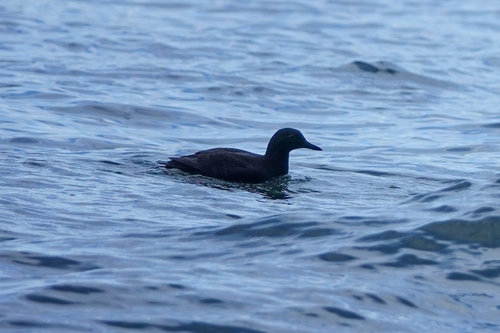 pigeon guillemot
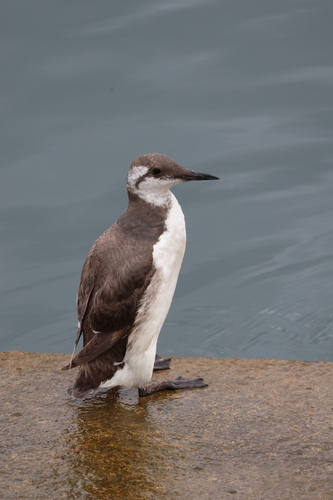 airo
Em resumo
A marca de campo mais confiável entre o pigeon guillemot e o airo é o padrão das asas: o pigeon guillemot (de todas as idades) apresenta uma ousada mancha branca na asa quebrada por um cunha escura, enquanto o airo tem asas totalmente escuras, sem mancha branca. Em voo, esse contraste é inconfundível. Na água ou empoleirado, o pigeon guillemot é menor, mais robusto e se senta mais ereto, com pernas e pés vermelhos brilhantes, enquanto o airo é maior, mais esguio e tem pernas escuras. Diferenças sazonais no plumagem podem causar confusão, mas o padrão das asas e a cor das pernas permanecem pistas fortes durante todo o ano. Juvenis e imaturos são melhor separados pelo padrão das asas e pela estrutura geral.
Dicas de identificação
- Mancha branca na asa (todas as idades): O pigeon guillemot sempre mostra uma mancha branca na asa, quebrada por um cunha escura, visível em voo e frequentemente em repouso. As asas do airo são totalmente escuras, sem mancha branca em qualquer idade ou estação.
- Contraste juvenil/imaturo: Mesmo os juvenis de pigeon guillemot têm uma mancha branca na asa reduzida, mas ainda visível; os juvenis de airo não têm nenhuma mancha branca na asa.
- Cor das pernas: O pigeon guillemot tem pernas e pés vermelhos brilhantes (cinza-escuro em juvenis), óbvios quando empoleirados ou nadando. As pernas do airo são cinza-escuras.
- Estrutura do bico: O pigeon guillemot tem um bico longo, fino e preto; o bico do airo também é fino e pontudo, mas proporcionalmente mais longo em relação ao tamanho da cabeça, e sempre escuro.
- Forma do corpo e postura: O pigeon guillemot é compacto e se senta ereto, frequentemente em seus tarsos. O airo é maior, mais alongado e se senta mais baixo em relação ao solo ou à água.
- Plumagem de reprodução: O pigeon guillemot é marrom escuro com um brilho negro, enquanto o airo é preto (ou marrom escuro em algumas populações do sul) por cima e branco por baixo, com uma nítida fronteira de cor.
- Plumagem não reprodutiva: O pigeon guillemot torna-se manchado por cima, mas mantém a mancha branca na asa; o rosto do airo torna-se branco com uma espinha escura atrás do olho, mas as asas permanecem escuras.
- Padrão da cabeça: Na não reprodução, o airo pode mostrar um rosto branco com uma linha escura atrás do olho (a morfologia 'bridled'), mas nunca um anel ocular branco. O pigeon guillemot tem um fino e ininterrupto anel ocular branco em todas as plumagens.
- Estilo de voo: O pigeon guillemot tem asas mais curtas e arredondadas e um rápido batimento de asas, refletindo sua especialização em mergulho. As asas do airo são mais longas e mais pontudas, e ele parece menos ágil em voo.
- Contexto do habitat: O pigeon guillemot é geralmente visto perto de costas rochosas, sozinho ou em pares. O airo é mais provável de ser encontrado em grandes grupos, especialmente em alto-mar ou em colônias em penhascos.
- Tamanho em contexto: Se vistos juntos, o airo é muito maior e mais pesado, mas cuidado com os efeitos de distância quando sozinho.
- Cor dos pés em voo: Os pés vermelhos do pigeon guillemot podem ser visíveis se arrastando atrás durante o voo, uma boa pista em curta distância.
- Vocalizações: Se ouvido, os chamados roncantes do airo são distintos em colônias, mas a voz raramente é útil no mar.
- Temporização sazonal: Ambas as espécies mudam de plumagem sazonalmente, mas o padrão das asas e a cor das pernas permanecem confiáveis durante todo o ano.
- Erros comuns: Cuidado com aves distantes ou silhuetadas onde o tamanho e a cor são difíceis de julgar—confie no padrão das asas e na cor das pernas sempre que possível.
Tamanho
O pigeon guillemot é distintamente menor e mais leve: 30–37 cm de comprimento e 450–550 g de peso [wikipedia]. O airo é maior e mais pesado: 38–46 cm de comprimento, pesando 775–1250 g, muitas vezes o dobro da massa do pigeon guillemot [wikipedia]. Essa diferença de tamanho é visível quando vistos juntos, mas pode ser sutil à distância ou sozinho. O pigeon guillemot também parece mais compacto e de pescoço curto, enquanto o airo é de corpo mais longo e mais alongado.
Plumagem
- Juvenil/Primeiro-inverno: Os juvenis de pigeon guillemot se assemelham a adultos de inverno, mas têm partes inferiores com pontas marrons (dando uma aparência barrada), mais marrom nas partes superiores e uma mancha branca na asa menor. Sua mancha na asa, embora reduzida, ainda está presente e é diagnóstica. Os juvenis de airo se parecem com adultos de inverno, sem nenhuma mancha branca na asa; suas asas são uniformemente escuras.
- Adulto reprodutivo: O pigeon guillemot é marrom escuro com um brilho negro e uma proeminente mancha branca na asa quebrada por um cunha escura. O airo é preto (ou marrom escuro em aves do sul) por cima e branco por baixo, com asas totalmente escuras e sem mancha branca. Ambos têm cabeças escuras, mas a do airo é mais nitidamente demarcada das partes inferiores brancas.
- Adulto não reprodutivo: O pigeon guillemot desenvolve partes superiores manchadas de cinza e preto e partes inferiores brancas, mas a mancha branca na asa permanece. O rosto do airo torna-se branco com uma linha escura atrás do olho, mas as asas permanecem uniformemente escuras. As pernas e pés do pigeon guillemot são sempre vermelhos (cinza-escuro em juvenis), enquanto os do airo são cinza-escuros.
Comportamento
O pigeon guillemot frequentemente se senta ereto em rochas ou na água, às vezes descansando em seus tarsos, e anda bem em terra. É um forte nadador e mergulhador, usando tanto as asas quanto os pés para propulsão. Ele decola com dificuldade em condições calmas, mas é rápido em voo uma vez no ar. O airo é menos ereto, mais alongado na postura, e tipicamente se reproduz em densas colônias em penhascos. Passa mais tempo no mar e é menos provável de ser visto andando ou em pé ereto em terra. Ambas as espécies mergulham em busca de alimento, mas o pigeon guillemot é mais frequentemente visto perto da costa e em grupos menores.
Habitat
O pigeon guillemot é encontrado principalmente ao longo de costas rochosas, ilhas e águas costeiras do Pacífico Norte. É frequentemente visto sozinho ou em pares, perto da costa, e faz ninho em fendas ou sob rochas. O airo se reproduz em grandes colônias densas em penhascos íngremes no Atlântico Norte e no Pacífico Norte, e passa a maior parte de sua vida longe da costa. Longe das colônias, o airo é geralmente visto em grandes botes no mar aberto, raramente perto da costa, exceto durante a reprodução.
Voz
O airo é altamente vocal em colônias, com um alto chamado roncante "murrrr" e filhotes emitindo um assobio agudo. A voz do pigeon guillemot não é descrita nas notas fornecidas, portanto, não é um separador confiável aqui.