

Motmot

ウミバト 対 ウミガラス

Cepphus columba 対 Uria aalge

ウミバトとウミガラスのクイズ
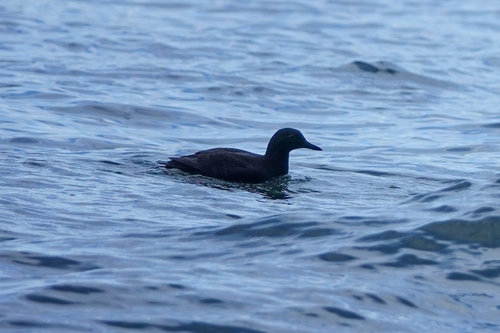
ウミバト (Cepphus columba) ウミバト
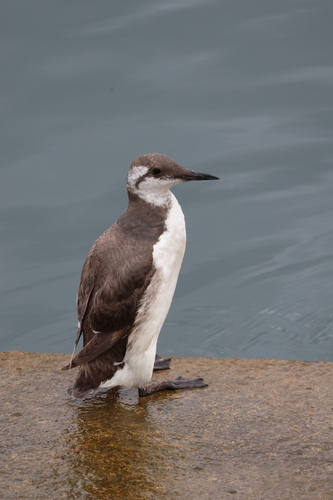
ウミガラス (Uria aalge) ウミガラス

メディア

読み込み中…

要点

ウミバトとウミガラスの間で最も信頼できるフィールドマークは翼のパターンです:ウミバト(すべての年齢)は、暗いくさびによって壊された大胆な白い翼の斑点を示しますが、ウミガラスは白い斑点のない完全に暗い翼を持っています。飛行中、このコントラストは明確です。水上または止まっているとき、ウミバトは小さく、がっしりとしていて、より直立して座り、明るい赤い足と足を持っていますが、ウミガラスは大きく、スリムで、暗い足を持っています。季節的な羽毛の違いは混乱を引き起こす可能性がありますが、翼のパターンと足の色は年間を通じて強い手がかりとなります。幼鳥と未成熟の個体は、翼のパターンと全体的な構造によって最もよく区別されます。

識別のコツ

  1. 白い翼の斑点(すべての年齢): ウミバトは常に白い翼の斑点を示し、暗いくさびによって壊され、飛行中や休息中によく見えます。ウミガラスの翼は完全に暗く、どの年齢や季節でも白い斑点はありません。
  2. 幼鳥/未成熟のコントラスト: 幼いウミバトでも、減少したがまだ見える白い翼の斑点があります;ウミガラスの幼鳥は翼に白い部分がありません。
  3. 足の色: ウミバトは明るい赤い足と足を持ち(幼鳥は灰色がかった茶色)、止まっているときや泳いでいるときに明らかです。ウミガラスの足は暗い灰色です。
  4. くちばしの構造: ウミバトは長くて細い黒いくちばしを持っています;ウミガラスのくちばしも細く尖っていますが、頭のサイズに対して相対的に長く、常に暗いです。
  5. 体の形と姿勢: ウミバトはコンパクトで直立して座り、しばしば足首の上に座ります。ウミガラスは大きく、より細長く、地面や水面に対して低く座ります。
  6. 繁殖羽毛: ウミバトは黒い光沢のある暗褐色で、暗いくさびによって壊された目立つ白い翼の斑点を持っていますが、ウミガラスは上が黒(または南部の個体では暗褐色)で、下は白く、鋭い色の境界を持っています。
  7. 非繁殖羽毛: ウミバトは上がまだらになり、白い翼の斑点を保持します;ウミガラスの顔は白くなり、暗い目のスパーがありますが、翼は暗いままです。
  8. 頭のパターン: 非繁殖期のウミガラスは、目の後ろに暗い線がある白い顔を示すことがあります(「ブライドル」形態)、しかし白い目の輪はありません。ウミバトはすべての羽毛において薄い、途切れのない白い目の輪を持っています。
  9. 飛行スタイル: ウミバトは短くて丸い翼を持ち、急速な翼のビートを持ち、潜水の専門性を反映しています。ウミガラスの翼は長くて尖っており、飛行中はあまり機敏に見えません。
  10. 生息地の文脈: ウミバトは通常、岩の多い海岸の近くで、単独またはペアで見られます。ウミガラスは特に沖合や崖のコロニーで、大きな群れで見られる可能性が高いです。
  11. 文脈におけるサイズ: 一緒に見られる場合、ウミガラスははるかに大きく重いですが、単独の場合は距離の影響に注意してください。
  12. 飛行中の足の色: ウミバトの赤い足は、飛行中に後ろに引きずられているのが見えることがあり、近距離での良い手がかりです。
  13. 鳴き声: 聞こえた場合、ウミガラスのうなり声はコロニーで特徴的ですが、海では声はあまり役に立ちません。
  14. 季節的なタイミング: 両種は季節ごとに羽毛を変えますが、翼のパターンと足の色は年間を通じて信頼できます。
  15. 一般的な落とし穴: サイズや色を判断するのが難しい遠くの鳥やシルエットに注意してください—可能な限り翼のパターンと足の色に頼ってください。

大きさ

ウミバトは明らかに小さくて軽い:長さ30〜37 cm、重さ450〜550 g [wikipedia]。ウミガラスは大きくて重い:長さ38〜46 cm、重さ775〜1250 gで、しばしばウミバトの2倍の質量です [wikipedia]。このサイズの差は一緒に見られるときに明らかですが、距離があるときや単独のときは微妙かもしれません。ウミバトはまた、よりコンパクトで短い首に見えますが、ウミガラスは体が長く、より細長いです。

羽色

行動

ウミバトはしばしば岩や水の上で直立して座り、時には足首の上に休んで、陸上をうまく歩きます。強力な泳ぎ手であり、潜水者であり、推進のために両方の翼と足を使用します。穏やかな条件では離陸が難しいですが、一旦空中に入ると飛行は速いです。ウミガラスは直立していることが少なく、姿勢がより細長く、通常は密集した崖のコロニーで繁殖します。海での時間が多く、陸上で直立して歩いたり立ったりしているのを見ることは少ないです。両種は食べ物のために潜りますが、ウミバトはより頻繁に岸に近く、小さな群れで見られます。

生息環境

ウミバトは主に北太平洋の岩の多い海岸、島、近海で見られます。通常、単独またはペアで岸に近くで見られ、隙間や岩の下に巣を作ります。ウミガラスは北大西洋と北太平洋の急な海崖にある大きく密集したコロニーで繁殖し、ほとんどの生活を沖合で過ごします。コロニーから離れると、ウミガラスは通常、開けた海で大きな筏で見られ、繁殖期以外は岸に近くで見られることはほとんどありません。

声

ウミガラスはコロニーで非常に声が大きく、うなり声の「ムルル」と雛が高音の口笛を発します。ウミバトの声は提供されたメモには記載されていないため、ここでの信頼できる区別にはなりません。

より良い説明を送る

比較と同じ項目を使ってください。文章はすぐに公開されます。

The most reliable field mark between Pigeon Guillemot and Common Guillemot is the wing pattern: Pigeon Guillemot (of all ages) shows a bold white wing patch broken by a dark wedge, while Common Guillemot has entirely dark wings with no white patch. In flight, this contrast is unmistakable. On the water or perched, Pigeon Guillemot is smaller, stockier, and sits more upright, with bright red legs and feet, while Common Guillemot is larger, sleeker, and has dark legs. Seasonal plumage differences can cause confusion, but the wing pattern and leg color remain strong clues year-round. Juveniles and immatures are best separated by wing pattern and overall structure.

  1. White wing patch (all ages): Pigeon Guillemot always shows a white wing patch, broken by a dark wedge, visible in flight and often at rest. Common Guillemot's wings are entirely dark, with no white patch at any age or season.
  2. Juvenile/immature contrast: Even juvenile Pigeon Guillemots have a reduced but still visible white wing patch; Common Guillemot juveniles lack any white in the wing.
  3. Leg color: Pigeon Guillemot has bright red legs and feet (grey-brown in juveniles), obvious when perched or swimming. Common Guillemot's legs are dark grey.
  4. Bill structure: Pigeon Guillemot has a long, thin, black bill; Common Guillemot's bill is also thin and pointed but proportionally longer relative to head size, and always dark.
  5. Body shape and posture: Pigeon Guillemot is compact and sits upright, often on its tarsi. Common Guillemot is larger, more elongated, and sits lower to the ground or water.
  6. Breeding plumage: Pigeon Guillemot is dark brown with a black sheen, while Common Guillemot is black (or dark brown in some southern populations) above and white below, with a sharp color boundary.
  7. Non-breeding plumage: Pigeon Guillemot becomes mottled above but keeps the white wing patch; Common Guillemot's face turns white with a dark eye spur, but wings remain dark.
  8. Head pattern: In non-breeding, Common Guillemot may show a white face with a dark line behind the eye (the 'bridled' morph), but never a white eye-ring. Pigeon Guillemot has a thin, unbroken white eye-ring in all plumages.
  9. Flight style: Pigeon Guillemot has shorter, rounder wings and a rapid wingbeat, reflecting its diving specialization. Common Guillemot's wings are longer and more pointed, and it appears less agile in flight.
  10. Habitat context: Pigeon Guillemot is usually seen close to rocky shores, singly or in pairs. Common Guillemot is more likely in large groups, especially offshore or at cliff colonies.
  11. Size in context: If seen together, Common Guillemot is much larger and heavier, but beware of distance effects when alone.
  12. Feet color in flight: Pigeon Guillemot's red feet may be visible trailing behind in flight, a good clue at close range.
  13. Vocalizations: If heard, Common Guillemot's growling calls are distinctive at colonies, but voice is rarely helpful at sea.
  14. Seasonal timing: Both species change plumage seasonally, but wing pattern and leg color remain reliable throughout the year.
  15. Common pitfalls: Beware of distant or silhouetted birds where size and color are hard to judge—rely on the wing pattern and leg color whenever possible.

Pigeon Guillemot is distinctly smaller and lighter: 30–37 cm in length and 450–550 g in weight [wikipedia]. Common Guillemot is larger and heavier: 38–46 cm long, weighing 775–1250 g, often twice the mass of Pigeon Guillemot [wikipedia]. This size gap is visible when seen together, but may be subtle at a distance or alone. Pigeon Guillemot also appears more compact and short-necked, while Common Guillemot is longer-bodied and more elongated.

  • Juvenile/First-winter: Pigeon Guillemot juveniles resemble winter adults but have brown-tipped underparts (giving a barred look), more brown on the upperparts, and a smaller white wing patch. Their wing patch, though reduced, is still present and diagnostic. Common Guillemot juveniles look like winter adults, with no white wing patch at all; their wings are uniformly dark.
  • Adult breeding: Pigeon Guillemot is dark brown with a black sheen and a prominent white wing patch broken by a dark wedge. Common Guillemot is black (or dark brown in southern birds) above and white below, with entirely dark wings and no white patch. Both have dark heads, but Common Guillemot's is more sharply demarcated from the white underparts.
  • Adult non-breeding: Pigeon Guillemot develops mottled grey and black upperparts and white underparts, but the white wing patch remains. Common Guillemot's face turns white with a dark line behind the eye, but wings remain uniformly dark. Pigeon Guillemot's legs and feet are always red (grey-brown in juveniles), while Common Guillemot's are dark grey.

Pigeon Guillemot often sits upright on rocks or the water, sometimes resting on its tarsi, and walks well on land. It is a strong swimmer and diver, using both wings and feet for propulsion. It takes off with difficulty in calm conditions but is fast in flight once airborne. Common Guillemot is less upright, more elongated in posture, and typically breeds in dense cliff colonies. It spends more time at sea and is less likely to be seen walking or standing upright on land. Both species dive for food, but Pigeon Guillemot is more frequently seen close to shore and in smaller groups.

Pigeon Guillemot is mostly found along rocky coasts, islands, and nearshore waters of the North Pacific. It is often seen singly or in pairs, close to shore, and nests in crevices or under rocks. Common Guillemot breeds in large, dense colonies on steep sea cliffs in both the North Atlantic and North Pacific, and spends most of its life far offshore. Away from colonies, Common Guillemot is usually seen in large rafts on the open sea, rarely close to shore except during breeding.

Common Guillemot is highly vocal at colonies, with a loud growling "murrrr" and chicks giving a high-pitched whistle. Pigeon Guillemot's voice is not described in the provided notes, so is not a reliable separator here.

変更を破棄しますか?

保存していない編集があります。今離れると失われます。

ウミバト · ウミガラス · 苦手な鳥