

chasco-persa vs beija-flor-do-nilo
Oenanthe chrysopygia versus Hedydipna metallica
Jogue um quiz com chasco-persa e beija-flor-do-nilo
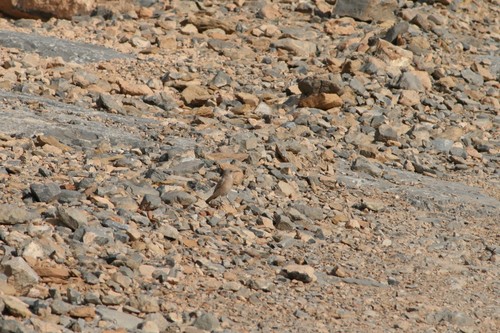 chasco-persa
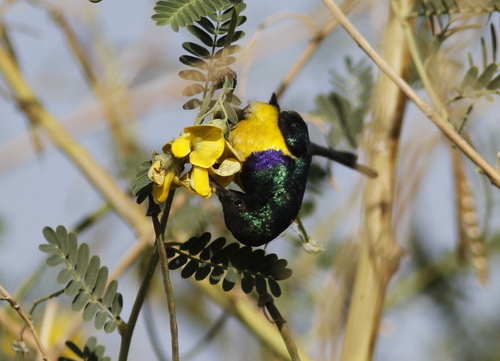 beija-flor-do-nilo
Em resumo
A marca de campo mais confiável para separar o chasco-persa do beija-flor-do-nilo é a estrutura geral e o padrão da cauda: o chasco-persa é um pássaro robusto, ereto, semelhante a um tordo, com um rabo ruivo e um padrão de cauda em forma de T preto, enquanto o beija-flor-do-nilo é muito menor, esguio e delicado, com um bico longo e curvado para baixo e, nos machos em época de reprodução, longas fitas de cauda. Na plumagem não reprodutiva, o beija-flor é cinza simples por cima e amarelado por baixo, sem qualquer padrão de cauda ruivo ou preto. Se você vê um pássaro pequeno com um bico longo e curvado e sem rabo ruivo ou cauda preta, é um beija-flor; um pássaro maior e ereto com um rabo ruivo e cauda em T preta é um chasco. Chascos imaturos e fêmeas podem ser apagados, mas sua estrutura e padrão de cauda permanecem distintos. O habitat e o comportamento também ajudam: chascos forrageiam no chão em áreas rochosas e abertas, enquanto beija-flores são mais prováveis em arbustos ou jardins, muitas vezes pairando ou se alimentando de flores.
Dicas de identificação
- Padrão da cauda (todas as idades): O chasco-persa sempre mostra um rabo ruivo e um padrão de cauda em forma de T preto, visível tanto empoleirado quanto em voo. O beija-flor-do-nilo nunca mostra esse padrão; sua cauda é simples, e nos machos em época de reprodução, é alongada com fitas, mas não é ruiva ou marcada em T.
- Formato do bico: O beija-flor tem um bico longo, esguio e distintamente curvado para baixo, adaptado para se alimentar de néctar. O bico do chasco é curto, reto e semelhante ao de um tordo, adequado para a alimentação de insetos. Esta é uma verificação rápida e confiável, especialmente a curta distância.
- Tamanho e estrutura: O chasco é muito maior, ereto e robusto, com uma aparência semelhante à de um pardal. O beija-flor é minúsculo, esguio e delicado, com uma postura mais horizontal e movimentos rápidos.
- Machos em época de reprodução do beija-flor (sazonal): Em fevereiro, o macho do beija-flor-do-nilo é inconfundível com partes superiores verdes metálicas, barriga amarelo brilhante e longas fitas de cauda. Nenhum chasco jamais mostra cores metálicas ou uma cauda tão longa.
- Confusão de plumagem/não reprodutiva: No inverno, ambos os sexos do beija-flor são cinza simples por cima e amarelados por baixo, mas ainda mostram o bico longo e curvado e não têm qualquer padrão de cauda ruivo ou preto. O chasco permanece apagado, mas é maior e sempre tem o padrão de cauda.
- Supercílios: O chasco pode mostrar uma faixa pálida sobre o olho (supercílios), especialmente na plumagem fresca. O beija-flor não possui nenhuma marca facial desse tipo.
- Coberturas auriculares: O chasco pode ter um tom ruivo nas coberturas auriculares; o beija-flor não tem.
- Parte inferior da asa: O chasco tem coberturas da parte inferior da asa brancas prateadas, às vezes visíveis em voo. A parte inferior da asa do beija-flor não é descrita como distintiva.
- Comportamento de empoleiramento e forrageamento: O chasco empoleira-se ereto em rochas ou no chão, muitas vezes saindo para pegar insetos. O beija-flor é mais provável de ser visto pairando em flores ou se movendo rapidamente através da folhagem.
- Contexto do habitat: Se o pássaro estiver em uma área rochosa, árida ou montanhosa, favoreça o chasco. Em jardins, arbustos de acácia ou perto de plantas com flores, favoreça o beija-flor.
- Estilo de voo: O voo do chasco é direto e forte, muitas vezes entre rochas ou empoleiramentos. O voo do beija-flor é mais agitado, com frequentes pairadas.
- Diferenças sexuais: Apenas o macho em época de reprodução do beija-flor é verde metálico com fitas; fêmeas e pássaros não reprodutivos são apagados, mas ainda mostram as diferenças estruturais.
- Vocalizações: O chasco emite assobios repetidos e chamados de clique; o beija-flor (não detalhado aqui) geralmente tem chamados altos, finos. Use com cautela, a menos que esteja familiarizado com ambos.
- Armadilha: Fêmeas e chascos imaturos podem parecer simples e semelhantes a beija-flores, mas sempre verifique o rabo ruivo e a cauda em T preta, que os beija-flores nunca mostram.
- Contexto sazonal: Se visto entre fevereiro e abril e mostrando verde metálico e fitas, é um macho beija-flor. O chasco nunca mostra essas características, independentemente da estação.
Tamanho
O chasco-persa é significativamente maior e mais robusto, medindo cerca de 14,5 cm de comprimento, com uma envergadura de 26–27 cm e pesando 20–27 g [wikipedia]. O beija-flor-do-nilo é muito menor, com apenas 9–10 cm de comprimento, e é notavelmente mais leve e delicado em construção. A cauda do beija-flor pode parecer mais longa em machos em época de reprodução devido às fitas de cauda, mas o corpo permanece muito menor e mais esguio no geral. No campo, a diferença de tamanho é impressionante: o chasco é do tamanho de um pardal e ereto, enquanto o beija-flor é minúsculo, quase semelhante a um tentilhão, e mais ativo.
Plumagem
- Juvenil/imaturo/primeiro inverno do chasco-persa: Nenhum padrão específico de asa superior juvenil é descrito, mas todas as idades mostram um rabo ruivo e um padrão de cauda em forma de T preto, que é consistente e diagnóstico. A plumagem é cinza-marrom apagada por cima e cinza-esbranquiçada por baixo, com um supercílios pálido e às vezes um tom ruivo nas coberturas auriculares. Os sexos são semelhantes, mas os machos têm uma pequena área preta entre o olho e o bico.
- Chasco-persa adulto: Mantém o mesmo padrão de cauda e coloração geral apagada. Nenhuma mudança sazonal tão dramática quanto a do beija-flor.
- Beija-flor-do-nilo (não reprodutivo, ambos os sexos): Minúsculo, cinza pálido simples por cima e amarelo desbotado por baixo, sem marcas fortes, ruivas ou pretas na cauda. O bico é longo e curvado para baixo.
- Machos em época de reprodução do beija-flor-do-nilo (em fevereiro): Transforma-se em um verde brilhante por cima, amarelo-sulfúrico brilhante por baixo e adquire longas fitas de cauda. Sem rabo ruivo ou cauda em T preta. As fêmeas permanecem apagadas.
- Contraste chave: Apenas o chasco mostra um rabo ruivo e cauda em T preta em todas as idades; apenas o beija-flor tem um macho em época de reprodução verde metálico e um bico longo e curvado.
Comportamento
O chasco-persa é um pássaro forrageador no chão, frequentemente visto em rochas ou solo nu, fazendo voos curtos para pegar insetos ou descendo ao chão para se alimentar. Ele empoleira-se de forma conspícua e raramente é visto se alimentando de flores. O beija-flor-do-nilo é muito mais ativo e ágil, frequentemente pairando em flores para se alimentar de néctar, às vezes saindo para pegar insetos, e raramente empoleirando-se ereto no chão. Os machos podem exibir pairando e mostrando suas fitas de cauda. O estilo de forrageamento e a postura são imediatamente diferentes: chascos são terrestres e eretos, beija-flores são aéreos e frequentemente pairam.
Habitat
O chasco-persa se reproduz em áreas montanhosas, rochosas e áridas com pouca vegetação, frequentemente em altas elevações (1.200–4.000 m), e inverna em colinas rochosas, estepes e semi-desertos. É raramente encontrado em áreas exuberantes e vegetadas. O beija-flor-do-nilo é encontrado em uma gama mais ampla de habitats, incluindo arbustos, jardins e áreas com plantas com flores, frequentemente em elevações mais baixas e em ambientes mais vegetados ou ripários. Se o pássaro estiver em uma paisagem rochosa, aberta e árida, o chasco é mais provável; em jardins, arbustos de acácia ou com arbustos floridos, o beija-flor é mais provável.
Voz
O chasco-persa tem um assobio simples e repetido para sua canção, e os chamados incluem notas de clique, raspagem e assobios. As vocalizações do beija-flor-do-nilo não são descritas em detalhes aqui, mas os beija-flores geralmente têm chamados altos, finos e rápidos e às vezes uma canção fraca e trêmula. Na prática, os chamados do chasco são mais semelhantes aos de um tordo e menos agudos do que os do beija-flor, mas as vocalizações não são a ferramenta de separação mais confiável, a menos que a canção seja ouvida claramente.