

Persian Wheatear vs Nile Valley Sunbird
Oenanthe chrysopygia contro Hedydipna metallica
Fai un quiz con Persian Wheatear e Nile Valley Sunbird
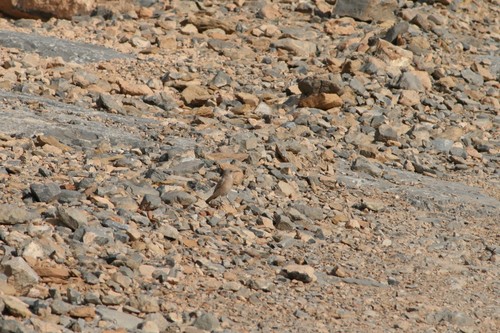 Persian Wheatear
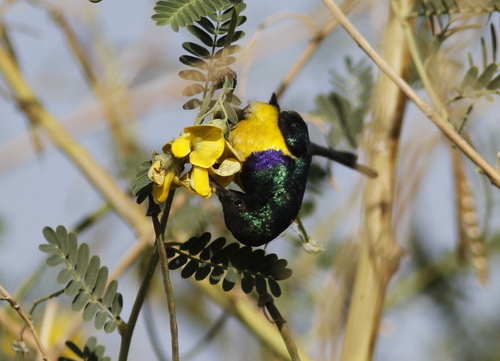 Nile Valley Sunbird
In breve
Il segno di campo più affidabile per separare il Persian Wheatear dal Nile Valley Sunbird è la struttura generale e il modello della coda: il Persian Wheatear è un uccello robusto, eretto, simile a un tordo, con un sottocoda rugginoso e un modello di coda a forma di T nera, mentre il Nile Valley Sunbird è molto più piccolo, snello e delicato, con un lungo becco ricurvo e, nei maschi in riproduzione, streamers della coda allungati. Nella livrea non riproduttiva, il sunbird è grigio uniforme sopra e giallastro sotto, privo di qualsiasi modello di coda rugginoso o nero. Se vedi un piccolo uccello con un lungo becco ricurvo e senza sottocoda rugginoso o coda nera, è un sunbird; un uccello più grande, eretto, con un sottocoda rugginoso e coda a forma di T nera è un wheatear. I wheatears immaturi e femminili possono essere opachi, ma la loro struttura e il modello della coda rimangono distintivi. L'habitat e il comportamento aiutano anche: i wheatears si nutrono a terra in aree rocciose e aperte, mentre i sunbirds sono più probabili in cespugli o giardini, spesso sospesi o nutrendosi dai fiori.
Consigli di identificazione
- Modello della coda (tutte le età): Il Persian Wheatear mostra sempre un sottocoda rugginoso e un modello di coda a forma di T nera, visibile sia in posizione perpendicolare che in volo. Il Nile Valley Sunbird non mostra mai questo modello; la sua coda è uniforme e, nei maschi in riproduzione, è allungata con streamers ma non rugginosa o contrassegnata a forma di T.
- Forma del becco: Il sunbird ha un becco lungo, snello e distintamente ricurvo, adattato per nutrirsi di nettare. Il becco del wheatear è corto, dritto e simile a un tordo, adatto per l'insettivoria. Questo è un controllo rapido e affidabile, specialmente a distanza ravvicinata.
- Dimensioni e struttura: Il wheatear è molto più grande, eretto e robusto, con un aspetto simile a un passero. Il sunbird è minuscolo, snello e delicato, con una postura più orizzontale e movimenti rapidi.
- Maschio in riproduzione del sunbird (stagionale): A febbraio, il maschio del Nile Valley Sunbird è inconfondibile con la parte superiore verde metallica, il ventre giallo brillante e i lunghi streamers della coda. Nessun wheatear mostra mai colori metallici o una coda così lunga.
- Confusione nella livrea/non riproduttiva: In inverno, entrambi i sessi del sunbird sono grigi uniformi sopra e giallastri sotto, ma mostrano comunque il lungo becco ricurvo e non hanno alcun modello di coda rugginoso o nero. Il wheatear rimane opaco ma è più grande e ha sempre il modello della coda.
- Supercilium: Il wheatear può mostrare una leggera striscia chiara sopra l'occhio (supercilium), specialmente nella livrea fresca. Il sunbird non ha alcun segno facciale di questo tipo.
- Copritrici auricolari: Il wheatear può avere una sfumatura rugginosa nelle copritrici auricolari; il sunbird no.
- Sottoala: Il wheatear ha copritrici sottoala bianche argentate, a volte intraviste in volo. La sottoala del sunbird non è descritta come distintiva.
- Comportamento di posizionamento e foraggiamento: Il wheatear si posiziona eretto su rocce o a terra, spesso lanciandosi per catturare insetti. Il sunbird è più probabile da vedere sospeso sui fiori o muovendosi rapidamente attraverso il fogliame.
- Contesto dell'habitat: Se l'uccello si trova in un'area rocciosa, desolata o montuosa, favorire il wheatear. Nei giardini, cespugli di acacia o vicino a piante fiorite, favorire il sunbird.
- Stile di volo: Il volo del wheatear è diretto e forte, spesso tra rocce o posatoi. Il volo del sunbird è più fluttuante, con frequenti sospensioni.
- Differenze sessuali: Solo il maschio in riproduzione del sunbird è verde metallico con streamers; le femmine e gli uccelli non in riproduzione sono opachi, ma mostrano comunque le differenze strutturali.
- Vocalizzazioni: Il wheatear emette fischi ripetuti e richiami a clic; il sunbird (non dettagliato qui) ha tipicamente richiami alti, sottili. Usare con cautela a meno che non si sia familiari con entrambi.
- Trappola: Le femmine e i wheatears immaturi possono sembrare opachi e simili ai sunbirds, ma controlla sempre il sottocoda rugginoso e la coda a forma di T nera, che i sunbirds non mostrano mai.
- Contesto stagionale: Se visto tra febbraio e aprile e mostrando verde metallico e streamers, è un maschio sunbird. Il wheatear non mostra mai queste caratteristiche, indipendentemente dalla stagione.
Taglia
Il Persian Wheatear è significativamente più grande e massiccio, misurando circa 14,5 cm di lunghezza con un'apertura alare di 26–27 cm e pesando 20–27 g [wikipedia]. Il Nile Valley Sunbird è molto più piccolo, solo 9–10 cm di lunghezza, ed è notevolmente più leggero e più delicato nella struttura. La coda del sunbird può apparire più lunga nei maschi in riproduzione a causa degli streamers della coda, ma il corpo rimane molto più piccolo e snello nel complesso. Sul campo, la differenza di dimensioni è sorprendente: il wheatear è delle dimensioni di un passero e eretto, mentre il sunbird è minuscolo, quasi simile a un warbler, e più attivo.
Piumaggio
- Giovanile/immaturo/primo inverno Persian Wheatear: Non è descritto alcun modello specifico della parte superiore dell'ala giovanile, ma tutte le età mostrano un sottocoda rugginoso e un modello di coda a forma di T nera, che è coerente e diagnostico. La livrea è grigio-marrone opaco sopra e grigio-bianco sotto, con un leggero supercilium chiaro e talvolta una sfumatura rugginosa nelle copritrici auricolari. I sessi sono simili, ma i maschi hanno una piccola area nera tra occhio e becco.
- Adulto Persian Wheatear: Mantiene lo stesso modello di coda e la stessa colorazione opaca generale. Nessun cambiamento stagionale così drammatico come il sunbird.
- Nile Valley Sunbird (non riproduttivo, entrambi i sessi): Minuscolo, grigio chiaro uniforme sopra e giallo sbiadito sotto, senza marcature forti, rugginose o nere nella coda. Il becco è lungo e ricurvo.
- Maschio in riproduzione del Nile Valley Sunbird (a febbraio): Si trasforma in un verde lucido sopra, giallo zolfo brillante sotto e acquisisce lunghi streamers della coda. Nessun sottocoda rugginoso o coda a forma di T nera. Le femmine rimangono opache.
- Contrasto chiave: Solo il wheatear mostra un sottocoda rugginoso e una coda a forma di T nera a tutte le età; solo il sunbird ha un maschio in riproduzione verde metallico e un lungo becco ricurvo.
Comportamento
Il Persian Wheatear è un uccello che si nutre a terra, spesso visto su rocce o terreno nudo, facendo brevi voli per catturare insetti o scendendo a terra per nutrirsi. Si posiziona in modo evidente ed è raramente visto nutrirsi dai fiori. Il Nile Valley Sunbird è molto più attivo e agile, spesso sospeso sui fiori per nutrirsi di nettare, a volte lanciandosi per insetti e raramente posandosi eretto a terra. I maschi possono esibirsi sospendendosi e mostrando i loro streamers della coda. Lo stile di foraggiamento e la postura sono immediatamente diversi: i wheatears sono terrestri ed eretti, i sunbirds sono aerei e spesso sospesi.
Habitat
Il Persian Wheatear nidifica in aree montuose, rocciose e desolate con poca vegetazione, spesso ad alte altitudini (1.200–4.000 m), e trascorre l'inverno in colline rocciose, steppa e semi-deserto. È raramente trovato in aree lussureggianti e vegetate. Il Nile Valley Sunbird si trova in una gamma più ampia di habitat, inclusi cespugli, giardini e aree con piante fiorite, spesso a basse altitudini e in ambienti più vegetati o ripariani. Se l'uccello si trova in un paesaggio roccioso, aperto e desolato, è più probabile che sia un wheatear; nei giardini, cespugli di acacia o con arbusti fioriti, è più probabile che sia un sunbird.
Voce
Il Persian Wheatear ha un fischio semplice e ripetuto per il suo canto, e i richiami includono note a clic, raschianti e fischianti. Le vocalizzazioni del Nile Valley Sunbird non sono descritte in dettaglio qui, ma i sunbirds tipicamente hanno richiami alti, sottili e rapidi e talvolta un canto debole e gorgheggiante. In pratica, i richiami del wheatear sono più simili a quelli di un tordo e meno acuti rispetto a quelli del sunbird, ma le vocalizzazioni non sono lo strumento di separazione più affidabile a meno che il canto non venga udito chiaramente.
Persian Wheatear · Nile Valley Sunbird · I miei uccelli difficili