

ganga-das-estepes vs cortiçol-de-barriga-preta
Syrrhaptes paradoxus versus Pterocles orientalis
Jogue um quiz com ganga-das-estepes e cortiçol-de-barriga-preta
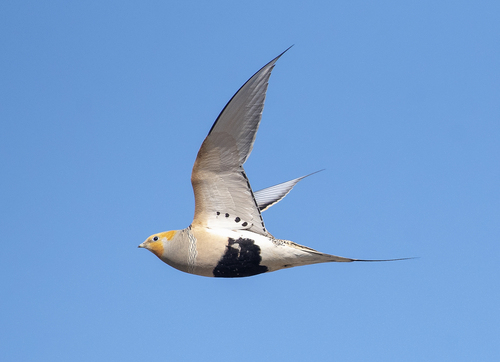 ganga-das-estepes
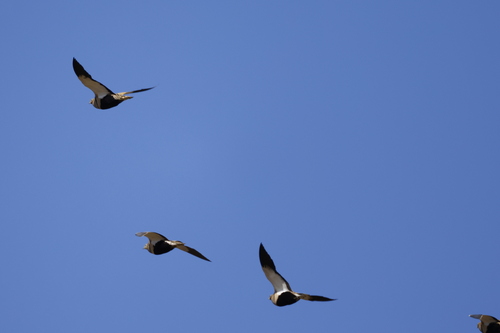 cortiçol-de-barriga-preta
Em resumo
A separação mais confiável em campo é a cor da parte inferior da asa em voo: a ganga-das-estepes mostra partes inferiores pálidas, enquanto o cortiçol-de-barriga-preta tem partes inferiores brancas marcantes. Ambas as espécies têm uma mancha preta na barriga, mas a ganga-das-estepes é geralmente mais clara e mais riscada por cima, com uma aparência mais compacta e de patas. Os machos de ambas têm cabeça e peito cinzas, mas apenas o macho da ganga-das-estepes tem um rosto laranja e uma faixa cinza no peito. As fêmeas são mais complicadas, mas a da ganga-das-estepes é mais riscada por cima e não tem a faixa no peito. Estrutura, estilo de voo e diferenças sutis no padrão da parte superior podem ajudar, especialmente à distância ou em bandos mistos.
Dicas de identificação
- Cor da parte inferior da asa em voo (todas as idades): A ganga-das-estepes mostra partes inferiores pálidas (não brancas); o cortiçol-de-barriga-preta tem partes inferiores brancas brilhantes. Esta é a marca de campo mais confiável, especialmente em bandos ou à distância.
- Mancha preta na barriga: Ambas as espécies têm uma barriga preta, mas a da ganga-das-estepes está contra partes inferiores claras, enquanto a do cortiçol-de-barriga-preta está contra partes inferiores mais brancas. Procure o contraste em voo ou quando as aves estão bebendo.
- Cabeça e peito do macho: O macho da ganga-das-estepes tem cabeça e peito cinzas, rosto laranja e uma faixa cinza no peito. O macho do cortiçol-de-barriga-preta também tem cabeça e peito cinzas, mas com uma mancha de garganta castanha e uma borda preta fina na parte inferior do peito. O rosto laranja e a faixa no peito são exclusivos da ganga-das-estepes.
- Partes superiores da fêmea: A fêmea da ganga-das-estepes é mais riscada por cima e não tem faixa no peito; a fêmea do cortiçol-de-barriga-preta é mais marrom e mais finamente marcada, mas tem a mesma barriga preta e faixa no peito que o macho. Se você ver uma fêmea riscada e sem faixa, é a da ganga-das-estepes.
- Cor da parte superior: A ganga-das-estepes é geralmente clara com riscas; o cortiçol-de-barriga-preta é marrom-dourado com marcas mais escuras. Em luz forte, a ganga-das-estepes pode parecer mais clara e mais uniforme.
- Pés e pernas: A ganga-das-estepes tem pernas e dedos com penas, com dedos frontais fundidos e uma aparência semelhante a patas. Isso é visível apenas a uma distância muito próxima ou em fotos, mas é único entre os cortiçóis.
- Tamanho: O cortiçol-de-barriga-preta é geralmente mais pesado e ligeiramente mais longo, mas a sobreposição é substancial. Use apenas se as aves estiverem lado a lado.
- Estilo de voo: Ambas são rápidas e diretas, mas a ganga-das-estepes é conhecida por voos especialmente longos e em alta velocidade. Não é geralmente diagnóstico em campo.
- Habitat: Se em verdadeira estepe com pouca ou nenhuma vegetação, a ganga-das-estepes é mais provável. Se em planícies semiáridas com alguma vegetação, especialmente no sul da Europa ou no Norte da África, o cortiçol-de-barriga-preta é mais provável.
- Distribuição: A ganga-das-estepes é da Ásia Central, às vezes irrompendo para o oeste; o cortiçol-de-barriga-preta é do sul da Europa, Norte da África e Oriente Médio. Registros fora da área devem ser verificados cuidadosamente.
- Voz: Apenas o chamado do cortiçol-de-barriga-preta é descrito ('chowrrr rrrr-rrrr'), mas não é um separador primário com base nessas notas.
- Contexto na água: Ambas as espécies se reúnem em bebedouros ao amanhecer/anoitecer, muitas vezes em grandes bandos. Bandos mistos são raros, mas possíveis durante irruptões; verifique cuidadosamente as partes inferiores e as manchas na barriga.
- Plumagem juvenil/imatura: Nenhuma marca de voo juvenil específica é descrita para qualquer uma das espécies nessas notas; concentre-se no padrão da parte inferior e da barriga para todas as idades.
- Variação sazonal: Nenhuma mudança sazonal forte na plumagem é notada; diferenças de sexo e idade são mais importantes.
- Armadilhas comuns: As fêmeas de ambas as espécies são opacas e podem ser confundidas; sempre verifique a cor da parte inferior da asa em voo e procure a presença ou ausência de uma faixa no peito e riscas acima.
Tamanho
Ambas as espécies são cortiçóis de tamanho médio a grande com forma geral semelhante: cabeça e pescoço pequenos, semelhantes a pombos, e um corpo compacto e robusto. O cortiçol-de-barriga-preta é provavelmente a maior espécie de cortiçol, com comprimento de 33–39 cm e massa corporal em torno de 405,5 g [wikidata], enquanto a ganga-das-estepes mede 30–41 cm de comprimento (sem massa dada). Na prática, a sobreposição de tamanho é considerável e não é uma marca de campo confiável, a menos que as aves estejam lado a lado.
Plumagem
- Em voo (todas as idades): A parte inferior da asa é a chave: a ganga-das-estepes tem partes inferiores pálidas, enquanto o cortiçol-de-barriga-preta mostra partes inferiores brancas brilhantes. Ambas têm uma mancha preta na barriga, mas a da ganga-das-estepes está contra partes inferiores claras, e a do cortiçol-de-barriga-preta está contra partes inferiores mais brancas.
- Machos adultos: Ambos têm cabeça e peito cinzas, mas o macho da ganga-das-estepes tem um rosto laranja e uma faixa cinza distinta no peito, enquanto o macho do cortiçol-de-barriga-preta tem uma mancha de garganta castanha e uma borda preta fina na parte inferior do peito. As partes superiores da ganga-das-estepes são claras e riscada; as do cortiçol-de-barriga-preta são marrom-dourado com marcas mais escuras.
- Fêmeas adultas: Ambas são mais opacas e mais finamente marcadas do que os machos. A fêmea da ganga-das-estepes não tem a faixa no peito e tem mais riscas por cima; a fêmea do cortiçol-de-barriga-preta é mais marrom por cima, com peito e partes inferiores semelhantes ao macho, e a mesma mancha preta na barriga.
- Pés: Apenas a ganga-das-estepes tem pernas e dedos com penas, com dedos frontais fundidos e uma aparência semelhante a patas (visível apenas a uma distância próxima ou em fotos).
Comportamento
Ambas as espécies são gregárias e frequentemente vistas em bandos, especialmente em bebedouros ao amanhecer e anoitecer. A ganga-das-estepes é conhecida por voos muito longos e rápidos (até 64 km/h e 121 km em viagens de ida e volta), e os machos carregam água nas penas do peito para os filhotes. O cortiçol-de-barriga-preta também voa rápido e diretamente, mas apenas o macho traz água para os jovens. Ambas as espécies fazem ninhos em buracos no chão e põem ovos marcados de forma críptica. O estilo de voo é semelhante: asas longas e pontudas e voo rápido e direto.
Habitat
Ambas preferem planícies ou estepes secas e abertas, mas o cortiçol-de-barriga-preta evita áreas completamente desprovidas de vegetação, enquanto a ganga-das-estepes é mais uma especialista em estepe verdadeira. A ganga-das-estepes se reproduz em toda a Ásia Central, com irruptões para o oeste em alguns anos; o cortiçol-de-barriga-preta é residente ou migratório no sul da Europa, Norte da África e partes do Oriente Médio. A sobreposição é rara, exceto como vagantes.
Voz
Apenas o chamado do cortiçol-de-barriga-preta é descrito: um suave 'chowrrr rrrr-rrrr.' Nenhuma descrição vocal é dada para a ganga-das-estepes nessas notas, então a voz não é um separador confiável com base nessa informação.
ganga-das-estepes · cortiçol-de-barriga-preta · Minhas aves difíceis