

Motmot

サケイ 対 クロハラサケイ

Syrrhaptes paradoxus 対 Pterocles orientalis

サケイとクロハラサケイのクイズ
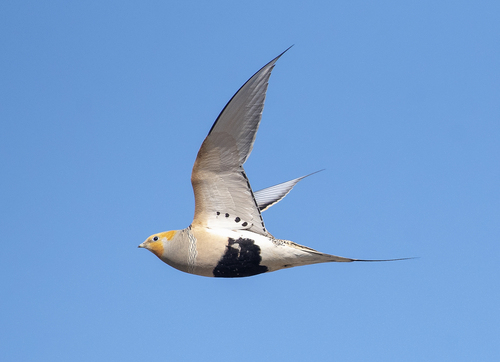
サケイ (Syrrhaptes paradoxus) サケイ
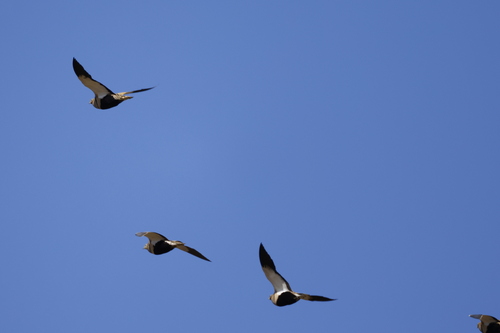
クロハラサケイ (Pterocles orientalis) クロハラサケイ

メディア

読み込み中…

要点

フィールドで最も信頼できる区別は、飛行中の翼の下の色です:サケイは淡い翼の下を示し、クロハラサケイは目を引く白い翼の下を持っています。両種は黒い腹部の斑点を持っていますが、サケイは全体的に淡い色合いで、上面はより横縞があり、よりコンパクトで足のような外観をしています。両方のオスは灰色の頭と胸を持っていますが、サケイのオスだけがオレンジ色の顔と灰色の胸の帯を持っています。メスは見分けが難しいですが、サケイは上面がより横縞があり、胸の帯がありません。構造、飛行スタイル、上面パターンの微妙な違いが役立つことがあります、特に距離がある場合や混合群れの中で。

識別のコツ

  1. 飛行中の翼の下の色(すべての年齢): サケイは淡い(白ではない)翼の下を示し、クロハラサケイは明るい白い翼の下を持っています。これは、特に群れや距離がある場合に最も信頼できるフィールドマークです。
  2. 黒い腹部の斑点: 両種は黒い腹部を持っていますが、サケイは淡い腹部に対して黒い腹部があり、クロハラサケイは白い腹部に対して黒い腹部があります。飛行中や鳥が水を飲んでいるときにコントラストを探してください。
  3. オスの頭と胸: サケイのオスは灰色の頭と胸、オレンジ色の顔、灰色の胸の帯を持っています。クロハラサケイのオスも灰色の頭と胸を持っていますが、栗色の喉の斑点と下胸に薄い黒い縁があります。オレンジ色の顔と胸の帯はサケイに特有です。
  4. メスの上面: サケイのメスは上面がより横縞があり、胸の帯がありません;クロハラサケイのメスは上面がより茶色で、胸と腹部はオスと同様で、同じ黒い腹部の斑点を持っています。横縞があり、帯がないメスを見たら、それはサケイです。
  5. 上面の色: サケイは全体的に淡い色合いで横縞があり、クロハラサケイは金色の茶色で、より暗い模様があります。強い光の下では、サケイはより淡く、より均一に見えることがあります。
  6. 足と脚: サケイは羽毛のある脚と足の指を持ち、前の足の指が融合していて足のような外観をしています。これは非常に近い距離または写真でのみ見ることができますが、サケイの中では特有です。
  7. サイズ: クロハラサケイは一般的に重く、わずかに長いですが、重なりはかなりあります。鳥が並んでいる場合にのみ使用してください。
  8. 飛行スタイル: 両方とも速く、直接的ですが、サケイは特に長く、高速の飛行が特徴です。フィールドでは通常診断的ではありません。
  9. 生息地: 植生がほとんどない真のステップにいる場合、サケイの方が可能性が高いです。特に南ヨーロッパや北アフリカの半乾燥平原にいる場合、クロハラサケイの方が可能性が高いです。
  10. 分布: サケイは中央アジアに生息し、時々西に出現します;クロハラサケイは南ヨーロッパ、北アフリカ、中東に生息しています。範囲外の記録は注意深く確認する必要があります。
  11. 声: クロハラサケイの鳴き声のみが記述されています(「チョウrrr rrrr-rrrr」)が、これらのメモに基づく主要な区別ではありません。
  12. 水のコンテキスト: 両種は夜明けや夕暮れに水たまりに集まり、大きな群れで見られることがよくあります。混合群れは稀ですが、出現時には可能です;翼の下と腹部の斑点を注意深く確認してください。
  13. 幼鳥/未熟な羽毛: これらのメモには、いずれの種についても特定の幼鳥の飛行マークは記述されていません;すべての年齢のために翼の下と腹部のパターンに焦点を当ててください。
  14. 季節的変化: 強い季節的な羽毛の変化は記載されていません;性別と年齢の違いがより重要です。
  15. 一般的な落とし穴: 両種のメスは鈍く、混同される可能性があります;常に飛行中の翼の下の色を確認し、胸の帯の有無と上面の横縞を探してください。

大きさ

両種は中型から大型のサケイで、全体的な形は似ています:小さく、鳩のような頭と首、コンパクトで頑丈な体。クロハラサケイはおそらく最も大きなサケイ種で、長さは33〜39 cm、体重は約405.5 g [wikidata]ですが、サケイは30〜41 cmの長さです(体重は記載されていません)。実際には、サイズの重なりはかなりあり、鳥が並んでいない限り信頼できるフィールドマークではありません。

羽色

行動

両種は群れを作り、特に夜明けや夕暮れの水たまりでよく見られます。サケイは非常に長く速い飛行(最大64 km/hおよび121 kmの往復)で知られ、オスは雛のために胸の羽毛に水を運びます。クロハラサケイも速く直接的に飛びますが、オスだけが雛のために水を運びます。両種は地面に巣を作り、目立たない模様の卵を産みます。飛行スタイルは似ており、長く尖った翼と迅速で直接的な飛行です。

生息環境

両種は乾燥した開けた平原やステップを好みますが、クロハラサケイは完全に植生がない地域を避け、サケイは真のステップの専門家です。サケイは中央アジア全域で繁殖し、数年ごとに西に出現します;クロハラサケイは南ヨーロッパ、北アフリカ、中東の一部に生息または移動します。重なりは稀で、漂流者としてのみ見られます。

声

クロハラサケイの鳴き声のみが記述されています:柔らかい「チョウrrr rrrr-rrrr」。これらのメモにはサケイの声の記述はないため、この情報に基づいて声は信頼できる区別ではありません。

より良い説明を送る

比較と同じ項目を使ってください。文章はすぐに公開されます。

The most reliable separation in the field is the underwing color in flight: Pallas's Sandgrouse shows pale underwings, while Black-bellied Sandgrouse has striking white underwings. Both species have a black belly patch, but Pallas's Sandgrouse is overall buffier and more barred above, with a more compact, paw-footed look. Males of both have a grey head and breast, but only Pallas's male has an orange face and a grey breast band. Females are trickier, but Pallas's is more barred above and lacks the breast band. Structure, flight jizz, and subtle differences in upperpart pattern can help, especially at a distance or in mixed flocks.

  1. Underwing color in flight (all ages): Pallas's Sandgrouse shows pale (not white) underwings; Black-bellied Sandgrouse has bright white underwings. This is the single most reliable field mark, especially in flocks or at a distance.
  2. Black belly patch: Both species have a black belly, but Pallas's is set against buff underparts, while Black-bellied's is against whiter underparts. Look for the contrast in flight or when birds are drinking.
  3. Male head and breast: Pallas's male has a grey head and breast, orange face, and a grey breast band. Black-bellied male also has a grey head and breast, but with a chestnut throat patch and a thin black border on the lower breast. The orange face and breast band are unique to Pallas's.
  4. Female upperparts: Pallas's female is more barred above and lacks a breast band; Black-bellied female is browner and more finely marked, but has the same black belly and breast band as the male. If you see a barred, band-less female, it's Pallas's.
  5. Upperpart color: Pallas's is overall buff with barring; Black-bellied is golden-brown with darker markings. In strong light, Pallas's can look paler and more uniform.
  6. Feet and legs: Pallas's has feathered legs and toes, with fused front toes and a paw-like appearance. This is only visible at very close range or in photos, but is unique among sandgrouse.
  7. Size: Black-bellied is generally heavier and slightly longer, but overlap is substantial. Use only if birds are side by side.
  8. Flight style: Both are fast and direct, but Pallas's is noted for especially long, high-speed flights. Not usually diagnostic in the field.
  9. Habitat: If in true steppe with little or no vegetation, Pallas's is more likely. If in semi-arid plains with some vegetation, especially in southern Europe or North Africa, Black-bellied is more likely.
  10. Range: Pallas's is central Asian, sometimes irrupting west; Black-bellied is southern European, North African, and Middle Eastern. Out-of-range records should be checked carefully.
  11. Voice: Only Black-bellied's call is described ('chowrrr rrrr-rrrr'), but not a primary separator based on these notes.
  12. Context at water: Both species gather at waterholes at dawn/dusk, often in large flocks. Mixed flocks are rare but possible during irruptions; check underwings and belly patches carefully.
  13. Juvenile/immature plumage: No specific juvenile flight marks are described for either species in these notes; focus on underwing and belly pattern for all ages.
  14. Seasonal variation: No strong seasonal plumage changes are noted; sex and age differences are more important.
  15. Common pitfalls: Females of both species are dull and can be confused; always check underwing color in flight and look for the presence or absence of a breast band and barring above.

Both species are medium to large sandgrouse with similar overall shape: small, pigeon-like head and neck, and a compact, sturdy body. Black-bellied Sandgrouse is likely the largest sandgrouse species, with a length of 33–39 cm and a body mass around 405.5 g [wikidata], while Pallas's Sandgrouse is 30–41 cm long (no mass given). In practice, size overlap is considerable and not a reliable field mark unless birds are side by side.

  • In flight (all ages): The underwing is the key: Pallas's Sandgrouse has pale underwings, while Black-bellied Sandgrouse shows bright white underwings. Both have a black belly patch, but Pallas's is set against buff underparts, and Black-bellied's is against whiter underparts.
  • Adult males: Both have a grey head and breast, but Pallas's male has an orange face and a distinct grey breast band, while Black-bellied's male has a chestnut throat patch and a thin black border on the lower breast. Pallas's upperparts are buff and barred; Black-bellied's are golden-brown with darker markings.
  • Adult females: Both are duller and more finely marked than males. Pallas's female lacks the breast band and has more barring above; Black-bellied's female is browner above, with breast and underparts similar to the male, and the same black belly patch.
  • Feet: Only Pallas's has feathered legs and toes, with fused front toes and a paw-like appearance (visible only at close range or in photos).

Both species are gregarious and often seen in flocks, especially at watering holes at dawn and dusk. Pallas's Sandgrouse is known for very long, fast flights (up to 64 km/h and 121 km round trips), and males carry water in their breast feathers for chicks. Black-bellied Sandgrouse also flies fast and directly, but only the male brings water for the young. Both species nest in ground scrapes and lay cryptically marked eggs. Flight style is similar: long, pointed wings and rapid, direct flight.

Both favor dry, open plains or steppes, but Black-bellied Sandgrouse avoids areas completely lacking vegetation, while Pallas's is more of a true steppe specialist. Pallas's breeds across central Asia, with irruptions westward in some years; Black-bellied is resident or migratory in southern Europe, North Africa, and parts of the Middle East. Overlap is rare except as vagrants.

Only Black-bellied Sandgrouse's call is described: a soft 'chowrrr rrrr-rrrr.' No vocal description is given for Pallas's Sandgrouse in these notes, so voice is not a reliable separator based on this information.

変更を破棄しますか?

保存していない編集があります。今離れると失われます。

サケイ · クロハラサケイ · 苦手な鳥