

Ganga de Pallas vs Ganga Ortega
Syrrhaptes paradoxus frente a Pterocles orientalis
Juega un quiz con Ganga de Pallas y Ganga Ortega
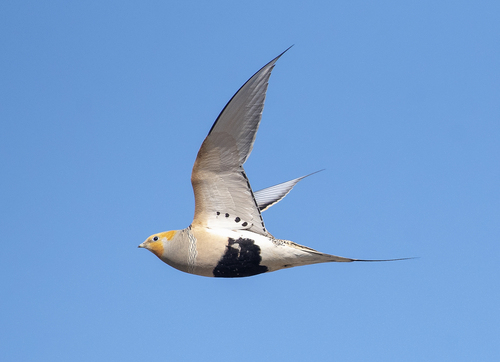 Ganga de Pallas
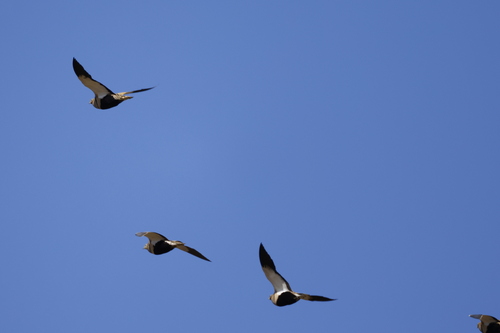 Ganga Ortega
En breve
La separación más confiable en el campo es el color del ala inferior en vuelo: la Ganga de Pallas muestra alas inferiores pálidas, mientras que la Ganga Ortega tiene alas inferiores blancas llamativas. Ambas especies tienen una mancha negra en el vientre, pero la Ganga de Pallas es en general más color canela y más barrada en la parte superior, con un aspecto más compacto y de patas similares a las de un mamífero. Los machos de ambas tienen una cabeza y un pecho grises, pero solo el macho de la Ganga de Pallas tiene una cara naranja y una banda gris en el pecho. Las hembras son más difíciles de distinguir, pero la de Pallas es más barrada en la parte superior y carece de la banda en el pecho. La estructura, el estilo de vuelo y las diferencias sutiles en el patrón de la parte superior pueden ayudar, especialmente a distancia o en bandadas mixtas.
Consejos de identificación
- Color del ala inferior en vuelo (todas las edades): La Ganga de Pallas muestra alas inferiores pálidas (no blancas); la Ganga Ortega tiene alas inferiores blancas brillantes. Esta es la marca de campo más confiable, especialmente en bandadas o a distancia.
- Mancha negra en el vientre: Ambas especies tienen un vientre negro, pero la de Pallas está en contraste con partes inferiores color canela, mientras que la de la Ganga Ortega está en contraste con partes inferiores más blancas. Busca el contraste en vuelo o cuando las aves están bebiendo.
- Cabeza y pecho del macho: El macho de la Ganga de Pallas tiene una cabeza y un pecho grises, cara naranja y una banda gris en el pecho. El macho de la Ganga Ortega también tiene una cabeza y un pecho grises, pero con una mancha de garganta castaña y un borde negro delgado en la parte inferior del pecho. La cara naranja y la banda en el pecho son únicas de la Ganga de Pallas.
- Partes superiores de la hembra: La hembra de la Ganga de Pallas es más barrada en la parte superior y carece de una banda en el pecho; la hembra de la Ganga Ortega es más marrón y más finamente marcada, pero tiene la misma mancha negra en el vientre y banda en el pecho que el macho. Si ves una hembra barrada y sin banda, es la de Pallas.
- Color de la parte superior: La de Pallas es en general color canela con barrado; la Ganga Ortega es marrón dorado con marcas más oscuras. Con luz fuerte, la de Pallas puede parecer más pálida y uniforme.
- Pies y patas: La de Pallas tiene patas y dedos emplumados, con dedos frontales fusionados y una apariencia similar a la de un mamífero. Esto solo es visible a muy corta distancia o en fotos, pero es único entre las gangas.
- Tamaño: La Ganga Ortega es generalmente más pesada y ligeramente más larga, pero la superposición es considerable. Úsalo solo si las aves están una al lado de la otra.
- Estilo de vuelo: Ambas son rápidas y directas, pero la Ganga de Pallas es conocida por vuelos especialmente largos y a alta velocidad. No suele ser un diagnóstico en el campo.
- Hábitat: Si se encuentra en estepas verdaderas con poca o ninguna vegetación, es más probable que sea la de Pallas. Si se encuentra en llanuras semiáridas con algo de vegetación, especialmente en el sur de Europa o el norte de África, es más probable que sea la Ganga Ortega.
- Distribución: La Ganga de Pallas es de Asia central, a veces irrumpiendo hacia el oeste; la Ganga Ortega es del sur de Europa, norte de África y Medio Oriente. Los registros fuera de su rango deben ser verificados cuidadosamente.
- Voz: Solo se describe el canto de la Ganga Ortega ('chowrrr rrrr-rrrr'), pero no es un separador primario basado en estas notas.
- Contexto en el agua: Ambas especies se reúnen en abrevaderos al amanecer/anochecer, a menudo en grandes bandadas. Las bandadas mixtas son raras pero posibles durante las irrupciones; revisa cuidadosamente las alas inferiores y las manchas en el vientre.
- Plumaje juvenil/inmaduro: No se describen marcas de vuelo juveniles específicas para ninguna de las especies en estas notas; enfócate en el patrón de las alas inferiores y el vientre para todas las edades.
- Variación estacional: No se notan cambios fuertes en el plumaje estacional; las diferencias de sexo y edad son más importantes.
- Errores comunes: Las hembras de ambas especies son apagadas y pueden confundirse; siempre revisa el color del ala inferior en vuelo y busca la presencia o ausencia de una banda en el pecho y barrado en la parte superior.
Tamaño
Both species are medium to large sandgrouse with similar overall shape: small, pigeon-like head and neck, and a compact, sturdy body. Ganga Ortega is likely the largest sandgrouse species, with a length of 33–39 cm and a body mass around 405.5 g [wikidata], while Ganga de Pallas is 30–41 cm long (no mass given). In practice, size overlap is considerable and not a reliable field mark unless birds are side by side.
Plumaje
- In flight (all ages): The underwing is the key: Ganga de Pallas has pale underwings, while Ganga Ortega shows bright white underwings. Both have a black belly patch, but Pallas's is set against buff underparts, and Black-bellied's is against whiter underparts.
- Adult males: Both have a grey head and breast, but Pallas's male has an orange face and a distinct grey breast band, while Black-bellied's male has a chestnut throat patch and a thin black border on the lower breast. Pallas's upperparts are buff and barred; Black-bellied's are golden-brown with darker markings.
- Adult females: Both are duller and more finely marked than males. Pallas's female lacks the breast band and has more barring above; Black-bellied's female is browner above, with breast and underparts similar to the male, and the same black belly patch.
- Feet: Only Pallas's has feathered legs and toes, with fused front toes and a paw-like appearance (visible only at close range or in photos).
Comportamiento
Ambas especies son gregarias y a menudo se ven en bandadas, especialmente en abrevaderos al amanecer y al anochecer. La Ganga de Pallas es conocida por vuelos muy largos y rápidos (hasta 64 km/h y 121 km de ida y vuelta), y los machos llevan agua en sus plumas del pecho para los polluelos. La Ganga Ortega también vuela rápido y directo, pero solo el macho lleva agua para los jóvenes. Ambas especies anidan en raspaduras en el suelo y ponen huevos marcados de manera críptica. El estilo de vuelo es similar: alas largas y puntiagudas y vuelo rápido y directo.
Hábitat
Ambas prefieren llanuras o estepas secas y abiertas, pero la Ganga Ortega evita áreas completamente desprovistas de vegetación, mientras que la de Pallas es más especialista en estepas verdaderas. La Ganga de Pallas se reproduce en toda Asia central, con irrupciones hacia el oeste en algunos años; la Ganga Ortega es residente o migratoria en el sur de Europa, el norte de África y partes del Medio Oriente. La superposición es rara excepto como vagabundos.
Voz
Solo se describe el canto de la Ganga Ortega: un suave 'chowrrr rrrr-rrrr.' No se da ninguna descripción vocal para la Ganga de Pallas en estas notas, por lo que la voz no es un separador confiable basado en esta información.