

Sirratte vs Black-bellied Sandgrouse
Syrrhaptes paradoxus contro Pterocles orientalis
Fai un quiz con Sirratte e Black-bellied Sandgrouse
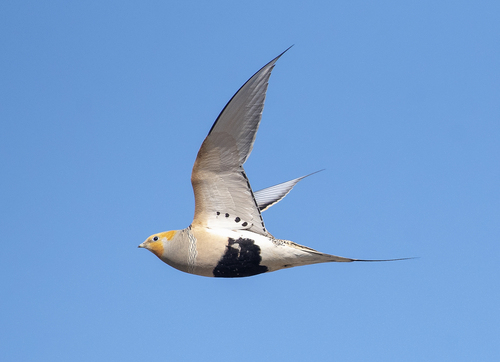 Sirratte
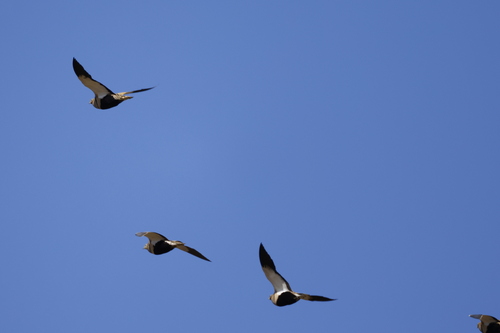 Black-bellied Sandgrouse
In breve
La separazione più affidabile sul campo è il colore delle ali inferiori in volo: la Sirratte mostra ali inferiori chiare, mentre il Black-bellied Sandgrouse ha ali inferiori bianche sorprendenti. Entrambe le specie hanno una macchia nera sul ventre, ma la Sirratte è complessivamente più color sabbia e più barrata sopra, con un aspetto più compatto e simile a una zampa. I maschi di entrambe hanno una testa e un petto grigi, ma solo il maschio della Sirratte ha un viso arancione e una fascia grigia sul petto. Le femmine sono più difficili da distinguere, ma la Sirratte è più barrata sopra e manca della fascia sul petto. La struttura, il modo di volare e le differenze sottili nel pattern delle parti superiori possono aiutare, specialmente a distanza o in stormi misti.
Consigli di identificazione
- Colore delle ali inferiori in volo (tutte le età): La Sirratte mostra ali inferiori chiare (non bianche); il Black-bellied Sandgrouse ha ali inferiori bianche brillanti. Questo è il segno di campo più affidabile, specialmente in stormi o a distanza.
- Macchia nera sul ventre: Entrambe le specie hanno un ventre nero, ma la Sirratte è impostata su parti inferiori color sabbia, mentre il Black-bellied è su parti inferiori più bianche. Cerca il contrasto in volo o quando gli uccelli bevono.
- Testa e petto del maschio: Il maschio della Sirratte ha una testa e un petto grigi, un viso arancione e una fascia grigia sul petto. Anche il maschio del Black-bellied ha una testa e un petto grigi, ma con una macchia di gola castagna e un sottile bordo nero sul petto inferiore. Il viso arancione e la fascia sul petto sono unici per la Sirratte.
- Parti superiori della femmina: La femmina della Sirratte è più barrata sopra e manca di una fascia sul petto; la femmina del Black-bellied è più marrone e più finemente marcata, ma ha lo stesso ventre nero e fascia sul petto del maschio. Se vedi una femmina barrata e senza fascia, è la Sirratte.
- Colore delle parti superiori: La Sirratte è complessivamente color sabbia con barrature; il Black-bellied è marrone dorato con marcature più scure. In forte luce, la Sirratte può apparire più chiara e uniforme.
- Piedi e gambe: La Sirratte ha gambe e dita piumate, con dita anteriori fuse e un aspetto simile a una zampa. Questo è visibile solo a distanza ravvicinata o in foto, ma è unico tra i sandgrouse.
- Dimensioni: Il Black-bellied è generalmente più pesante e leggermente più lungo, ma la sovrapposizione è sostanziale. Usa solo se gli uccelli sono affiancati.
- Stile di volo: Entrambi sono veloci e diretti, ma la Sirratte è nota per voli particolarmente lunghi e ad alta velocità. Non è solitamente diagnostico sul campo.
- Habitat: Se si trova in vera steppa con poca o nessuna vegetazione, è più probabile che sia la Sirratte. Se si trova in pianure semi-aride con un po' di vegetazione, specialmente nel sud Europa o in Nord Africa, è più probabile che sia il Black-bellied.
- Distribuzione: La Sirratte è centroasiatica, a volte irrompendo a ovest; il Black-bellied è europeo meridionale, nordafricano e mediorientale. I record fuori dalla gamma dovrebbero essere controllati con attenzione.
- Voce: Solo il richiamo del Black-bellied è descritto ('chowrrr rrrr-rrrr'), ma non è un separatore primario basato su queste note.
- Contesto all'acqua: Entrambe le specie si radunano presso le pozze d'acqua all'alba/tramonto, spesso in grandi stormi. Gli stormi misti sono rari ma possibili durante le irruzioni; controlla attentamente le ali inferiori e le macchie sul ventre.
- Piumaggio giovanile/immaturo: Non sono descritti segni di volo specifici per i giovanili di entrambe le specie in queste note; concentrati sul pattern delle ali inferiori e del ventre per tutte le età.
- Variazione stagionale: Non sono notati forti cambiamenti nel piumaggio stagionale; le differenze di sesso e età sono più importanti.
- Trappole comuni: Le femmine di entrambe le specie sono opache e possono essere confuse; controlla sempre il colore delle ali inferiori in volo e cerca la presenza o l'assenza di una fascia sul petto e barrature sopra.
Taglia
Entrambe le specie sono sandgrouse di dimensioni medie e grandi con una forma complessiva simile: testa e collo piccoli, simili a quelli di un piccione, e un corpo compatto e robusto. Il Black-bellied Sandgrouse è probabilmente la specie di sandgrouse più grande, con una lunghezza di 33–39 cm e una massa corporea di circa 405,5 g [wikidata], mentre la Sirratte è lunga 30–41 cm (nessuna massa fornita). In pratica, la sovrapposizione delle dimensioni è considerevole e non è un segno di campo affidabile a meno che gli uccelli non siano affiancati.
Piumaggio
- In volo (tutte le età): L'ala inferiore è la chiave: la Sirratte ha ali inferiori chiare, mentre il Black-bellied Sandgrouse mostra ali inferiori bianche brillanti. Entrambi hanno una macchia nera sul ventre, ma la Sirratte è impostata su parti inferiori color sabbia, e il Black-bellied è su parti inferiori più bianche.
- Maschi adulti: Entrambi hanno una testa e un petto grigi, ma il maschio della Sirratte ha un viso arancione e una fascia grigia distintiva sul petto, mentre il maschio del Black-bellied ha una macchia di gola castagna e un sottile bordo nero sul petto inferiore. Le parti superiori della Sirratte sono color sabbia e barrate; quelle del Black-bellied sono marrone dorato con marcature più scure.
- Femmine adulte: Entrambi sono più opachi e più finemente marcati rispetto ai maschi. La femmina della Sirratte manca della fascia sul petto e ha più barrature sopra; la femmina del Black-bellied è più marrone sopra, con petto e parti inferiori simili a quelle del maschio, e la stessa macchia nera sul ventre.
- Piedi: Solo la Sirratte ha gambe e dita piumate, con dita anteriori fuse e un aspetto simile a una zampa (visibile solo a distanza ravvicinata o in foto).
Comportamento
Entrambe le specie sono gregarie e spesso viste in stormi, specialmente presso le pozze d'acqua all'alba e al tramonto. La Sirratte è nota per voli molto lunghi e veloci (fino a 64 km/h e 121 km di andata e ritorno), e i maschi portano acqua nelle piume del petto per i pulcini. Anche il Black-bellied Sandgrouse vola veloce e diretto, ma solo il maschio porta acqua per i giovani. Entrambe le specie nidificano in scavi nel terreno e depongono uova cripticamente marcate. Lo stile di volo è simile: ali lunghe e appuntite e volo rapido e diretto.
Habitat
Entrambe preferiscono pianure o steppe secche e aperte, ma il Black-bellied Sandgrouse evita aree completamente prive di vegetazione, mentre la Sirratte è più un vero specialista della steppa. La Sirratte si riproduce in tutta l'Asia centrale, con irruzioni verso ovest in alcuni anni; il Black-bellied è residente o migratorio nel sud Europa, in Nord Africa e in alcune parti del Medio Oriente. La sovrapposizione è rara tranne che come vagabondi.
Voce
Solo il richiamo del Black-bellied Sandgrouse è descritto: un morbido 'chowrrr rrrr-rrrr.' Nessuna descrizione vocale è fornita per la Sirratte in queste note, quindi la voce non è un separatore affidabile basato su queste informazioni.
Sirratte · Black-bellied Sandgrouse · I miei uccelli difficili