

turu-turu vs frango-d'água-pequeno
Mustelirallus erythrops versus Porphyrio flavirostris
Jogue um quiz com turu-turu e frango-d'água-pequeno
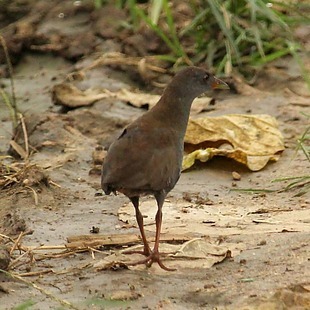 turu-turu
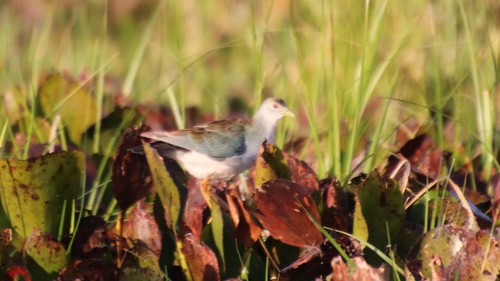 frango-d'água-pequeno
Em resumo
A marca de campo mais confiável para separar o turu-turu do frango-d'água-pequeno é a cor do bico e das pernas: o turu-turu tem um bico distinto vermelho e amarelo com pernas vermelhas brilhantes, enquanto o frango-d'água-pequeno apresenta um bico e um escudo amarelo-esverdeado pálido com pernas amarelas. Em voo ou em repouso, o frango-d'água-pequeno é notavelmente maior e mais robusto, com uma asa superior em tom azul e um rosto e peito azul-cinza pálido, contrastando com a plumagem mais marrom e críptica do turu-turu e as listras ousadas em preto e branco nas partes inferiores. Frangos-d'água-pequenos imaturos podem ser confusos, mas suas pernas amarelo-alaranjadas e rosto/peito amarelados ajudam. Ambas as espécies podem ocorrer em habitats pantanosos semelhantes, mas o turu-turu é muito mais discreto e raramente visto à vista.
Dicas de identificação
- Cor do bico: O turu-turu tem um bico vermelho e amarelo marcante; o bico e o escudo do frango-d'água-pequeno são amarelo-esverdeados pálidos. Isso é frequentemente visível mesmo à distância ou em pouca luz.
- Cor das pernas: As pernas do turu-turu são vermelhas brilhantes, enquanto as do frango-d'água-pequeno são amarelas (adultos) ou amarelo-alaranjadas (imaturos). Se você ver pernas vermelhas, é o turu-turu.
- Tamanho e estrutura: O frango-d'água-pequeno é visivelmente maior, com pernas mais longas e mais robusto do que o turu-turu. O turu-turu parece mais compacto e semelhante a uma rã, com uma cauda e pescoço mais curtos.
- Cor da asa superior e do rosto: O frango-d'água-pequeno apresenta coberturas de asa superior azul a azul-esverdeado e um rosto e peito azul-cinza pálido (adultos); o turu-turu não apresenta tons azuis ou azuis, mostrando em vez disso partes superiores marrons e rosto/peito cinza.
- Padrão das partes inferiores: O turu-turu tem listras ousadas em preto e branco nas flancos, barriga e vent (todas as idades); o frango-d'água-pequeno tem partes inferiores brancas simples sem listras (todas as idades).
- Confusão juvenil/imatura: O frango-d'água-pequeno imaturo tem um rosto, pescoço e peito amarelados, com um escudo verde e pernas amarelo-alaranjadas—nunca mostra as listras ou tons vermelhos do turu-turu. Se você ver um pássaro com rosto liso e amarelado, suspeite do frango-d'água-pequeno imaturo.
- Cauda e coberturas da cauda superior: A cauda e as coberturas da cauda superior do frango-d'água-pequeno são marrons-oliva a pretas, misturando-se com as costas; a cauda do turu-turu é marrom, combinando com as partes superiores, e não contrasta.
- Comportamento: O turu-turu é extremamente furtivo, raramente à vista; o frango-d'água-pequeno é mais frequentemente visto caminhando sobre vegetação flutuante ou em pântano aberto.
- Contexto do habitat: Se o pássaro estiver em um pasto mais seco, borda arbustiva ou campo de arroz, é mais provável que seja o turu-turu. Se estiver sobre plantas aquáticas flutuantes ou em pântano aberto, o frango-d'água-pequeno é favorecido.
- Estilo de voo: O turu-turu levanta-se baixo e rapidamente se esconde; o frango-d'água-pequeno pode voar mais longe e está menos rigidamente ligado a coberturas densas.
- Sexos: Ambas as espécies são sexualmente monomórficas—não confie no sexo para identificação.
- Movimentos sazonais: O frango-d'água-pequeno pode estar ausente de algumas áreas fora da estação chuvosa, enquanto a presença do turu-turu é menos previsível devido à sua natureza secreta.
- Sobreposição geográfica: Ambas podem ocorrer juntas em grande parte do norte e centro da América do Sul, então a faixa sozinha não é diagnóstica.
- Sem azul ou verde no turu-turu: Qualquer tom azul ou azul no asa ou rosto elimina o turu-turu.
- Sem listras no frango-d'água-pequeno: Qualquer listagem em preto e branco nas partes inferiores elimina o frango-d'água-pequeno.
Tamanho
O frango-d'água-pequeno é significativamente maior e mais pesado: os adultos têm entre 23 e 26 cm de comprimento e pesam entre 92 e 111 g (machos) ou 92 e 107 g (fêmeas) [wikipedia], enquanto o turu-turu mede entre 18 e 20 cm e pesa entre 40 e 70 g [wikipedia]. O frango-d'água-pequeno é o menor Porphyrio, mas ainda é mais robusto e com pernas mais longas do que o turu-turu, que é uma rã compacta e de cauda curta. No campo, as pernas e o pescoço mais longos do frango-d'água-pequeno, bem como sua postura mais ereta, são geralmente aparentes.
Plumagem
- Juvenil/Imaturo Frango-d'água-pequeno: As partes superiores são mais marrons do que os adultos, com um rosto, pescoço e peito amarelados; escudo frontal verde; pernas amarelo-alaranjadas. Sem listras ousadas abaixo.
- Adulto Frango-d'água-pequeno: Bico e escudo amarelo-esverdeados pálidos, pernas amarelas, coroa/costas marrons-oliva pálidas, coberturas de asa superior azuis a azul-esverdeadas, penas de voo cinza-azul, rosto/pescoço/peito azul-cinza pálido, barriga branca, cauda marrons-oliva a preta.
- Turu-turu (todas as idades): Bico vermelho e amarelo, pernas vermelhas brilhantes, coroa/nuca/costas marrons, garganta branca, rosto/garganta/peito cinza, listras ousadas em preto e branco nos flancos/barriga/vent. Sem tons azuis ou rosto azul-cinza pálido. Sexos iguais.
- Contraste chave: O turu-turu sempre mostra listras fortes nas partes inferiores e não apresenta tons azuis ou verde-azulados; o frango-d'água-pequeno (mesmo imaturo) nunca mostra tais listras e tem tons azuis/azuis na asa e no rosto.
Comportamento
O turu-turu é extremamente furtivo, raramente visto à vista, e normalmente se esconde em gramados densos, juncos ou arbustos, frequentemente apenas vislumbrado enquanto se move rapidamente por uma abertura. O frango-d'água-pequeno é mais provável de ser visto caminhando sobre vegetação flutuante ou se movendo em plantas de pântano emergentes, às vezes à vista. Os dedos e pernas mais longos do frango-d'água-pequeno permitem que ele se mova com mais confiança sobre a vegetação aquática. O turu-turu é mais provável de levantar-se baixo e rapidamente voltar para a cobertura, enquanto o frango-d'água-pequeno pode voar mais longe e está menos rigidamente ligado a coberturas densas.
Habitat
Ambas as espécies ocorrem em pântanos, canaviais e pastagens úmidas, mas o turu-turu é mais frequentemente encontrado em pastagens secas ou mistas úmidas-secas, campos de arroz e às vezes em bordas arbustivas ou florestais, especialmente na América do Sul. O frango-d'água-pequeno está mais estritamente associado à vegetação aquática em pântanos, lagos e campos alagados, frequentemente onde há plantas flutuantes. Os hábitos secretos do turu-turu significam que é menos provável que seja visto em água aberta ou em plantas flutuantes em comparação com o frango-d'água-pequeno.