

Polluela Picopinta vs Calamoncillo Celeste
Mustelirallus erythrops frente a Porphyrio flavirostris
Juega un quiz con Polluela Picopinta y Calamoncillo Celeste
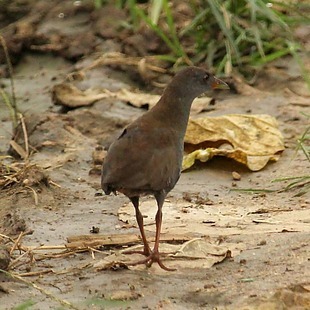 Polluela Picopinta
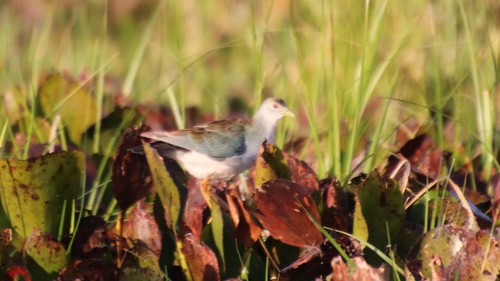 Calamoncillo Celeste
En breve
La marca de campo más confiable para separar la Polluela Picopinta del Calamoncillo Celeste es el color del pico y las patas: la Polluela Picopinta tiene un pico distintivo rojo y amarillo con patas rojas brillantes, mientras que el Calamoncillo Celeste muestra un pico y un escudo de color verde amarillento pálido con patas amarillas. En vuelo o en reposo, el Calamoncillo Celeste es notablemente más grande y robusto, con una parte superior de alas de tono azul y una cara y pecho azul grisáceo pálido, en contraste con el plumaje más marrón y críptico de la polluela y las llamativas franjas en blanco y negro en las partes inferiores. Los Calamoncillos Celestes inmaduros pueden ser confusos, pero sus patas amarillento-naranjas y su cara/pecho color crema ayudan. Ambas especies pueden ocurrir en hábitats pantanosos similares, pero la polluela es mucho más secreta y rara vez se ve a la vista.
Consejos de identificación
- Color del pico: La Polluela Picopinta tiene un pico llamativo rojo y amarillo; el pico y el escudo del Calamoncillo Celeste son de color verde amarillento pálido. Esto a menudo es visible incluso a distancia o en mala luz.
- Color de las patas: Las patas de la Polluela Picopinta son rojas brillantes, mientras que las del Calamoncillo Celeste son amarillas (adultos) o amarillento-naranjas (inmaduros). Si ves patas rojas, es la polluela.
- Tamaño y estructura: El Calamoncillo Celeste es notablemente más grande, con patas más largas y más robusto que la Polluela Picopinta. La polluela parece más compacta y similar a un ferrocarril, con una cola y un cuello más cortos.
- Color de la parte superior del ala y la cara: El Calamoncillo Celeste muestra cobertoras de alas de color azul a azul verdoso y una cara y pecho azul grisáceo pálido (adultos); la Polluela Picopinta carece de tonos azules o celestes, mostrando en su lugar partes superiores marrones y cara/pecho grises.
- Patrón de las partes inferiores: La Polluela Picopinta tiene franjas en blanco y negro en los flancos, el vientre y el vent (todas las edades); el Calamoncillo Celeste tiene partes inferiores blancas lisas sin franjas (todas las edades).
- Confusión juvenil/inmaduro: El Calamoncillo Celeste inmaduro tiene una cara, cuello y pecho color crema, con un escudo verde y patas amarillento-naranjas—nunca muestra las franjas de la polluela ni tonos rojos. Si ves un pájaro de cara color crema y patas amarillentas, sospecha que es un calamoncillo inmaduro.
- Cola y cobertoras de la cola superior: La cola y las cobertoras de la cola superior del Calamoncillo Celeste son de color marrón oliváceo a negro, fusionándose con la espalda; la cola de la Polluela Picopinta es marrón, coincidiendo con las partes superiores, y no contrasta.
- Comportamiento: La Polluela Picopinta es extremadamente furtiva, rara vez se ve a la vista; el Calamoncillo Celeste se ve más a menudo caminando sobre vegetación flotante o en pantanos abiertos.
- Contexto del hábitat: Si el pájaro está en un pastizal más seco, borde arbustivo o campo de arroz, es más probable que sea la Polluela Picopinta. Si está sobre plantas acuáticas flotantes o en un pantano abierto, se prefiere el Calamoncillo Celeste.
- Estilo de vuelo: La Polluela Picopinta se asusta bajo y rápidamente se esconde; el Calamoncillo Celeste puede volar más lejos y está menos estrictamente ligado a la cobertura densa.
- Sexos: Ambas especies son sexualmente monomórficas—no confíes en el sexo para la identificación.
- Movimientos estacionales: El Calamoncillo Celeste puede estar ausente en algunas áreas fuera de la temporada húmeda, mientras que la presencia de la Polluela Picopinta es menos predecible debido a su naturaleza secreta.
- Superposición geográfica: Ambas pueden ocurrir juntas en gran parte del norte y centro de América del Sur, por lo que el rango solo no es diagnóstico.
- Sin azul o verde en la polluela: Cualquier tono azul o celeste en el ala o la cara descarta a la Polluela Picopinta.
- Sin franjas en el calamoncillo: Cualquier franja en blanco y negro en las partes inferiores descarta al Calamoncillo Celeste.
Tamaño
El Calamoncillo Celeste es significativamente más grande y pesado: los adultos miden entre 23 y 26 cm de largo y pesan entre 92 y 111 g (machos) o entre 92 y 107 g (hembras) [wikipedia], mientras que la Polluela Picopinta mide entre 18 y 20 cm y pesa entre 40 y 70 g [wikipedia]. El calamoncillo es el más pequeño de los Porphyrio, pero aún así es más robusto y tiene patas más largas que la polluela, que es un ferrocarril compacto y de cola corta. En el campo, las patas y el cuello más largos del calamoncillo, así como su postura más erguida, son generalmente evidentes.
Plumaje
- Calamoncillo Celeste Juvenil/Inmaduro: Las partes superiores son más marrones que las de los adultos, con una cara, cuello y pecho color crema; escudo frontal verde; patas amarillento-naranjas. Sin franjas llamativas abajo.
- Calamoncillo Celeste Adulto: Pico y escudo de color verde amarillento pálido, patas amarillas, corona/espalda marrón oliváceo pálido, cobertoras de alas de color azul a azul verdoso, plumas de vuelo gris-azul, cara/puntos laterales del cuello/pecho azul grisáceo pálido, vientre blanco, cola marrón olivácea a negra.
- Polluela Picopinta (todas las edades): Pico rojo y amarillo, patas rojas brillantes, corona/nuca/espalda marrón, garganta blanca, cara/garganta/pecho grises, franjas en blanco y negro llamativas en flancos/vientre/vent. Sin tonos azules ni cara azul grisácea. Sexos iguales.
- Contraste clave: La Polluela Picopinta siempre muestra franjas fuertes en las partes inferiores y carece de tonos azules o verdosos; el Calamoncillo Celeste (incluso inmaduro) nunca muestra tales franjas y tiene tonos azules/celestes en el ala y la cara.
Comportamiento
La Polluela Picopinta es extremadamente furtiva, rara vez se ve a la vista, y típicamente se mueve a través de hierbas densas, juncos o matorrales, a menudo solo se vislumbra cuando cruza un espacio. El Calamoncillo Celeste es más probable que se vea caminando sobre vegetación flotante o trepando en plantas de pantano emergentes, a veces a la vista. Los dedos y patas más largos del calamoncillo le permiten moverse con más confianza sobre la vegetación acuática. La Polluela Picopinta es más propensa a asustarse bajo y caer rápidamente de nuevo a la cobertura, mientras que el Calamoncillo Celeste puede volar más lejos y está menos estrictamente ligado a la cobertura densa.
Hábitat
Ambas especies ocurren en pantanos, cañaverales y pastizales húmedos, pero la Polluela Picopinta se encuentra más a menudo en pastizales secos o mixtos húmedo-secos, campos de arroz y a veces en bordes arbustivos o boscosos, especialmente en América del Sur. El Calamoncillo Celeste está más estrictamente asociado con la vegetación acuática en pantanos, lagos y campos inundados, a menudo donde hay plantas flotantes. Los hábitos secretos de la polluela significan que es menos probable que se vea en aguas abiertas o sobre plantas flotantes en comparación con el calamoncillo.
Polluela Picopinta · Calamoncillo Celeste · Mis aves difíciles