

Paint-billed Crake vs Azure Gallinule
Mustelirallus erythrops contro Porphyrio flavirostris
Fai un quiz con Paint-billed Crake e Azure Gallinule
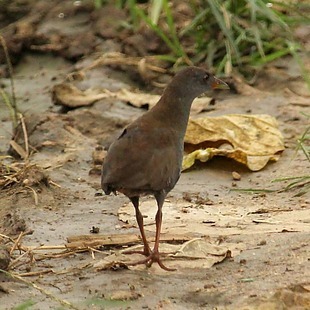 Paint-billed Crake
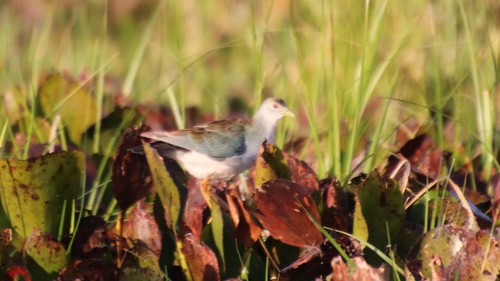 Azure Gallinule
In breve
Il segno distintivo più affidabile per separare il Paint-billed Crake dall'Azure Gallinule è il colore del becco e delle gambe: il Paint-billed Crake ha un becco distintivo rosso e giallo con gambe rosse brillanti, mentre l'Azure Gallinule mostra un becco e uno scudo di un pallido giallo-verde con gambe gialle. In volo o a riposo, l'Azure Gallinule è notevolmente più grande e massiccio, con un'ala superiore di tonalità blu e un volto e un petto blu-grigiastro pallido, in contrasto con il piumaggio più marrone e criptico del crake e le audaci strisce bianche e nere sui sottoparti. Gli Azure Gallinule immaturi possono essere confusi, ma le loro gambe giallo-arancioni e il volto/petto color crema aiutano. Entrambe le specie possono verificarsi in habitat paludosi simili, ma il crake è molto più riservato e raramente visto in aperto.
Consigli di identificazione
- Colore del becco: il Paint-billed Crake ha un becco rosso e giallo sorprendente; il becco e lo scudo dell'Azure Gallinule sono di un pallido giallo-verde. Questo è spesso visibile anche da lontano o in scarsa luce.
- Colore delle gambe: le gambe del Paint-billed Crake sono rosse brillanti, mentre quelle dell'Azure Gallinule sono gialle (adulti) o giallo-arancioni (immaturi). Se vedi gambe rosse, è il crake.
- Dimensioni e struttura: l'Azure Gallinule è notevolmente più grande, con gambe più lunghe e più massiccio rispetto al Paint-billed Crake. Il crake appare più compatto e simile a un rallide, con una coda e un collo più corti.
- Colore dell'ala superiore e del volto: l'Azure Gallinule mostra copritrici dell'ala superiore blu a blu-verde e un volto e un petto blu-grigiastro pallido (adulti); il Paint-billed Crake non presenta tonalità blu o azzurre, mostrando invece parti superiori marroni e un volto/petto grigio.
- Schema dei sottoparti: il Paint-billed Crake ha audaci strisce bianche e nere sui fianchi, sul ventre e sul vent (tutte le età); l'Azure Gallinule ha sottoparti bianche semplici senza strisce (tutte le età).
- Confusione giovanile/immatura: l'Azure Gallinule immaturo ha un volto, un collo e un petto color crema, con uno scudo verde e gambe giallo-arancioni—non mostra mai le strisce o le tonalità rosse del crake. Se vedi un uccello con volto semplice e color crema con gambe giallo-arancioni, sospetta un gallinule immaturo.
- Coda e copritrici della coda superiore: la coda e le copritrici della coda superiore dell'Azure Gallinule sono di un marrone-oliva a nero, fondendosi con il dorso; la coda del Paint-billed Crake è marrone, abbinata alle parti superiori, e non contrasta.
- Comportamento: il Paint-billed Crake è estremamente furtivo, raramente in aperto; l'Azure Gallinule è più spesso visto camminare su vegetazione galleggiante o in paludi aperte.
- Contesto dell'habitat: se l'uccello si trova in un pascolo più secco, in un bordo cespuglioso o in un campo di riso, è più probabile che sia un Paint-billed Crake. Se su piante acquatiche galleggianti o in una palude aperta, è favorito l'Azure Gallinule.
- Stile di volo: il Paint-billed Crake si alza basso e scende rapidamente nel riparo; l'Azure Gallinule può volare più lontano ed è meno legato a coperture dense.
- Sessi: entrambe le specie sono sessualmente monomorfiche—non fare affidamento sul sesso per l'identificazione.
- Movimenti stagionali: l'Azure Gallinule può essere assente da alcune aree al di fuori della stagione umida, mentre la presenza del Paint-billed Crake è meno prevedibile a causa della sua natura riservata.
- Sovrapposizione geografica: entrambe possono verificarsi insieme in gran parte del Sud America settentrionale e centrale, quindi l'areale da solo non è diagnostico.
- Nessun blu o verde nel crake: qualsiasi tonalità blu o azzurra sull'ala o sul volto esclude il Paint-billed Crake.
- Nessuna striscia nel gallinule: qualsiasi striscia bianca e nera sui sottoparti esclude l'Azure Gallinule.
Taglia
L'Azure Gallinule è significativamente più grande e pesante: gli adulti sono lunghi 23–26 cm e pesano 92–111 g (maschi) o 92–107 g (femmine) [wikipedia], mentre il Paint-billed Crake è lungo 18–20 cm e pesa 40–70 g [wikipedia]. Il gallinule è il più piccolo Porphyrio ma è comunque più massiccio e con gambe più lunghe rispetto al crake, che è un rallide compatto e dalla coda corta. Sul campo, le gambe e il collo più lunghi del gallinule, così come la sua postura più eretta, sono solitamente evidenti.
Piumaggio
- Giovanile/Immature Azure Gallinule: le parti superiori sono più marroni rispetto agli adulti, con un volto, un collo e un petto color crema; scudo frontale verde; gambe giallo-arancioni. Nessuna audace striscia sotto.
- Adulto Azure Gallinule: becco e scudo giallo-verde pallido, gambe gialle, corona/dorso marrone-oliva pallido, copritrici dell'ala superiore blu a blu-verde, piume di volo grigio-blu, volto/parti laterali del collo/petto blu-grigiastro pallido, ventre bianco, coda marrone-oliva a nera.
- Paint-billed Crake (tutte le età): becco rosso e giallo, gambe rosse brillanti, corona/nuca/dorso marroni, gola bianca, volto/gola/petto grigi, audaci strisce bianche e nere sui fianchi/ventre/vent. Nessuna tonalità blu o volto blu-grigiastro. Sessi simili.
- Contrasto chiave: il Paint-billed Crake mostra sempre forti strisce sui sottoparti e non presenta tonalità blu o verdi; l'Azure Gallinule (anche immaturo) non mostra mai tali strisce e ha tonalità blu/azzurre sull'ala e sul volto.
Comportamento
Il Paint-billed Crake è estremamente furtivo, raramente visto in aperto, e tipicamente si muove attraverso erba densa, canne o cespugli, spesso solo intravisto mentre attraversa un'apertura. L'Azure Gallinule è più probabile che venga visto camminare su vegetazione galleggiante o arrampicarsi tra le piante palustri emergenti, a volte in aperto. Le gambe e le dita più lunghe del gallinule gli permettono di muoversi più sicuro sulla vegetazione acquatica. Il Paint-billed Crake è più probabile che si alzi basso e scenda rapidamente nel riparo, mentre l'Azure Gallinule può volare più lontano ed è meno legato a coperture dense.
Habitat
Entrambe le specie si trovano in paludi, canneti e prati umidi, ma il Paint-billed Crake è più spesso trovato in pascoli più secchi o misti umido-secco, campi di riso e talvolta bordi cespugliosi o boschivi, specialmente in Sud America. L'Azure Gallinule è più strettamente associato alla vegetazione acquatica in paludi, laghi e campi allagati, spesso dove ci sono piante galleggianti. Le abitudini riservate del crake significano che è meno probabile essere visto in acque aperte o su piante galleggianti rispetto al gallinule.
Paint-billed Crake · Azure Gallinule · I miei uccelli difficili