

ornate sunbird vs black-throated sunbird
Cinnyris ornatus versus Aethopyga saturata
Jogue um quiz com ornate sunbird e black-throated sunbird
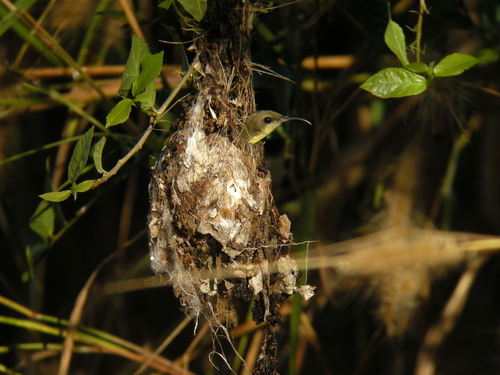 ornate sunbird
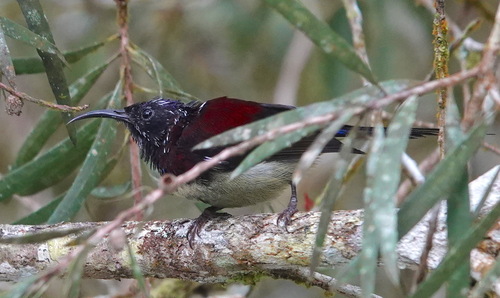 black-throated sunbird
Em resumo
A marca de campo mais confiável para separar o ornate sunbird do black-throated sunbird é a garganta e o peito do macho: os machos do ornate sunbird apresentam uma garganta e um peito azul-preto iridescentes com partes inferiores amarelas, enquanto os machos do black-throated sunbird têm uma garganta preta distinta, mas não possuem a barriga amarela brilhante. As fêmeas são mais complicadas, mas as fêmeas do ornate sunbird têm um supercílio amarelo e partes superiores verde-oliva, enquanto as fêmeas do black-throated sunbird são geralmente mais escuras e não possuem a sobrancelha amarela forte. O tamanho e a estrutura não são fortemente diagnósticos em campo, mas o black-throated sunbird é ligeiramente mais leve. Ambas as espécies se sobrepõem no Sudeste Asiático, portanto, atenção cuidadosa à plumagem é essencial, especialmente em bandos mistos ou habitats de borda de floresta.
Dicas de identificação
- Cor da garganta e do peito do macho: O macho do ornate sunbird tem uma garganta e um peito azul-preto iridescentes, enquanto o macho do black-throated sunbird tem uma garganta preta simples sem o brilho azul-preto iridescente. Esta é a marca de campo mais confiável para machos adultos.
- Partes inferiores do macho: Os machos do ornate sunbird têm partes inferiores amarelas brilhantes, contrastando fortemente com a garganta escura. Os machos do black-throated sunbird são geralmente mais escuros embaixo e não possuem a barriga amarela forte.
- Brilho da testa do macho: Os machos do ornate sunbird podem mostrar um brilho roxo-preto na testa, que está ausente no black-throated sunbird.
- Ponta da cauda: Os machos do ornate sunbird têm uma cauda preta com uma ponta branca, que pode ser visível em boas vistas. O black-throated sunbird não possui essa ponta branca forte.
- Supercílio da fêmea: A fêmea do ornate sunbird tem um supercílio amarelo (sobrancelha), que está ausente nas fêmeas do black-throated sunbird. Esta é uma marca chave para separar fêmeas e imaturos.
- Partes superiores da fêmea: As fêmeas do ornate sunbird são verde-oliva acima, enquanto as fêmeas do black-throated sunbird são geralmente mais escuras e menos oliva.
- Partes inferiores da fêmea: As fêmeas do ornate sunbird têm partes inferiores amarelas, enquanto as fêmeas do black-throated sunbird são mais apagadas e menos amarelas.
- Padrão das asas: Nenhuma marca distintiva de padrão de asa superior ou de voo é descrita para ambas as espécies, portanto, não confie em painéis de asa ou bordas traseiras.
- Tamanho: O ornate sunbird é ligeiramente mais pesado, mas esta não é uma marca de campo confiável em campo.
- Habitat: Em áreas onde ambas ocorrem, o black-throated sunbird pode ser mais comum em elevações mais altas ou em florestas mais densas, enquanto o ornate sunbird é mais amplamente distribuído em habitats de planície e borda. No entanto, há considerável sobreposição.
- Distribuição geográfica: Se você está no subcontinente indiano (Índia, Nepal, Butão, Bangladesh), você está quase certamente vendo o black-throated sunbird. Em Java, Bornéu ou nas Menores Sundas, apenas o ornate sunbird ocorre.
- Comportamento: Ambas as espécies se comportam de maneira semelhante, portanto, não confie no estilo de alimentação ou voo para separação.
- Dimorfismo sexual: Ambas as espécies são sexualmente dimórficas, então sempre considere o sexo ao identificar. Machos são mais fáceis de separar do que fêmeas.
- Armadilhas: Fêmeas e imaturos são os mais propensos a serem confundidos. Concentre-se na presença ou ausência do supercílio amarelo e no tom das partes inferiores.
- Bandos mistos: Em bandos de espécies mistas, verifique cada sunbird cuidadosamente, pois ambos podem ocorrer juntos em algumas regiões.
Tamanho
O ornate sunbird é ligeiramente mais pesado (macho 6,7–11,9 g, fêmea 6–10 g) do que o black-throated sunbird (cerca de 5,3 g) [wikipedia][wikidata]. No entanto, essa diferença é sutil e não é facilmente julgada em campo. Ambos são sunbirds pequenos e ativos, e o tamanho sozinho não é um separador confiável, a menos que vistos lado a lado.
Plumagem
- Machos adultos: Os machos do ornate sunbird apresentam partes superiores oliva, remiges pretas com bordas verdes, uma cauda preta com uma ponta branca e uma garganta e um peito azul-preto iridescentes. As partes inferiores são amarelas brilhantes. A testa tem um brilho roxo-preto. Em contraste, os machos do black-throated sunbird têm uma garganta preta (como o nome sugere), mas não possuem a barriga amarela brilhante e o peito azul-preto iridescente do ornate. Suas partes superiores e inferiores são geralmente mais escuras e menos contrastantes.
- Fêmeas adultas: As fêmeas do ornate sunbird são verde-oliva acima, com um supercílio amarelo e partes inferiores amarelas. As fêmeas do black-throated sunbird são geralmente mais escuras, não possuem o supercílio amarelo e têm menos amarelo embaixo.
- Plumagem imatura/juvenil: Nenhum padrão específico de asa juvenil ou de primeiro inverno é descrito para ambas as espécies nas fontes. Assim, a separação depende da coloração geral e do supercílio em fêmeas e imaturos.
- Padrão das asas em voo: Nenhuma marca distintiva de padrão de asa superior ou de voo é descrita para ambas as espécies, portanto, isso não é uma marca de campo útil.
- Cauda: Os machos do ornate sunbird têm uma cauda preta com uma ponta branca; isso pode ser visível em boas vistas e é menos pronunciado no black-throated sunbird.
Comportamento
Ambas as espécies são sunbirds ativos que se alimentam de néctar, frequentemente vistos flutuando entre flores. Nenhuma diferença comportamental forte é notada nas fontes. Ambos podem ser encontrados sozinhos, em pares ou em bandos de espécies mistas, especialmente nas bordas da floresta ou em jardins.
Habitat
O ornate sunbird é endêmico do Sudeste Asiático Continental, Sumatra, Java, Bornéu e das Ilhas Menores da Sunda, e é frequentemente encontrado em uma variedade de habitats, desde florestas de planície até jardins [wikipedia]. O black-throated sunbird tem uma distribuição mais ampla, incluindo o subcontinente indiano e grande parte do Sudeste Asiático, e é encontrado tanto em florestas úmidas de planície quanto montanhosas. Em áreas de sobreposição (por exemplo, Tailândia, Malásia), ambas as espécies podem estar presentes, mas o black-throated sunbird é mais provável em elevações mais altas ou em florestas mais densas.
ornate sunbird · black-throated sunbird · Minhas aves difíceis